

Published date: 15th October, 2026
TL; DR
- Define your mobility business model, whether it is ride-hailing, taxi booking, chauffeur services, corporate transport, or electric vehicle mobility.
- Research your target European country and city to understand market demand, competition, customer preferences, and operating costs.
- Understand local transportation regulations, including operator licensing, driver eligibility, vehicle requirements, insurance, and data protection.
- Prioritize essential features such as ride booking, real-time tracking, fare estimates, payment processing, driver management, and an admin dashboard.
- Choose between custom development and an established software solution based on your budget, customization needs, and business goals.
- You can build a mobility platform that will suit all your needs with VivoCabs to customize passenger and driver apps and an admin dashboard. It will also include integrations to suit your business requirements and European expansion plans.
In this blog, we’ll show you how to plan and execute a comprehensive strategy to launch a mobility platform in Europe. You can start a business in Europe, which offers opportunities for companies looking to build digital mobility services, from ride-hailing and taxi booking to corporate transportation, airport transfers, chauffeur services, and electric vehicle fleets. As the demand of customer expectations evolve, transportation businesses are exploring digital platforms that make booking easier, improve fleet visibility, streamline driver operations, and provide a more convenient passenger experience.
However, launching a mobility platform in Europe takes more than building a passenger app. Businesses must identify their target market, understand local transportation regulations, build a reliable driver network, choose a revenue model, and select technology that meets their operational needs.
For entrepreneurs, established taxi operators, fleet owners, and mobility companies, the challenge is bringing these elements together without adding unnecessary technical complexity or delaying market entry.
Table of Contents
- What Is a Mobility Platform?
- Factors to Consider for Launching a Mobility Platform in Europe
- 1. Identify Your Mobility Business Model
- 2. Research the European Mobility Market
- 3. Select the Right European Country for Launch
- 4. Understand Transportation Regulations and Compliance
- 5. Define the Features Your Mobility Platform Needs
- 6. Decide Between Custom Development and an Established Technology Foundation
- 7. Launch and Market Your Mobility Platform
- Conclusion
What is a Mobility Platform?
A mobility platform is a ride-hailing or taxi-booking platform people use to book cars or bikes. Additional features include connecting passengers with drivers, managing the fleet, handling payments and transactions, tracking, on-demand booking, and other features your business may need.
It can even be a platform that supports two-wheelers or multiple automobiles. It all depends upon your business model. People prefer taxis because some don’t own cars, and others choose public transport to reduce their carbon footprint and optimize fuel consumption. That is where you step in as an intermediary. The platform helps drivers and passengers connect for hassle-free bookings and a seamless travel experience.
Factors to Consider for Launching a Mobility Platform in Europe
Several factors come into play before launching a mobility platform in Europe. Consider factors like your business model, market demand, technology, policies, scaling, and more. Let’s look at the key aspects to consider before launching a mobility platform.
1. Identify Your Mobility Business Model
First, you will have to identify the type of mobility business platform you want to build. Market requirements can vary and are not pre-defined, so keep that in mind. For example,
the requirements of a corporate transportation platform will differ from those of a consumer-focused taxi booking service. Once you successfully define your business model, it helps determine the features, partnerships, operational processes, and integrations required for launch.
Here are some common mobility business models:
Ride-hailing Mobility platforms: This model connects passengers with available drivers through a digital booking experience, such as a mobile app. The revenue generation may come from commissions, booking fees, subscriptions, or contractual arrangements.
Taxi booking Mobility platforms: This is for taxi operators to help licensed taxi operators manage bookings, dispatch requests, coordinate drivers, and improve customer communication.
Chauffeur and premium transportation: A more niche model focused on executive travel, business meetings, airport transfers, and premium passenger experiences.
Corporate mobility solutions: Focusing of corporate and office requirements like employee transportation, business travel management, scheduled journeys, and reporting for organizations.
Electric vehicle mobility: Another niche-specific model to build a transportation service around electric vehicles, potentially incorporating charging considerations, fleet utilization, and sustainability reporting.
Specialized transportation: You can also cater to special requests or on-demand services, such as hotel transfers, accessible transport, event transportation, or pre-booked regional journeys.
Choosing the right model depends on your target customers, local competition, fleet availability, and the transportation problems your business can solve.
For example, a business planning to launch a mobility platform in the UK for corporate travel may prioritize scheduled bookings, centralized administration, and business reporting. Likewise, a startup targeting tourists in Spain may focus more on airport pickups, multilingual booking experiences, and convenient digital payments.
Looking To Launch A Mobility Platform in Any Of The Above-Mentioned Business Models
2. Research the European Mobility Market
You can’t consider Europe as a single entity or a uniform market for your transportation business. There are several factors that you will have to consider, like passenger preferences, competition, licensing requirements, pricing expectations, and payment habits, which can vary by country and city..
Conduct thorough market research before selecting your launch location.
Start by evaluating the following factors:
- Demand for taxis, ride-hailing, and pre-booked transportation.
- Existing competitors and their service coverage.
- Availability of licensed drivers and suitable vehicles.
- Airport, hotel, tourism, and corporate transportation demand.
- Customer expectations around pricing, safety, and convenience.
- Local operating costs and potential revenue.
- Regulatory requirements and market entry restrictions.
After evaluating all these factors, choose a specific city or customer segment where your business can establish a strong initial presence. Attempting to launch across several European countries simultaneously can increase operational complexity before the business model has been validated.
For example, a mobility operator could start with airport transfers in one major city, build relationships with drivers and hotels, and then expand into corporate transportation or additional cities.
Identifying existing gaps in the market should also be a part of your initial research. These can include limited availability in certain locations, insufficient support for business customers, unreliable scheduled pickups, or a need for specialized vehicle categories.
3. Select the Right European Country for Launch
Choosing a country helps you assess key factors like the business model, regulatory environment, target customers, tax policies, and available operating resources.
Here are examples of how businesses can approach country-specific planning.
Launch a Mobility Platform in the UK
The UK may suit businesses targeting urban transportation, airport transfers, corporate travel, and chauffeur services. However, businesses must address licensing before the platform begins accepting bookings.
In England and Wales, private hire vehicles generally must be pre-booked, and operators must meet licensing requirements. London has its own licensing arrangements administered by Transport for London. Scotland and Northern Ireland have different processes.
Businesses planning to launch a mobility platform in the UK should investigate the applicable operator, driver, and vehicle licensing rules for their intended operating area before finalizing their launch plans. Official guidance is available from GOV.UK and Transport for London.
From a technology perspective, consider booking management, driver-document monitoring, payment processing, customer notifications, and reporting capabilities that align with the approved operating model.
Suggested Read: How To Launch a Ride-Hailing App In The UK
Launch a Mobility Platform in Germany
If you plan to launch a mobility platform in Germany, then examine the country’s passenger transportation framework and the requirements relevant to your particular service.
You should find out the legal classification of your chosen service, whether it falls under taxi, rental-car-with-driver, or another applicable category. The legal classification can influence operating permissions, booking procedures, and driver and vehicle requirements.
Your business plan should also, consider local customer expectations, payment preferences, German-language interfaces, and the availability of transportation partners.
From a technology perspective, prioritize transparent booking information, reliable trip tracking, clear cancellation policies, and administrative controls that support the intended service model.
Launch a Mobility Platform in France
For France, you should first determine whether the proposed business will operate as a taxi service, a chauffeur-driven private transport service, or another regulated transportation offering.
The requirements vary by service category, so seek advice on the relevant professional qualifications, vehicle requirements, registration, and operating obligations. Consider French-language passenger and driver interfaces, local payment options, customer support, and the requirements of the cities you plan to serve.
A focused launch in one metropolitan area may help the business develop a driver network and establish customer demand before expanding into additional regions.
Launch a Mobility Platform in Spain
Let us consider you choose Spain; then evaluating urban transportation, tourism, airport transfers, and pre-booked mobility services will be required
Before launching, you should assess the applicable national and regional rules, including the authorization requirements relevant to taxis and chauffeur-driven services. Requirements may vary depending on the service and location.
Other factors to consider include seasonal demand, tourist booking patterns, multilingual support, and partnerships with hotels or travel businesses.
4. Understand Transportation Regulations and Compliance
You should begin with regulatory planning before finalizing software implementation.
A mobility platform can involve several different parties, including the technology provider, booking operator, vehicle owner, driver, payment processor, and business customer. Their responsibilities depend on the service structure and applicable law.
Develop a compliance checklist
Operator authorization: Determine whether your business requires a taxi, private hire, passenger transportation, or other operating authorization.
Driver eligibility: Establish the relevant licensing, background-check, training, and documentation requirements.
Vehicle compliance: Identify applicable vehicle licensing, insurance, inspection, accessibility, and safety requirements.
Passenger protection: Develop procedures for complaints, incidents, cancellations, refunds, and emergency situations.
Data protection: Assess how you will process and protect passenger information, location data, driver details, and payment-related information.
Business obligations: Review tax, employment or contractor classification, consumer protection, and other relevant obligations.
For businesses operating in multiple European countries, don’t assume approval in one jurisdiction automatically authorizes operations elsewhere.
Technology can help organize documents, record trip information, and support administrative oversight. Moreover, your operating procedures and legal arrangements must also meet the relevant requirements.
5. Define the Features Your Mobility Platform Needs
Defining your mobility platform’s features will help you decide which features to integrate into your mobile application and how many apps you need.
Rider Application
The passenger application enables customers to book rides, track drivers, and manage their journeys through a convenient mobile interface. For businesses planning to launch a mobility platform in Europe, a user-friendly rider app can deliver a seamless booking experience, build customer trust, and encourage repeat bookings.
Depending on the business model and customization requirements, the rider application may include the following features:
- User Registration and Profile Management: Allow passengers to create accounts, manage their profiles, and keep contact information up to date.
- Ride Booking: Enable passengers to enter pickup and destination locations, select available ride options, and request transportation according to the services offered.
- Fare Estimates: Display estimated ride costs before booking confirmation, based on the platform’s configured pricing rules.
- Real-Time Driver Tracking: Allow passengers to view the assigned driver’s location and monitor the driver’s approach to the pickup point.
- Ride Details and Status Updates: Provide information about the assigned driver, vehicle, pickup details, and journey status.
- Multiple Payment Options: Support configured payment methods through suitable payment gateway integrations, depending on the target market and business requirements.
- Ride History and Receipts: Allow passengers to review previous bookings and access available trip and payment records.
- Ride Scheduling: Enable passengers to arrange journeys in advance where scheduled bookings are supported by the platform.
- Ratings and Feedback: Give passengers an option to share feedback about completed trips and their overall experience.
- Notifications and Updates: Send booking confirmations, driver assignment updates, ride-status notifications, and other service-related communications.
- Cancellation Management: Allow passengers to cancel bookings according to the platform’s configured cancellation rules.
- Customer Support: Provide access to the available support channels for assistance with bookings, payments, and other ride-related concerns.
For businesses planning to launch a mobility platform in the UK, Germany, France, Spain, or other European markets, the rider application can be customized to support local languages, suitable payment integrations, and market-specific booking requirements.
Driver Application
The driver application enables drivers to manage ride requests, coordinate pickups, and handle trip-related activities through a dedicated mobile interface. For businesses planning to launch a mobility platform in Europe, a well-structured driver app can help streamline daily operations and improve communication between drivers and passengers.
Depending on the business model and customization requirements, the driver application may include the following features:
- Driver Registration and Profile Management: Allow drivers to create profiles and manage their personal information and relevant documents.
- Availability Management: Enable drivers to update their availability and receive ride requests when they are ready to accept trips.
- Ride Request Management: Allow drivers to review incoming requests, view trip details, and accept or reject requests according to the configured workflow.
- Pickup and Navigation Support: Provide pickup locations, destination details, route information, and navigation integrations to help drivers complete trips.
- Real-Time Trip Updates: Enable drivers to update ride statuses, from accepting a booking to picking up the passenger and completing the journey.
- Earnings and Payment Information: Help drivers review relevant trip earnings, payment records, and outstanding balances, depending on the configured payment model.
- Notifications and Communication: Keep drivers informed about booking assignments, trip changes, and other operational updates.
- Document Management: Support the submission and monitoring of required driver and vehicle documents, with additional workflows configured to suit the business’s operating requirements.
For mobility businesses operating in different European markets, the driver app can be customized around local languages, service categories, booking procedures, and operational policies. These capabilities should complement the applicable driver licensing, vehicle authorization, and insurance requirements rather than replace them.
Administration Dashboard
The administration dashboard provides a centralized interface for managing the mobility platform’s users, bookings, service configuration, and operational activities. It helps business owners and authorized administrators oversee the platform and monitor its performance as the service grows.
Depending on the agreed scope, relevant capabilities may include:
- Passenger and Driver Management: View and manage user profiles, driver information, account status, and relevant onboarding records.
- Vehicle Management: Maintain vehicle information and monitor the records required for the business’s operational processes.
- Ride and Booking Management: Monitor bookings, review trip details, and manage booking-related activities through the available administrative workflows.
- Fare and Service Configuration: Configure applicable fare structures, service categories, and other booking parameters according to the business model.
- Payment and Transaction Management: Review relevant payment records, transaction statuses, and financial information supported by the platform’s configuration and integrations.
- Service Area Management: Configure supported operating locations and service areas to align with the business’s launch and expansion plans.
- Reports and Analytics: Access available operational and business reports to review bookings, user activity, and other relevant performance indicators.
- Notifications and Platform Settings: Manage supported notifications and configuration settings used to coordinate platform activities.
- Issue and Booking Oversight: Review booking-related concerns and coordinate administrative actions through the available management workflows.
6. Decide Between Custom Development and an Established Technology Foundation
A major decision when launching a mobility business is whether to develop the entire platform from scratch or customize an existing software foundation. The right approach depends on your business objectives, technical requirements, available resources, and long-term expansion plans.
Building a Mobility Platform From Scratch
Building a platform from scratch makes sense when you have ample of time and more budget to launch the platform or a business requirement. Otherwise, custom development allows a business to define its architecture, workflows, user experience, integrations, and specialized functionality from the beginning. This approach can be suitable for enterprises with highly distinctive operational requirements or complex mobility ecosystems that demand a purpose-built solution.
However, developing a complete ride-hailing platform involves more than building passenger and driver applications. The project may require requirements analysis, UI/UX design, backend development, administrative tools, third-party integrations, quality assurance, security testing, deployment, and ongoing maintenance.
Businesses must account for the time, investment, and technical resources required to develop and maintain these components. The overall effort depends on the platform’s complexity, the number of integrations, and the degree of customization.
Customizing Existing Mobility Software
Customizing an existing ride-hailing software foundation offers an alternative for businesses that want to establish their mobility operations without building every core component from scratch.
An established platform can provide essential functionality for passenger bookings, driver operations, and administrative management. Businesses can then focus development on adapting the software to their branding, business model, regional requirements, specialized workflows, and integrations.
This approach can help reduce duplicated development work and provide a more structured starting point. However, actual cost, implementation schedule, and flexibility depend on the underlying software architecture, available features, licensing terms, and the scope of customization.
For businesses planning to launch a mobility platform in the UK, Germany, France, Spain, or another European market, the priority should be selecting a technology foundation that can support their intended operations and future growth.
Build Your Customized Mobility Platform With VivoCabs
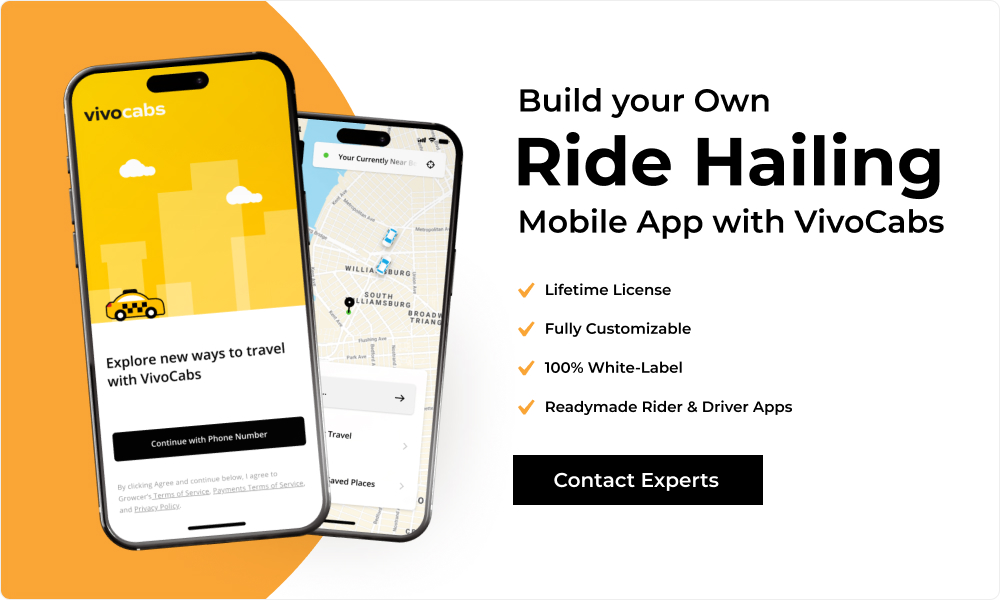
For businesses looking to combine an established ride-hailing technology foundation with the flexibility of custom development, VivoCabs offers a robust app and admin panel with all core functionalities, plus the customization and scalability needed to build a branded mobility platform tailored to specific business requirements.
Instead of building every standard ride-hailing component from scratch, businesses can use VivoCabs as the foundation for their passenger app, driver app, and admin dashboard, with customization aligned to their operational objectives.
The focus is not simply to launch another taxi booking app. The goal is to develop a mobility solution that reflects your business model, supports your operational workflows, and allows room for future enhancements.
With VivoCabs, businesses can discuss customization opportunities across several areas:
- Business-Specific Functionality: Adapt supported ride-booking workflows and platform features to align with your transportation business model.
- Branded Passenger and Driver Apps: Tailor the user experience and branding to the requirements of your target customers and driver network.
- Third-Party Integrations: Evaluate payment gateways, mapping services, communication tools, and other integrations required for your intended operations.
- Regional Requirements: Plan localization, payment configurations, and market-specific workflows for your intended European launch locations.
- Enterprise Mobility Requirements: Explore additional functionality, integrations, and operational workflows for larger transportation businesses, fleet operators, and mobility ventures.
- Deployment and Ongoing Support: Discuss suitable deployment arrangements, implementation requirements, and technical support based on the agreed project scope.
Whether you are planning to launch a mobility platform in the UK, establish a ride-hailing business in Germany, or expand transportation services across multiple European markets, the customization process should begin with a clear understanding of your operational and technical requirements.
VivoCabs provides a technology foundation for this purpose, while a detailed project assessment determines the final solution, integrations, and implementation scope.
Explore How Your Mobility Platform Build With VivoCabs Works
7. Launch and Market Your Mobility Platform
Your marketing strategy should be designed around the target consumer and geographic area you intend to serve.
A new mobility platform may need to attract both passengers and transportation providers. This creates a two-sided acquisition challenge: passengers want reliable driver availability, while drivers want sufficient booking demand.
Begin by defining the most valuable customer segment. Depending on the business model, this might include local commuters, tourists, hotels, corporate travel managers, event organizers, or established taxi operators.
Potential marketing activities include:
Local SEO: Create useful location-specific pages and accurate business listings for the areas you serve.
Paid search: Target relevant searches for airport transfers, corporate transport, taxi booking, or other services your business offers.
Business partnerships: Develop relationships with hotels, travel agencies, event organizers, employers, and fleet owners.
Referral programs: Encourage satisfied customers and drivers to recommend the service, subject to applicable promotional requirements.
Content marketing: Publish useful information about service areas, booking procedures, safety processes, and the transportation solutions you provide.
Driver recruitment: Promote the opportunity through appropriate local channels and partnerships.
Country-specific content can support search visibility when it addresses real local requirements. For example, a business can develop a page around “launch a mobility platform in the UK” if the content genuinely helps UK-focused operators understand the business and technology considerations involved.
Scale Into Additional European Markets
Once the platform has demonstrated demand in its initial market, evaluate expansion into additional cities or countries.
Do not assume that the operating model that succeeds in one location will automatically work elsewhere. Each new market may require different permissions, partnerships, languages, payment arrangements, vehicle categories, and customer acquisition strategies.
A practical expansion process involves:
- Reviewing the results and economics of the existing market.
- Researching the next target location and its regulatory framework.
- Identifying local transportation partners and driver supply.
- Reviewing localization and integration requirements.
- Testing the relevant workflows and customer experience.
- Launching in a controlled area before expanding further.
For example, a business that establishes an airport transfer service in the UK might later evaluate corporate transportation in Germany or tourism-focused transportation in Spain.
Market research and operational readiness should support the decision, not a desire to cover as many countries as possible.
Looking For A Software To Launch Your Mobility Platform?
Conclusion
Launching a mobility platform in Europe involves much more than launching an online booking application. Businesses must validate the market opportunity, select an appropriate operating model, understand local transportation regulations, recruit reliable drivers, establish a viable revenue model, and create a dependable customer experience.
The most effective starting point is a focused launch in a clearly defined market. Build around your intended customers’ needs, prioritize essential features, test real operating conditions, and expand only when the business shows sufficient demand and operational readiness.
Technology decisions should support this strategy. Whether you develop a platform from scratch or customize an established solution like VivoCabs, evaluate the software’s capabilities, integration options, security arrangements, and suitability for your long-term plans.
Launch Your Mobility Platform Now
Connect With UsPopular Posts