
Quick Overview:
The UAE has emerged as one of the Middle East’s most advanced mobility markets, where digital transportation services are steadily replacing traditional taxi booking methods. Featuring platforms such as Careem, Uber, Hala, Bolt, and Yango, this blog explores the factors behind their popularity, regional market dynamics, and service offerings. At the same time, it explains how VivoCabs enables entrepreneurs to build a localized, white-label ride-hailing platform tailored to the UAE’s regulatory requirements and evolving customer expectations.
In the heart of the Middle East, the United Arab Emirates (UAE) stands as a beacon of iconic skylines, smart cities, and a fast-paced lifestyle built around convenience. From the bustling financial districts of Dubai to the cultural heart of Abu Dhabi, the way people move across cities has undergone a radical transformation. Waiting on the roadside to hail a taxi has become a thing of the past. Instead, everyday mobility in the UAE is powered by intelligent, app-driven ride-hailing platforms designed for speed, comfort, and reliability.
Whether you are a resident navigating the daily commute or an entrepreneur seeking to tap into a multi-billion-dollar market, understanding the ride-hailing ecosystem in the UAE is essential. This guide highlights the leading platforms shaping urban transport in 2026 and outlines a clear path for building a successful, future-ready ride-hailing solution in the region.
Table of Contents
The Growing Ride-Hailing Industry in the UAE
The ride-hailing market in the UAE is not simply expanding; it is rapidly maturing and redefining how urban mobility works. Driven by technology, policy support, and changing consumer expectations, the sector continues to evolve at a remarkable pace. Several key factors are fueling this sustained growth. Let’s have a look at them:
- Urbanization and Smart City Initiatives: Dubai and Abu Dhabi are at the forefront of the smart city revolution. Government-led investments in integrated and intelligent transport systems have created an ecosystem where digital mobility platforms can scale efficiently and operate seamlessly.
- High Smartphone Penetration: With one of the highest smartphone and internet penetration rates globally, UAE residents are tech-savvy and prefer the convenience of app-based services for their speed, convenience, and real-time visibility.
- Large Expatriate Population: With more than 80% of the population being expatriates, there is a constant demand for reliable, transparently priced, and language-accessible transport options.
- Tourism-Driven Demand: As a global tourism hub, the UAE hosts millions of visitors annually. Tourists increasingly rely on trusted ride-hailing platforms to navigate unfamiliar cities safely and comfortably, further strengthening market demand.
- Sustainability and EV Adoption: In 2026, environmental responsibility has become a core industry focus. Strong government support for electric and hybrid vehicles has accelerated the transition toward greener fleets, aligning ride-hailing services with national sustainability goals.
According to Grand View Research, the ride-hailing sector in the UAE is expected to reach a valuation of over $1,364.7 million by 2030, growing at a CAGR (Compound Annual Growth Rate) of 15.7% from 2022 to 2030.
Top 5 Ride-Hailing Apps in the UAE (2026)
The UAE ride-hailing market is highly competitive, shaped by a mix of global heavyweights and strong regional players. Each platform has carved out its own space by aligning technology, pricing, and service quality with local user expectations. Below are the five ride-hailing apps that continue to dominate the UAE roads in 2026.
1. Careem (The Region’s Super App)
Careem’s journey from a regional startup to one of the Middle East’s most trusted digital platforms is deeply tied to its local roots. Even after becoming part of Uber’s global network, Careem has continued to operate with a strong regional identity. In 2026, it will be fully evolved into a super app that goes far beyond transportation, blending rides, food delivery, payments, and everyday services into a single experience.
– Why it Leads: Careem understands the local nuances. Whether it’s the “Careem Kids” service with pre-installed car seats or the “Hala Taxi” integration, it caters to every demographic.
– Key Features:
- Support for multiple currencies and payment methods
- Reward-based loyalty ecosystem through Careem Rewards
- Broad range of ride options, from budget-friendly to premium
Suggested Read: How to Build an App Like Careem: Compete Guide
2. Uber UAE
Uber continues to hold a strong position in the UAE, especially among professionals, corporate travelers, and international visitors. Its appeal lies in familiarity and consistency. In the UAE, Uber has leaned into the premium segment. The focus is on comfort, professionalism, and reliability, with carefully vetted drivers and high-end vehicles. Uber’s seamless interface and dependable service make it a trusted choice for both planned and on-demand travel.
– Why it Leads: Its global brand recognition and seamless user interface make it a go-to choice. Services like Uber Black cater to luxury-focused riders, while Uber Green reflects the country’s growing emphasis on sustainable transportation.
– Key Features:
- Ride scheduling and Uber Reserve for planned trips
- Premium vehicle categories and professional drivers
- Advanced safety measures, including PIN-based ride verification
3. Hala (The Smart Way to Catch a Dubai Taxi)
Hala represents one of the most practical mobility solutions in Dubai. Created through a partnership between the Roads and Transport Authority and Careem, it bridges the gap between traditional taxis and modern ride-hailing technology. Users can book official RTA taxis directly through the Careem app, combining regulation with convenience.
– Why it Leads: Since fares follow RTA’s official meter, pricing remains predictable and transparent. Backed by Dubai’s extensive taxi fleet, Hala often delivers faster pickup times and a cost-effective way to get around Dubai during peak hours.
– Key Features:
- Official RTA meter-based pricing
- No unexpected surge charges beyond RTA rules
- Quick arrivals supported by a large taxi network
4. Bolt
Bolt has steadily built its presence in the UAE by focusing on value-driven mobility. Rather than competing on luxury, the platform appeals to riders who want reliable transportation at competitive prices. Its approach of charging lower commissions to drivers allows Bolt to offer more affordable fares while maintaining service quality.
– Why it Leads: Bolt has become particularly popular among younger residents, freelancers, and budget-conscious users. It keeps things simple, prioritizing quick bookings, frequent promotions, and straightforward pricing. Its growing emphasis on electric vehicles also aligns with the UAE’s sustainability goals, adding long-term appeal.
– Key Features:
- Fast, no-friction ride booking
- Expanding electric and hybrid vehicle options
- Regular discounts and promotional pricing
5. Yango
Yango has carved out its niche in the UAE by placing technology at the center of its ride-hailing experience. Backed by the broader Yandex ecosystem, the platform uses proprietary mapping and routing systems designed to optimize trips in real time. This technology-first approach delivers practical benefits for riders and drivers alike. Smarter routing reduces wait times, improves pickup accuracy, and lowers overall trip costs.
– Why it Leads: Yango’s interface is exceptionally fast, responsive, and designed to work smoothly even on lower battery or slower connections. For users who value speed, efficiency, and clean design, Yango stands out as a modern alternative.
– Key Features:
- Advanced vehicle tracking and route optimization
- Battery-saving lightweight app mode
- Minimalist interface focused on performance
These platforms showcase the diversity of the UAE’s ride-hailing landscape in 2026, balancing luxury, affordability, regulation, and innovation to meet the needs of a highly dynamic market.
Suggested Read: How to Build a Ride-Hailing App Like Yango
Want to Create a Ride-Hailing App Similar to Uber?
Steps to Build a Ride-Hailing App in the UAE
The success of established ride-hailing platforms clearly shows that the UAE offers a strong and sustainable market for mobility startups. However, entering this space requires more than a good idea. Strict regulations, high user expectations, and intense competition mean that success depends on careful planning and execution. Below is a step-by-step approach to building a ride-hailing app that can operate and scale confidently in the UAE.
Step 1: Understand the Market & Legal Regulations
The first step in building a ride-hailing app in the UAE is gaining a clear understanding of the regulatory environment. Transportation is a highly regulated sector, and launching without proper approvals can quickly bring operations to a halt. To operate legally and smoothly, your platform must align with the following regulatory and compliance requirements.
- Regulatory Authorities: In Dubai, you must comply with the Roads and Transport Authority (RTA). In Abu Dhabi, it is the Integrated Transport Centre (ITC). Each authority has its own operational and compliance requirements.
- Licensing: You need a specific commercial license for “Electronic Map-Based Booking Services.”
- Safety & Security: All drivers must undergo background checks, and vehicles must meet specific standards, such as age of vehicle, insurance, and safety features.
- Data Protection: Ensure your app complies with the UAE’s Federal Data Protection Law to secure user information.
Step 2: Define Your Business Model
With regulatory clarity in place, the next step is deciding how your ride-hailing platform will operate and compete. Your business model should reflect your available capital, operational capacity, and long-term growth goals:
- Aggregator Model: You partner with existing taxi companies or private limousine fleets (like Uber/Careem). This approach reduces upfront investment and allows faster market entry.
- Ownership Model: You own the fleet of cars and employ the drivers. This requires more capital but offers more control over quality.
- Niche Focus: Differentiate your platform by targeting specific segments such as women-only rides, luxury chauffeur services, corporate transportation, or electric and eco-friendly vehicle fleets.
Choosing the right model early helps position your platform clearly in the market and lays a strong foundation for sustainable growth.
Step 3: Finalize Must-Have Features
A successful ride-hailing app must deliver a smooth experience for all stakeholders: riders, drivers, and administrators. Each panel should be designed to reduce friction, increase transparency, and support real-time decision-making.
The table below outlines essential and advanced features typically expected in a modern UAE-ready ride-hailing platform.
| Rider App | Driver App | Admin Panel |
| Live GPS tracking of the driver and the trip | Turn-by-turn navigation with live traffic | Real-time ride monitoring |
| Instant and scheduled ride booking | Trip request alerts and acceptance | Fleet and zone-based trip control |
| Fare estimates and digital invoices | Earnings per trip visibility | Pricing rules and commission setup |
| Cards, wallets, and cash options | Automated payout tracking | Payment reconciliation and reports |
| SOS button and emergency support | Passenger ratings and feedback | Driver verification and compliance checks |
| Ride cancellation and trip history | Active and inactive status toggle | Driver and vehicle onboarding |
| Promo codes and loyalty rewards | Incentives and performance tracking | Promotions and referral campaigns |
| In-app chat and call with the driver | In-app chat and call with the rider | Dispute resolution and support tools |
| Trip history and receipts | Demand heatmaps and trip summaries | Advanced analytics and demand forecasting |
| Secure login and data privacy | Document upload and verification | Role-based access and audit reports |
Create a Feature-Packed Ride-Hailing App Suitable for the UAE
Step 4: Choose the Right Technology Partner
Choosing the right technology partner directly impacts how quickly and successfully your ride-hailing app enters the UAE market. Beyond development, the right partner ensures your platform is stable, scalable, and compliant from day one.
In a regulated and competitive environment like the UAE, an experienced ride-hailing technology partner helps you avoid delays, compliance risks, and performance issues. A proven partner delivers a future-ready platform capable of supporting real-time tracking, secure payments, multi-city operations, and evolving mobility features.
Step 5: Launch and Promote Your Platform
With the foundation in place, the final step is launching your platform and driving early adoption. Start with a focused launch in a single city or zone to validate operations and onboard drivers efficiently.
Promote your app through targeted digital campaigns, referral programs, and strategic local partnerships. As traction builds, expand into additional emirates while continuously optimizing performance, user experience, and service quality to support long-term growth.
What to Look for in a Ride-Hailing Technology Partner
Choosing the right technology partner can define the success or failure of your ride-hailing business. Beyond building the app, your partner should understand the operational realities of running a mobility platform and support your growth at every stage.
1. Proven Experience in Ride-Hailing Solutions
Ride-hailing is a complex ecosystem that combines real-time tracking, payments, driver management, dynamic pricing, and high-volume transactions. A technology partner with proven experience in ride-hailing solutions understands these complexities deeply.
An experienced partner brings:
- Market-tested system architecture
- Efficient dispatch and driver-matching algorithms
- Deep understanding of rider and driver behavior
- Experience handling peak-hour demand and surge scenarios
- Awareness of common operational and scaling challenges
This reduces trial-and-error development and ensures your platform launches with stability and performance from day one.
2. Ready-Made, Customizable Software
Building a ride-hailing app entirely from scratch can take 9 to 12 months and involves high cost and risk. A ready-made solution shortens time-to-market and minimizes technical uncertainty.
However, customizability is just as important as readiness. Your platform must adapt to:
- Local branding requirements
- Unique pricing and commission models
- Regional payment gateways
- Specific rider or driver workflows
A strong technology partner offers a ready-made core system that can be fully customized to match your business goals and local market needs.
3. Compliance-Ready Architecture
The UAE has strict regulations around transportation, data protection, payments, and driver operations. Your ride-hailing platform must be built with compliance in mind.
A reliable technology partner provides:
– Secure data storage and encryption
– Compliance-friendly system architecture
- Configurable workflows aligned with RTA and local authority rules
- Secure payment processing that meets regional standards
- Role-based access controls and audit trails
This helps avoid costly rework, penalties, or operational shutdowns later.
4. Scalability for Multi-City or Multi-Country Expansion
Many ride-hailing startups begin in one city but aim to expand across multiple emirates or even internationally. Your technology partner should offer a platform designed to scale without major redevelopment.
Key scalability factors include:
– Multi-city and multi-zone operations
– Region-specific pricing and regulatory configurations
- High-performance infrastructure for growing user volumes
- Modular architecture for introducing new services
Scalable technology ensures your business can grow without technical limitations slowing you down.
5. Ongoing Technical Support and Upgrades
Ride-hailing platforms require continuous improvement to remain competitive. Continuous updates, security patches, performance improvements, and feature enhancements are essential for long-term success.
A reliable technology partner provides:
- Dedicated post-launch technical support
- Regular system and security updates
- Performance monitoring and optimization
- Feature upgrades aligned with market trends
- Assistance with scaling and expansion
This ongoing partnership ensures your platform remains competitive and reliable as the market evolves.
Why VivoCabs Is Ideal for the UAE Market?
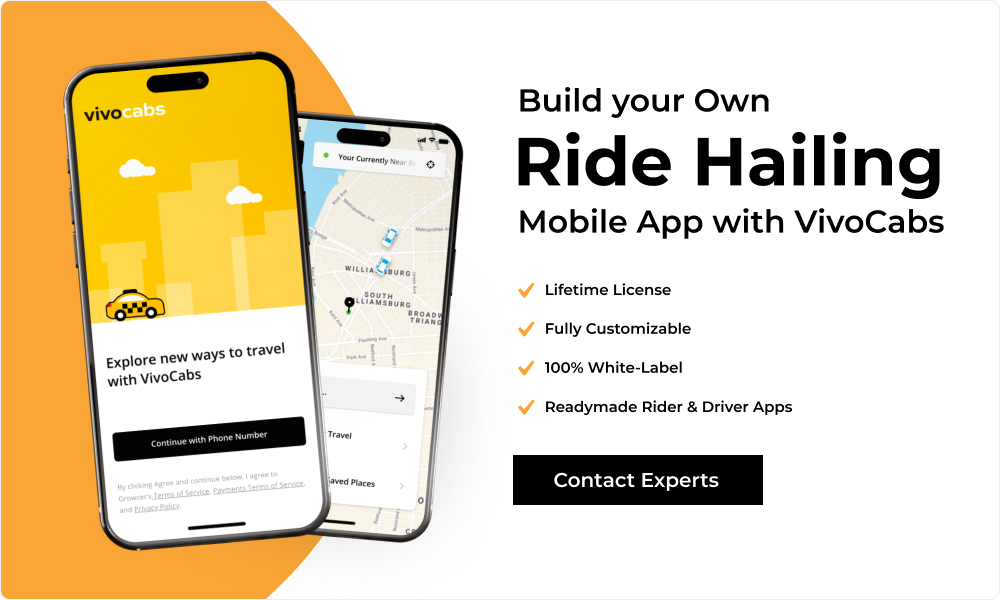
With a fast-evolving mobility ecosystem and strict regulatory expectations, the UAE demands a ride-hailing platform that is flexible, secure, and built to scale. VivoCabs is a readymade software solution designed to meet these requirements, making it a strong fit for businesses looking to launch or expand ride-hailing operations in the region.
1. UAE-Ready & Scalable Architecture
VivoCabs is built to support the UAE’s diverse and multicultural, multi-city environment. The solution is designed to operate seamlessly across different emirates while accommodating varied user needs. It supports:
- Multi-city operations across different emirates
- Multi-language support for riders and drivers
- Multi-currency configurations
- Flexible pricing and commission rules
This makes VivoCabs an ideal solution for businesses targeting residents, tourists, and corporate users across the UAE.
2. Faster Time-to-Market
Speed is a major competitive advantage in the ride-hailing industry. VivoCabs allows businesses to launch their ride-hailing platform in weeks instead of months, enabling them to capitalize on market opportunities faster.
With a proven and stable codebase, entrepreneurs avoid:
- Long development cycles
- Costly technical delays
- Unpredictable development risks
This faster launch helps you begin onboarding drivers and acquiring riders sooner.
3. Fully Customizable to Match Your Business Vision
While VivoCabs offers a ready-made foundation, it does not restrict your creativity or business strategy. The software is fully customizable, allowing you to tailor:
- App branding and UI/UX
- Ride types and service categories
- Pricing models and commissions
- Driver onboarding workflows
- Promotions, referrals, and loyalty programs
This level of customization ensures your platform remains differentiated in a competitive market.
4. Advanced Admin Control & Analytics
Managing a ride-hailing business requires complete visibility into operations. VivoCabs provides a powerful admin dashboard that enables you to:
- Monitor rides, drivers, and vehicles in real time
- Control pricing, commissions, and surge rules
- Analyze revenue and performance metrics
- Manage disputes, cancellations, and refunds
- Launch promotions and referral campaigns
This centralized control helps you make data-driven decisions and optimize operations efficiently.
5. Secure, Reliable & Enterprise-Grade
Security and reliability are essential in the UAE market. VivoCabs is built with enterprise-grade security standards, ensuring:
- Secure user data handling
- Encrypted transactions
- Reliable payment processing
- High system uptime
- Protection against fraud and misuse
This builds trust with users, drivers, and regulatory authorities alike.
6. Cost-Effective Alternative to Custom Development
Custom development often involves high upfront costs, long timelines, and ongoing maintenance challenges. VivoCabs offers a cost-effective alternative by providing:
- Lower initial investment
- Predictable development costs
- Faster ROI
- Full ownership of the platform
With VivoCabs, businesses gain the benefits of a mature ride-hailing system without the financial and technical risks associated with building from scratch.
Schedule a Personalized Demo to VivoCabs in Action
Conclusion
The UAE ride-hailing market is entering a new phase of growth and innovation as we move toward 2026. Strong user demand, progressive transport policies, and a highly tech-savvy population continue to create a favorable environment for both new entrants and expanding mobility businesses.
While established players of the industry like Careem and Uber dominate today, there is still room for localized, niche, and innovative ride-hailing platforms that address specific user needs. However, long-term success in this space depends on a clear understanding of the market, strict regulatory compliance, a well-defined business model, and the support of a reliable technology partner capable of scaling with your vision.
Frequently Asked Questions (FAQs)
Q 1. Is it legal to launch a ride-hailing app in the UAE?
Ans. Yes, it is legal to launch a ride-hailing app in the UAE. However, it requires strict compliance with local transport authorities. In Dubai, approvals are governed by the Roads and Transport Authority (RTA), while Abu Dhabi follows regulations set by the Integrated Transport Centre (ITC).
Hence, businesses must obtain the appropriate commercial license, ensure driver and vehicle compliance, and follow data protection and payment security regulations.
Q 2. How much does it cost to build a ride-hailing app in the UAE?
Ans. The cost to build a ride-hailing app in the UAE depends on the development approach. Custom development can cost significantly more and take 9-12 months. On the other hand, using a ready-made solution like VivoCabs drastically reduces both development cost and time by providing a proven, customizable platform with all essential features already built in.
Q 3. How long does it take to launch a ride-hailing app using VivoCabs?
Ans. With VivoCabs, a fully functional ride-hailing app can be launched in a few weeks, depending on customization requirements. Since the core system is already developed and tested, businesses can focus on branding, regulatory approvals, and onboarding drivers instead of lengthy development cycles.
Q 4. Can VivoCabs support multi-city operations across different emirates?
Ans. Yes, VivoCabs is designed with a multi-city and multi-zone architecture, making it ideal for operating across different emirates such as Dubai, Abu Dhabi, Sharjah, and beyond. This robust solution allows different pricing rules, commissions, and operational settings for each city or region.
Q 5. Is VivoCabs suitable for niche ride-hailing businesses?
Ans. Yes, VivoCabs is suitable for niche ride-hailing businesses. It is highly flexible and can be customized for niche ride-hailing models such as:
- Women-only ride services
- Luxury or chauffeur-driven cars
- Corporate or employee transport
- Electric or eco-friendly vehicle fleets
This makes it an ideal solution for startups looking to differentiate themselves in the UAE market.
Q 6. Who owns the ride-hailing platform built using VivoCabs?
Ans. When you launch a ride-hailing app using VivoCabs, you retain full ownership of the platform. Unlike SaaS or revenue-sharing models, VivoCabs provides a white-label solution that allows complete control over branding, data, operations, and revenue.
Launch Your Own Secure & Scalable Mobility Marketplace
Get StartedPopular Posts