

Published date: 22nd October, 2026
TL; DR
- Chauffeur apps typically include a customer app, a driver app, and an admin dashboard. A web booking interface or corporate portal is optional.
- Choose your business model first (on-demand, scheduled, luxury, corporate, or marketplace), because it determines features and workflows.
- Prioritize advance booking, vehicle selection, transparent fares, secure payments, real-time notifications, and driver assignment.
- You can build from scratch for maximum control, or customize ready-made ride-hailing software for faster launch and lower upfront investment.
- Budget for the total cost of ownership, including hosting, third-party APIs, maintenance, security updates, and marketing, not just the development quote.
- VivoCabs, a white-label, self-hosted ride-hailing solution by FATbit Technologies, is an ideal technology foundation for Chauffeur app development.
The chauffeur service industry is thriving, owing to the increasing demand and booking of cars becoming easier. User-friendly apps with practical and helpful features give this industry an edge.
It has been more than a decade since cabs through chauffeur apps have been used for everyday commutes, and the demand is increasing tremendously. The increased demand gives an opportunity to fill this gap and tap into the chauffeur app development business.
The features that a chauffeur app provides decide the success and usability of that app. With so many apps in the market, customers want features like convenient bookings, transparent pricing, professional drivers, real-time trip updates, and seamless digital payment options. Traditional chauffeur businesses can manage growing booking volumes through chauffeur app development while giving a consistent experience.
Dedicated mobile applications can help centralize management operations and give opportunity to businesses to digitize these operations.. Whether you want to launch a luxury chauffeur service, corporate transportation business, airport transfer platform, or on-demand private driver service, a well-designed app can streamline bookings, manage drivers, and improve service delivery.
This Chauffeur app development guide explains how it works, the essential features to consider, the available development approaches, and the steps involved in launching a chauffeur booking platform.
Table of Contents
- What Is Chauffeur App Development?
- Why Invest in Chauffeur App Development?
- Different Business Models for Chauffeur Booking Apps
- Essential Components of a Chauffeur Booking App
- Key Features to Include in Chauffeur App Development
- Advanced Features That Can Differentiate a Chauffeur App
- How to Develop a Chauffeur Booking App
- How Much Does Chauffeur App Development Cost?
- Launch a Customized Chauffeur Booking App With VivoCabs
- Why Consider VivoCabs for Chauffeur App Development?
- Is VivoCabs Suitable for Your Chauffeur Business?
- Conclusion
- Frequently Asked Questions
What Is Chauffeur App Development?
Chauffeur app development is the process of building mobile apps that let customers book professional drivers for scheduled journeys, airport transfers, corporate travel, luxury transportation, and other private transportation services.
Unlike a conventional taxi booking app that focuses on immediate rides, chauffeur booking platforms often support advance reservations, hourly bookings, fixed-route transfers, premium vehicle categories, and personalized transportation needs.
A complete chauffeur booking solution typically includes a customer-facing app, a driver app, and an admin dashboard. Depending on the business model, it may also include a website, a corporate booking portal, fleet management tools, and third-party integrations.
For example, a luxury transportation company could use its chauffeur app to let customers reserve a premium vehicle for an airport pickup several days in advance. The driver could receive the request through a dedicated app, while the administrator manages reservations, payments, and service status from a centralized dashboard.
The primary objective is to simplify the entire booking process while maintaining the professionalism and service quality expected from chauffeur businesses.
Why Invest in Chauffeur App Development?
Many transportation businesses can expand and go digital with a chauffeur app. Also, some new businesses can be established to target small areas with premium and personalized services. So, there is still a gap to explore and use to build a successful business. Furthermore, integrating robust digital booking capabilities helps optimize chauffeur app development. There are multiple reasons to invest in chauffeur app development, which we discuss in detail below.
1. Simplify the Booking Process
Customers can browse available services, select pickup and drop-off locations, choose a vehicle category, and easily reserve a chauffeur through an app instead of contacting the business manually via calls or email
Advance booking and scheduling options are particularly useful for airport transfers, business meetings, weddings, special occasions, and executive transportation.
2. Improve Customer Experience
A dedicated application gives customers access to booking confirmations, driver details, trip notifications, payment information, and reservation history.
These features reduce uncertainty and help customers stay informed throughout the transportation process which enhances the overall experience
3. Streamline Driver Management
Managing drivers through spreadsheets, phone calls, and messaging applications becomes increasingly complicated as a business expands.
A chauffeur platform can centralize driver profiles, availability, assignments, schedules, and trip status. This helps administrators coordinate reservations more efficiently.
4. Expand Service Coverage
A digital platform can support operations across multiple cities, service zones, airports, and corporate locations, depending on its configuration.
Businesses can expand their service offerings without relying entirely on manual processes to coordinate every new booking.
5. Support New Revenue Opportunities
Chauffeur businesses can introduce additional services such as hourly chauffeur hire, corporate travel accounts, premium airport transfers, event transportation, and recurring reservations.
The right platform can also support business partnerships with hotels, travel agencies, event organizers, and corporate clients.
Different Business Models for Chauffeur Booking Apps
Before starting chauffeur app development, it is important to identify the business model. The model determines the required features, operational workflows, payment structure, and level of customization.
1. On-Demand Chauffeur/Taxi Booking
This model allows customers to request a chauffeur for an immediate or near-immediate journey. The platform assigns requests to available drivers based on location, availability, service area, and other configured criteria.
It is suitable for businesses that want to combine professional driver services with the convenience of app-based transportation.
2. Scheduled Chauffeur Services
Scheduled chauffeur apps focus on advance reservations. Customers can book transportation for a specific date and time, making this model particularly relevant to airport transfers, executive travel, and special events. Airport taxi services can also serve as a subniche for businesses focused on airport transfers.
The platform should support reservation management, scheduling, driver assignment, and notifications for upcoming trips.
3. Luxury Chauffeur Services
Luxury chauffeur businesses typically offer premium vehicles and personalized transportation experiences. Customers may include VIPs, executives, tourists, celebrities, and people attending special occasions.
Features such as vehicle category selection, service packages, flight information, special requests, and dedicated customer support can help support this business model.
4. Corporate Chauffeur Services
Corporate transportation platforms serve businesses that arrange transportation for employees, executives, clients, and visiting teams.
Useful capabilities include centralized corporate accounts, employee booking permissions, billing controls, trip reports, and consolidated invoices.
5. Chauffeur Marketplace
A chauffeur marketplace connects customers with multiple independent chauffeur operators or transportation providers.
In this model, the platform owner may need workflows for provider registration and verification, commission management, service listings, payment distribution, and dispute handling.
The marketplace’s functionality and features depend on how providers join, receive bookings, and manage their services.
Want To Launch App In One Of Chauffeur Business Models
Essential Components of a Chauffeur Booking App
A chauffeur booking platform generally requires three core components: a customer app, a driver app, and an admin dashboard. Businesses may also need a web booking interface or a corporate portal.
1. Customer App
The customer app allows users to search for chauffeur services, make reservations, manage bookings, and complete payments.
Its interface should be straightforward, especially for customers who need to arrange transportation quickly or schedule an important journey in advance.
2. Driver App
The driver app helps chauffeurs manage their availability, receive assigned bookings, access trip details, and update journey status.
It should provide the information required to complete each assignment while minimizing distractions during driving.
3. Admin Dashboard
The administration dashboard provides centralized control over customers, chauffeurs, vehicles, reservations, payments, service areas, and business settings.
Depending on the business model, administrators may also require reporting tools, promotional campaign management, corporate account administration, and operational monitoring.
4. Web Booking Interface
A mobile-friendly website lets customers book chauffeur services without downloading an app. This is particularly useful for visitors, corporate travel coordinators, and customers making one-time reservations.
Businesses can also use their websites to showcase service categories, vehicle options, coverage areas, and booking policies.
Key Features to Include in Chauffeur App Development
The features required for a chauffeur booking app depend on the target audience, service model, and operating procedures. The following capabilities provide a practical starting point.
Customer App Features
- User registration and profile management: Allow customers to create accounts, manage contact information, save preferences, and review their booking history.
- Location selection and route planning: Enable customers to enter pickup and destination details, select airport terminals where applicable, and review journey information before booking.
- Advance booking and scheduling: Allow users to reserve a chauffeur for a future date and time. This is especially important for airport transfers, business travel, and planned events.
- Vehicle selection: Display available vehicle categories, passenger capacity, luggage information, and other relevant details to help customers choose a suitable option.
- Fare estimation and transparent pricing: Show estimated or fixed fares before confirmation, depending on the service type and business-configured pricing rules.
- Secure payment options: Support suitable payment methods, such as cards and digital payment services, according to the target market and payment provider.
- Booking management: Let customers review, modify, or cancel reservations according to the applicable booking policy.
- Real-time notifications: Send booking confirmations, chauffeur assignment updates, arrival notifications, and trip status alerts.
- Driver details and trip tracking: Display relevant chauffeur information and, where supported, the driver’s location and estimated arrival time.
- Ratings and feedback: Collect customer feedback to help businesses monitor service quality and identify areas for improvement.
Driver App Features
- Driver registration and verification: Collect the driver’s details, licenses, identification documents, and other information the business requires.
- Availability management: Let chauffeurs indicate when they are available to receive assignments, subject to the platform’s scheduling rules.
- Booking assignments: Provide details about assigned trips, including pickup locations, scheduled times, destinations, and relevant customer instructions.
- Navigation integration: Connect drivers with mapping and navigation services to support route planning and efficient journey completion.
- Trip status updates: Let chauffeurs update a booking’s status as they accept an assignment, arrive at the pickup location, start the trip, and complete the journey.
- Earnings and trip history: Provide access to completed bookings, applicable earnings information, and relevant payment records.
- Document and license alerts: Notify drivers and administrators when required documents are approaching their expiration dates.
Admin Dashboard Features
- Booking management: View reservations, assign chauffeurs, manage schedules, and monitor trip progress from one place.
- Driver and vehicle management: Maintain driver profiles, vehicle details, availability records, and verification information.
- Pricing and service configuration: Configure rates based on distance, duration, vehicle category, service type, location, or other supported business rules.
- Payment and commission management: Track transactions, refunds, applicable commissions, and settlement records according to the business model.
- Customer management: Access customer profiles, booking histories, feedback, and support-related information.
- Reports and analytics: Review booking volumes, revenue, cancellations, driver activity, and other relevant business indicators.
- Service area management: Define supported cities, operational zones, pickup locations, and other geographic restrictions.
- Promotions and discounts: Configure promotional codes, customer offers, and campaigns where required.
Advanced Features That Can Differentiate a Chauffeur App
Basic booking capabilities may suffice for a small operator, but businesses targeting corporate clients or premium transportation markets may need more advanced features.
1. Corporate Account Management
Corporate customers may need to book rides for employees and visitors, control who can make reservations, and receive consolidated invoices. Dedicated account permissions and reporting can make the platform more suitable for business travel operations.
2. Flight Tracking and Airport Pickup Coordination
Airport transfer services can benefit from flight information integrations that help operators monitor arrival changes and coordinate pickups. The exact functionality depends on the flight data provider and the integration implemented.
3. Automated Driver Assignment
Assignment rules can help allocate bookings based on driver availability, location, vehicle category, scheduled commitments, and other business requirements.
For pre-booked chauffeur services, the system should also account for existing reservations and the time needed to reach the next pickup.
4. Multiple Stops and Hourly Bookings
Customers may require several destinations within one journey or a chauffeur for a specified number of hours. Supporting these booking types can make the platform suitable for sightseeing, corporate itineraries, shopping trips, and special events.
5. Multi-City and Multi-Language Support
Businesses operating internationally may need different service areas, currencies, languages, payment options, and pricing rules.
Plan these capabilities around the intended markets rather than adding them without considering local operational requirements.
6. Customer Support and Booking Assistance
Integrated support tools can help customers resolve booking issues, communicate special requirements, and get help during their journey.
The right setup may include in-app communication, support tickets, or integrations with external customer service platforms.
Build a Feature-Rich Chauffeur Mobility Platform
How to Develop a Chauffeur Booking App
Developing a chauffeur platform involves more than building mobile interfaces. The booking workflow, dispatch logic, driver operations, payment process, and administrative controls must work together.
Step 1: Define Your Business Requirements
Start by identifying the services you plan to offer, the customers you want to serve, and the locations in which you intend to operate.
Determine whether the platform will support on-demand rides, advance reservations, airport transfers, corporate accounts, luxury vehicles, or a combination of services.
Also establish how you will recruit drivers, assign bookings, collect payments, and handle cancellations.
These decisions create the foundation for feature planning and technical development.
Step 2: Research the Market and Competitors
Study existing chauffeur services and transportation platforms operating in your target markets.
Examine their booking journeys, vehicle categories, pricing structures, customer reviews, cancellation policies, and service offerings.
The purpose is not to replicate another application. Instead, identify customer expectations, underserved segments, and opportunities to differentiate your business through service quality or operational convenience.
Step 3: Prepare the Feature and Workflow Specification
Document the functionality required for each application component.
For example, a scheduled airport transfer may involve a customer reservation, fare calculation, payment authorization, chauffeur assignment, pickup notification, trip completion, and final payment processing.
Mapping these workflows early helps developers understand how components should collaborate and reduces the risk of making expensive operational changes later.
Step 4: Choose a Development Approach
Once your business requirements are clear, the next step is to decide how to build your chauffeur booking platform. The two primary approaches are custom development from scratch and ready-made ride-hailing software with customization.
Both approaches can help you launch a chauffeur booking app, but they differ in development effort, initial investment, launch time, and flexibility. For businesses looking to enter the market without spending excessive time and resources building standard functionality, ready-made software with customization is often the more practical choice.
Option 1: Custom Development From Scratch
Custom development involves building the entire platform from the ground up, including customer and driver applications, the administration dashboard, booking workflows, payment integrations, and backend infrastructure.
This approach offers extensive control over the product but requires significant planning, engineering, testing, and ongoing maintenance.
Pros:
- Flexibility to develop highly specialized business workflows.
- Freedom to design features around unique operational requirements.
Cons:
- Higher initial development costs in many cases.
- Longer development and testing cycles.
- Requires more resources to build and maintain core functionality.
- Additional time and investment may be needed to introduce new features or expand the platform.
Option 2: Ready-Made Ride-Hailing Software With Customization
Ready-made ride-hailing software provides an existing technological foundation with core functionality you can configure or customize for your business. Instead of developing every component from scratch, you can use the available features and focus development efforts on the specific requirements of your chauffeur service.
For example, a business launching luxury chauffeur services may need to customize booking workflows, vehicle categories, advance reservations, or corporate transportation features without rebuilding the entire ride-hailing system.
Pros:
- Faster time to market: Start with existing functionality rather than building every core component from scratch.
- Lower initial investment in many cases: Reduces development costs for standard booking and ride-management features.
- Customization flexibility: Adapt supported workflows, branding, integrations, and other functionality to your business requirements.
- Simplified development planning: Begin with an existing foundation and prioritize the additional features your business needs.
- Easier future expansion: Build on the existing platform as your operational requirements evolve, subject to its architecture and customization capabilities.
Cons:
- Customization options vary depending on the software provider and underlying architecture.
You need to evaluate the software’s existing features, deployment model, technical support, and long-term maintenance arrangements before making a decision.
Which Approach Should You Choose?
For most businesses looking to launch a chauffeur booking platform, ready-made ride-hailing software with customization is a sensible starting point. It can reduce the effort required to build standard functionality while leaving room to tailor the platform to your brand, customers, and operational model.
Consider custom development from scratch when your business requires a highly specialized architecture or workflows that existing solutions cannot accommodate.
Before deciding, compare total investment, launch requirements, customization scope, software ownership arrangements, and ongoing maintenance responsibilities. The objective is to choose a solution that meets your current needs without creating unnecessary development costs or limiting future growth.
Step 5: Launch, Promote, and Grow Your Chauffeur Business
Once your chauffeur booking app is ready, focus on marketing that attracts customers, generates bookings, and builds brand awareness.
- Identify your target audience: Focus on customer segments such as corporate travelers, luxury transportation customers, airport transfer users, and event organizers.
- Optimize for search engines: Target relevant keywords such as chauffeur services near me, luxury chauffeur service, and airport chauffeur booking to attract users searching for these services.
- Invest in local SEO: Optimize your Google Business Profile and create location-specific landing pages to improve visibility in your service areas.
- Run targeted advertising campaigns: Use Google Ads and social media ads to reach potential customers based on location, interests, and transportation needs.
- Build strategic partnerships: Collaborate with hotels, travel agencies, event planners, and corporate organizations to generate regular bookings and business referrals.
- Encourage reviews and referrals: Ask satisfied customers to share reviews and recommend your chauffeur services. Consider referral incentives and loyalty programs to encourage repeat bookings.
- Promote your mobile app: Use your website, social media profiles, email campaigns, and existing customer networks to encourage app downloads and direct bookings.
How Much Does Chauffeur App Development Cost?
The cost of chauffeur app development depends on how the platform is built, the features it includes, the number of applications required, and the level of customization involved. Businesses can either invest in custom development from scratch or use ready-made ride-hailing software and customize it to meet their operational requirements.
Building a chauffeur booking platform from scratch requires developing core components such as customer and driver applications, an admin dashboard, booking management, payment processing, and backend infrastructure. In contrast, ready-made software provides an existing technological foundation, allowing businesses to focus their investment on customization, integrations, and features that differentiate their services.
The following table provides illustrative planning estimates for different development approaches. Actual costs may vary significantly depending on the project scope, development team, location, and technical requirements.
| Development Approach | Indicative Cost |
| Basic chauffeur booking app | $10,000–$25,000 |
| Custom platform with customer and driver apps | $25,000–$60,000 |
| Advanced chauffeur platform with complex integrations | $60,000–$150,000+ |
| Enterprise platform with extensive custom development | $150,000+ |
| Ready-made ride-hailing software with customization | Depends on the software license and customization scope |
Please note: These figures are illustrative, not verified market averages or vendor quotes. They should not be treated as directly equivalent project quotes because each approach may include a different scope of work.
Why Does Chauffeur App Development Cost Vary?
Several factors influence the total investment required to launch a chauffeur booking platform.
- Number of applications: A platform may require separate customer and driver apps, an administration dashboard, a web booking interface, and a corporate booking portal. Each additional component increases development and testing requirements.
- Feature complexity: Basic booking functionality requires less effort than advanced capabilities such as scheduled reservations, automated driver assignment, hourly bookings, corporate billing, and multi-city operations.
- Third-party integrations: Mapping services, payment gateways, flight tracking, SMS notifications, and customer support tools can add integration costs and recurring usage fees.
- Customization requirements: Businesses that need unique booking workflows, specialized pricing rules, custom interfaces, or additional business logic may require more development work.
- Infrastructure and deployment: Hosting, server configuration, monitoring, security, and performance optimization contribute to the overall cost of operating the platform.
- Maintenance and support: Include application updates, bug fixes, security patches, compatibility improvements, and technical support in the long-term budget.
Can Ready-Made Software Reduce Chauffeur App Development Costs?
Yes. Ready-made ride-hailing software can significantly reduce development costs because businesses don’t need to rebuild every core component from scratch.
Depending on the solution and project scope, a ready-made software with customization may cost up to 5x less than a comparable custom-built solution. However, this is a potential cost advantage, not a guaranteed industry-wide saving. The actual difference depends on the software license, required customization, integrations, and ongoing maintenance.
For example, a business launching a chauffeur service may not need to develop customer registration, driver management, booking workflows, and administrative controls independently if suitable functionality is already available. Instead, it can use the existing foundation and allocate resources to service-specific features, branding, and customer acquisition.
Before choosing an approach, compare total cost of ownership, not just the initial development quote. Consider licensing, customization, infrastructure, third-party services, maintenance, and future enhancements. This will help you select a solution that fits your budget without compromising essential business requirements.
Launch a Customized Chauffeur Booking App With VivoCabs
Launching a chauffeur booking business doesn’t require building every component of a ride-hailing platform from scratch. An existing software foundation can reduce development effort while keeping the flexibility to tailor the platform to your brand and operational needs.
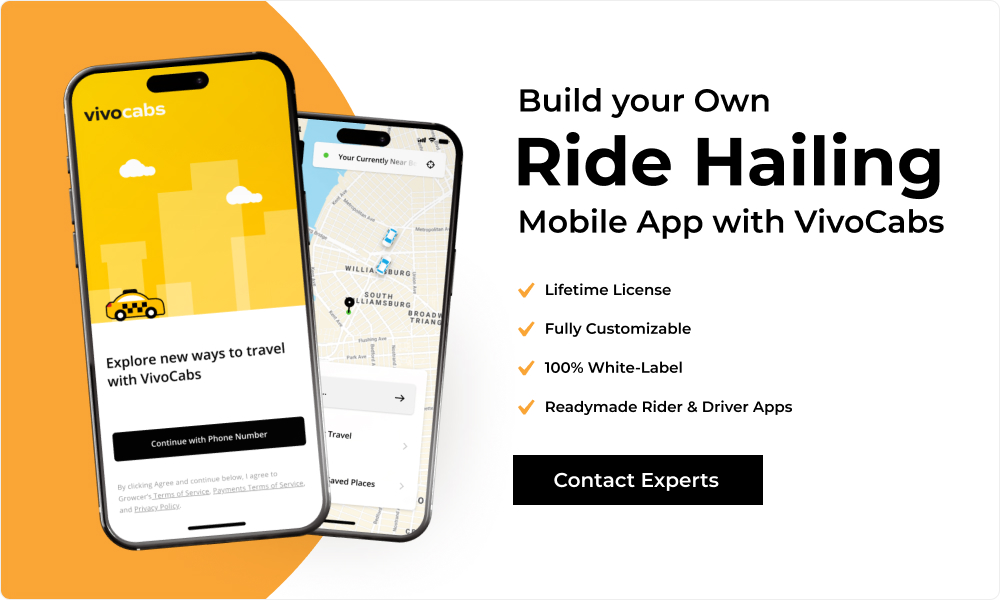
VivoCabs, developed by FATbit Technologies, is a white-label, self-hosted ride-hailing software solution designed for businesses that want to launch their own branded transportation mobility platforms. Businesses exploring chauffeur app development can use VivoCabs as a starting point and see how its existing functionality fits their service model.
Why Consider VivoCabs for Chauffeur App Development?
1. White-Label Ride-Hailing Foundation
VivoCabs enables businesses to establish their own branded ride-hailing mobility platform rather than relying on a third-party consumer transportation brand. This provides a foundation for developing a distinct identity in the chauffeur and private transportation market.
2. Customer and Driver Applications
The platform provides a foundation for customer and driver ride-hailing applications. Businesses can assess the existing functionality and identify additional requirements for their intended chauffeur-booking experience.
Launch Your Rider and Driver Applications
3. Centralized Administrative Management
A centralized administration system supports the management of ride-hailing operations. The specific controls and workflows required for scheduled chauffeur bookings, corporate transportation, and premium services should be reviewed during project planning.
4. Customization for Business Requirements
Every chauffeur business has its own operational needs. Some prioritize advance reservations and airport transfers, while others focus on corporate travel, hourly chauffeur hire, or premium vehicle categories.
VivoCabs can be evaluated for customization opportunities that align its ride-hailing foundation with these requirements. Features that are not available as standard functionality should be confirmed separately.
5. Self-Hosted Deployment
VivoCabs follows a self-hosted deployment model, allowing businesses to deploy the software in their chosen hosting environment. The implementation plan should include hosting configuration, infrastructure management, security, and ongoing maintenance.
6. A Practical Alternative to Building Everything From Scratch
By starting with an existing ride-hailing software foundation, businesses may reduce the core functionality they need to develop independently. This can help focus the development budget on customization, integrations, and business-specific features instead.
The actual savings and launch timeline depend on the existing functionality, required changes, and project scope.
Is VivoCabs Suitable for Your Chauffeur Business?
VivoCabs is a robust software solution for launching a branded chauffeur service, private driver platform, airport transfer business, or other ride-hailing operation.
Before proceeding, identify the booking workflows your business requires and confirm which capabilities are available, which can be customized, and which may require additional development.
Explore the VivoCabs ride-hailing software solution and discuss your requirements with FATbit Technologies to determine whether the platform can support your chauffeur business goals.
Get Your Chauffeur App Developed
Conclusion
Chauffeur app development offers businesses an opportunity to modernize their booking operations, improve the customer experience, and build a scalable transportation service. Whether you plan to provide airport transfers, executive transportation, corporate travel, or luxury chauffeur services, the right digital platform can help you manage bookings, coordinate drivers, process payments, and build lasting customer relationships.
However, success depends on more than developing an app. You need to choose the right business model, prioritize essential features, plan your customer acquisition strategy, and ensure reliable day-to-day operations. Your development approach also heavily influences the overall investment and time required to launch.
Building from scratch may suit businesses with highly specialized requirements, but it can involve substantial development costs and longer implementation timelines. Ready-made chauffeur app software with customization can be a more cost-effective alternative, potentially costing up to five times less than comparable custom development, depending on the project scope. This approach allows businesses to start with an established software foundation and adapt it to their branding, workflows, and growth plans.
Frequently Asked Questions
Is ready-made chauffeur app software suitable for an established transportation business?
Yes. Ready-made chauffeur app software can suit established transportation companies looking to digitize bookings, expand into new markets, or launch a branded digital service. The key is to evaluate whether the software supports your existing workflows, business model, integrations, and future expansion plans. A customizable solution can reduce the need to build core functionality from scratch while allowing the platform to adapt to specific operational requirements.
How much can a business save by choosing ready-made chauffeur app software over custom development?
The savings depend on the project’s scope, required features, integrations, and ongoing maintenance needs. A ready-made solution can potentially cost up to five times less than comparable custom development because the core software foundation already exists. However, businesses should compare the total cost of ownership, including licensing, customization, deployment, hosting, support, and future upgrades, rather than comparing initial development quotes alone.
Can ready-made chauffeur software be customized for a specific business model?
Yes, depending on the software’s architecture and customization capabilities. Businesses may need to support airport transfers, executive transportation, corporate accounts, hourly chauffeur bookings, scheduled reservations, or premium vehicle categories. Before selecting a solution, confirm which workflows can be configured, which require custom development, and whether the required integrations are technically feasible.
What should businesses evaluate before selecting a chauffeur app development company?
Decision-makers should assess the provider’s experience with booking and mobility platforms, customization capabilities, deployment options, source-code access, integration support, security practices, and post-launch assistance. It is also important to clarify project ownership, third-party software dependencies, upgrade policies, service-level expectations, and the process for handling future feature requests.
Should a chauffeur booking mobility platform be built from scratch or customized from existing software?
Custom development from scratch may be appropriate when the business requires a highly specialized architecture or workflows that existing solutions cannot support. Customizing established software can be more practical when the core booking model is already supported and the main requirements involve branding, integrations, or business-specific features. The decision should be based on technical fit, total cost, launch objectives, and long-term flexibility.
Can a chauffeur booking mobility platform support expansion into multiple cities or regions?
Yes, provided the underlying architecture and operating model support it. Businesses should evaluate location-based service availability, driver onboarding, pricing rules, payment methods, regional settings, reporting, and administrative controls. Expansion into additional regions may also require changes to local compliance procedures, insurance arrangements, and payment integrations.
What ongoing costs should be considered after launching a chauffeur booking app?
Initial development or software acquisition costs are only part of the investment. Businesses should budget for hosting and infrastructure, maintenance, security updates, third-party APIs, payment processing, customer support, driver acquisition, marketing, and future customization. The exact costs depend on platform usage, deployment choices, integrations, and the level of ongoing technical support required.
Want Expert Guidance On Chauffeur App Development
Talk To Our ExpertsPopular Posts