

The rapid growth of eCommerce, quick commerce, and on-demand services has reshaped how goods move from businesses to customers. Today, users expect fast deliveries, real-time tracking, and a seamless mobile experience. As a result, courier delivery mobile apps have become an essential technology solution for logistics companies, startups, and enterprises aiming to streamline operations and enhance customer satisfaction.
The courier and logistics industry is experiencing a strong digital transformation. Businesses that once relied on manual booking systems, phone calls, or offline coordination are now adopting mobile applications to automate delivery management. Additionally, with a courier delivery mobile app, businesses can manage orders, track deliveries, assign drivers, and ensure smooth communication between customers, dispatchers, and delivery agents.
For startups and entrepreneurs, this presents a lucrative opportunity. Whether you plan to launch a hyperlocal delivery service, support eCommerce businesses with logistics, or provide same-day courier services, a well-designed mobile app can power your entire business. This blog walks you through the business model, key features, development approaches, and estimated costs to build a courier delivery mobile app.
Table of Contents
- Understanding the Courier Delivery App Business Model
- Types of Courier Delivery Platforms
- Key Features Required in a Courier Delivery Mobile App
- Major Challenges in Building a Courier Delivery Mobile App
- Development Approaches to Build a Courier Delivery Mobile App
- Cost to Build a Courier Delivery Mobile App
- Launch Your Courier Delivery Mobile App with VivoCabs
- Conclusion
- FAQs
Understanding the Courier Delivery App Business Model
Courier delivery apps operate through a structured digital workflow that connects all types of users on a unified platform. Each step, from booking to final delivery, is streamlined to ensure quick order processing, efficient deliveries, and real-time tracking. This automation helps businesses manage high volumes efficiently while improving delivery performance and customer satisfaction.
The ecosystem is driven by key stakeholders, including customers, delivery agents, admins, and businesses. Customers place orders and track deliveries, while agents handle pickups and drop-offs. Admin/s oversee operations, pricing, and performance, and businesses use the platform to manage shipments, ensuring smooth coordination and efficient logistics execution across the system.
Below is the typical workflow of a courier delivery mobile app:
- User Registration: Customers create an account on the courier delivery mobile app using their phone number, email address, or social login.
- Delivery Request Creation: The customer enters the pickup location, drop-off location, package details, and preferred delivery time to create a delivery request.
- Delivery Fee Calculation: The platform automatically calculates the delivery charges based on factors such as distance, package type, delivery speed, and service availability.
- Order Confirmation: Once the customer confirms the request and completes the payment, the delivery order is created in the system.
- Courier Assignment: The platform assigns the delivery request to the nearest available delivery agent based on location, availability, and route optimization.
- Pickup Process: The assigned courier partner collects the package and confirms the pickup through the delivery app.
- Real-Time Shipment Tracking: Customers and admin/s can track the courier partner and shipment status in real time through GPS tracking.
- Package Delivery: The courier partner delivers the package to the recipient at the specified location and confirms the delivery through the app.
- Proof of Delivery: The system records proof of delivery using digital signatures, OTP verification, or photo confirmation.
- Payment Settlement: The platform manages payments and commissions between all users.
- Ratings and Feedback: Customers can rate the delivery experience and provide feedback, helping maintain service quality on the platform.
This structured workflow ensures efficient delivery management, better transparency, faster deliveries, and a seamless experience for both businesses and customers.
Power Your Logistics Business With an Advanced Courier App Solution
Types of Courier Delivery Platforms
Courier delivery platforms can be broadly categorized based on the type of services they offer. Understanding these models helps businesses choose the right approach depending on their target market, delivery speed, and operational needs. Let’s have a look at some of the popular types of courier delivery platforms:
1. Hyperlocal Courier Delivery
Hyperlocal courier delivery platforms operate within a specific geographic area, such as a city or neighborhood. They are ideal for delivering goods such as groceries, documents, parcels, and small packages within short distances. These apps focus on speed and convenience, often offering delivery within a few hours.
2. On-Demand Courier Delivery
On-demand courier delivery platforms enable customers to request deliveries instantly. Once the request is submitted, a nearby courier partner is assigned to pick up and deliver the package. This model is ideal for businesses that require fast and flexible logistics services.
3. Scheduled Delivery Platforms
Scheduled delivery services allow customers to book courier services in advance by selecting preferred dates and time slots, which makes it easier to manage logistics for bulk shipments or regular deliveries. This model is commonly used by eCommerce companies and subscription-based businesses.
4. Multi-Vendor Courier Platforms
Multi-vendor courier platforms allow multiple businesses to register and use the same delivery network. Each vendor can manage their own shipments while the platform owner manages the logistics infrastructure. This model enables courier platforms to serve multiple industries simultaneously.
Key Features Required in a Courier Delivery Mobile App
A successful courier delivery app is built on features that simplify operations and deliver a seamless user experience. These capabilities are usually divided across three main panels: customer app, delivery agent app, and admin panel.
Let’s begin with customer app features:
1. Customer App Features
The customer app is the primary interface through which users interact with the courier platform. So, it should provide a simple and convenient delivery booking experience.
Important customer app features include:
- Parcel Booking: Customers should be able to easily book deliveries by entering pickup and drop-off details.
- Pickup and Delivery Scheduling: Users should have the option to schedule deliveries at their preferred time.
- Real-Time Shipment Tracking: Live tracking allows customers to monitor the exact location of their parcels during delivery.
- Secure Payment Options: Multiple payment methods, such as cards, digital wallets, and online payments, should be supported.
- Delivery Notifications: Automated notifications keep customers updated about order confirmation, pickup status, and delivery completion.
- Ratings and Feedback: Customers should be able to rate delivery services and provide feedback to improve service quality.
These features help improve transparency and create a smooth delivery experience.
2. Delivery Agent App Features
Delivery agents play a crucial role in courier operations. Therefore, their mobile app must help them manage deliveries efficiently and reduce operational complexity.
Key delivery partner features include:
- Order Assignment: Delivery partners should receive delivery requests automatically based on availability and location.
- Route Optimization: Navigation tools help delivery agents choose the fastest routes and reduce delivery time.
- Delivery Status Updates: Drivers should be able to update the delivery status as they progress through the pickup and delivery stages.
- Navigation Integration: Integration with GPS-based navigation systems ensures accurate directions.
- Earnings Dashboard: Delivery agents should be able to track their completed orders and earnings through the app.
- Proof of Delivery: Features like digital signatures, photos, or OTP verification help confirm successful deliveries.
These features help delivery partners perform their tasks efficiently while improving overall delivery performance.
3. Admin Panel Features
The admin panel acts as the control center of the courier delivery platform. It enables business owners to manage operations, monitor deliveries, and analyze business performance.
Important admin panel capabilities include:
- Order Management: Admin/s should be able to track all active and completed deliveries from a centralized dashboard.
- Driver Management: The platform should allow onboarding, verification, and management of delivery partners.
- Pricing and Commission Management: Businesses should be able to define delivery charges, commissions, and service fees.
- Analytics and Reporting: Reports provide insights into order volume, revenue, delivery performance, and customer behavior.
- Payment Management: Admins should manage payments between customers, delivery agents, and the platform.
These features help courier companies maintain operational control and improve efficiency.
Launch Your Courier Delivery Mobile App with Powerful Features
Major Challenges in Building a Courier Delivery Mobile App
While launching a courier delivery mobile app offers many advantages, building one from scratch can be a complex and expensive process. Many businesses underestimate the technical, operational, and financial challenges involved, which can slow down growth and increase overall investment.
1. High Development Costs
Custom app development requires hiring a dedicated team of designers, developers, testers, and project managers. As features and integrations grow, costs can rise significantly.
2. Long Development Timelines
Building a robust courier delivery platform from scratch can take several months or even a year. This delay can slow down business expansion and increase time-to-market.
3. Complex Real-Time Tracking Implementation
Real-time tracking and live updates are essential but technically demanding, which requires advanced development and constant optimization.
4. Managing Delivery Fleets Efficiently
Handling multiple deliveries, assigning delivery agents, optimizing routes, and ensuring timely deliveries can quickly become complicated without proper systems.
5. Continuous Updates and Maintenance
Mobile apps require regular updates, bug fixes, and performance improvements. It requires businesses to maintain a dedicated technical team to manage these tasks.
6. Ensuring App Scalability
As businesses grow, the app must handle increasing numbers of users, orders, and delivery partners. Scaling a custom-built system requires significant infrastructure planning.
These challenges often create hurdles in the growth of startups and growing courier businesses. However, a readymade courier delivery solution can help overcome these challenges, allowing you to focus on business growth.
Development Approaches to Build a Courier Delivery Mobile App
Once the platform features and business model are defined, it is time to choose the development approach. Typically, businesses have two options when building a courier delivery mobile app: custom development or readymade software solutions. Each of them offers distinct advantages depending on your goals, timeline, and budget.
1. Custom Development
Custom development involves building a courier delivery app from scratch, tailored to your specific business requirements. This approach allows businesses to create unique features and gives full control over design, data, and integrations, allowing you to create a unique platform that stands out in the market.
Pros:
- Complete flexibility in interface, features, and integrations
- Allow companies to create a unique platform
- High scalability as your business grows
Cons of Custom Development
- High development costs and resource requirements
- Longer timelines, often several months or more
- Ongoing responsibility for maintenance, updates, and technical management
- Higher risk of budget overruns due to changing requirements
- Delays in implementing new features or updates
- Increased complexity in managing multiple app components and integrations
2. Readymade Software
Readymade software solutions offer a faster and more practical way to launch a courier delivery platform. These solutions are pre-built systems designed specifically for courier and logistics businesses. Instead of building the entire platform from scratch, businesses can purchase the software and customize it according to their branding and operational needs.
Pros of Readymade Software
- Faster time to market with minimal development effort
- More cost-effective compared to custom-built solutions
- Comes with built-in features like tracking, dispatch, payments, and analytics
- Access to technical support for setup and maintenance
- No need to hire and manage a large in-house development team
- Easier scalability to support business growth
- Proven workflows and industry-tested functionalities
Cons of Readymade Software
- Some readymade software may offer limited customization compared to custom development. However, many modern solutions provide flexible customization options that address most business needs.
Overall, readymade software is often the preferred choice for startups and enterprises that want to launch quickly while minimizing development costs.
Looking For a Reliable Courier Delivery App Solution?
Cost to Build a Courier Delivery Mobile App
The cost of building a courier delivery mobile app can vary widely based on several factors, including the platform’s complexity, required features, development approach, and the location of the development team. On average, building a courier delivery mobile app from scratch can cost anywhere between $20,000 and $80,000, depending on the scope and functionality of the platform. In contrast, readymade solutions cost 10 times less than custom development.
Below are the key points that influence the overall cost:
1. Platform Complexity: Feature complexity is directly related to the development cost. The more advanced the platform features and integrations, the higher the development cost.
2. Multiple Applications Development: Custom development usually requires building several components, such as:
- Customer mobile app
- Delivery agent mobile app
- Admin dashboard
Building the apps separately significantly adds to the budget.
3. UI/UX Design Costs: Creating an intuitive and user-friendly interface requires dedicated design work, which adds to the development budget.
4. Backend Infrastructure: Developing a robust system for order management, user data handling, and system communication increases overall costs.
5. Third-Party Integrations: Integration with services such as payment gateways, GPS tracking, and notification systems contributes to development expenses.
6. Testing and Quality Assurance: Extensive testing is required to ensure the platform works smoothly across devices and operating systems.
Beyond development, businesses should also plan for ongoing expenses such as server hosting, security updates, maintenance, and feature upgrades.
Cost Advantage of Readymade Software
Using readymade courier delivery software offers a more cost-efficient alternative by eliminating the need to build everything from scratch. Readymade solutions offer:
- Lower Initial Investment: Businesses mainly need to invest in software licensing, customization, and deployment rather than full-scale development.
- Faster and Cost-Effective Launch: This approach allows companies to launch their courier delivery platform quickly without investing heavily in development resources.
Launch Your Courier Delivery Mobile App with VivoCabs
Building and managing a courier delivery mobile app from scratch requires extensive time, resources, technical expertise, and ongoing maintenance. For businesses looking to enter the logistics industry quickly, using a ready-made platform can significantly simplify the process while reducing overall investment.
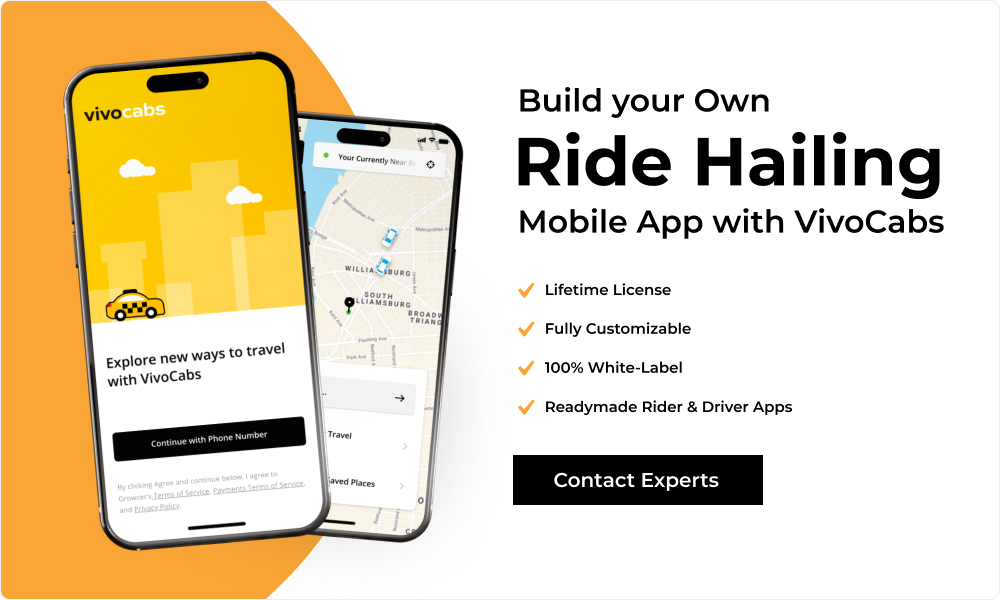
VivoCabs is a white-label software solution designed to help entrepreneurs and logistics companies launch their own on-demand transportation and delivery platforms with ease. Instead of investing heavily in custom development, businesses can deploy a readymade solution, reduce costs substantially, and start operations much faster.
VivoCabs comes with pre-built features that enable businesses to start operations without going through lengthy development cycles. Thus, it enables businesses to launch a fully functional courier delivery mobile app that supports customers, delivery partners, and administrators through a unified platform.
Key advantages of using VivoCabs include:
a. Multi-Panel System
VivoCabs offers dedicated applications for customers and drivers, and a robust panel for admin/s. These apps and panels streamline operations and improve the overall delivery experience.
b. Real-Time Tracking
The solution includes built-in real-time tracking capabilities, allowing customers and admins to monitor delivery progress and ensure transparency throughout the delivery process.
c. Flexible Pricing and Commission Management
Businesses can easily configure pricing structures, delivery charges, and driver commissions based on their operational needs.
d. White-Label Solution
VivoCabs is a white-label software, which means you can launch your app under your own brand name, logo, and identity.
e. Scalable and Customizable
The software is designed to support business growth and can be customized based on specific operational requirements.
f. Faster Time to Market
Since the software is already developed and tested, businesses can launch their courier delivery apps much faster compared to building a system from scratch.
By leveraging a solution like VivoCabs, entrepreneurs and logistics companies can significantly reduce development costs, accelerate their market entry, and avoid the complexities of building a courier delivery platform from the ground up.
This allows them to focus on expanding their delivery network, improving service quality, and growing their customer base instead of managing complex software development processes.
Schedule a One-on-One Demo to See VivoCabs in Action
Conclusion
The courier and logistics industry is evolving rapidly as businesses embrace digital platforms to improve delivery efficiency and customer experience. In today’s fast-moving environment, mobile apps have become an essential tool for courier companies that want to stay competitive and meet rising customer expectations.
While building a courier delivery mobile app from scratch may sound appealing, the process often involves high costs, long development timelines, and ongoing technical challenges, which can slow down your launch and strain resources.
This is where readymade courier delivery software provides a much faster and more practical alternative. Pre-built features, scalable infrastructure, and dedicated technical support allow businesses to launch their courier delivery apps quickly and focus on growing their logistics operations rather than managing complex development processes.
FAQs
Q 1. How do courier delivery mobile apps work?
Ans. Courier delivery mobile apps connect customers, delivery agents, and admin/s through a centralized platform. Customers create delivery requests by entering pickup and drop-off locations, and the platform assigns the nearest available delivery partner. The courier agent collects the package, delivers it to the destination, and updates the status. Meanwhile, customers can track the shipment in real time and stay informed at every stage through the app.
Q 2. What features should a courier delivery mobile app include?
Ans. A well-rounded app should cater to all stakeholders. Key features include:
- Parcel booking
- Real-time tracking
- Route optimization
- Delivery scheduling
- Multiple payment options
- Push notifications
- Proof of delivery
- Driver management
- Analytics dashboards for monitoring business performance
Q 3. How much does it cost to build a courier delivery mobile app?
Ans. The cost to build a courier delivery mobile app depends on factors like features, platform complexity, and development approach. On average, custom development can cost between $20,000 and $80,000 or more. However, using a readymade courier delivery software solution like VivoCabs can significantly reduce development costs.
Q 4. How long does it take to develop a courier delivery mobile app?
Ans. Custom development of a courier delivery mobile app can take several months to over a year, depending on the complexity of the platform and the number of features required. In contrast, using a ready-made solution like VivoCabs can reduce the launch timeline significantly since the core platform is already built and tested.
Q 5. What are the benefits of using readymade courier delivery software?
Ans. Readymade courier delivery software provides several advantages, including:
- Faster time to market
- Lower development costs
- Pre-built essential features
- Technical support
Businesses can launch their courier platform quickly without managing complex development processes or hiring large technical teams.
Q 6. Can a courier delivery app support multiple businesses or vendors?
Ans. Yes, a courier delivery app supports multiple businesses or vendors, allowing multiple businesses, such as eCommerce stores, pharmacies, and retailers, to use the same platform for their deliveries. Each business can manage its shipments while the platform owner manages the overall delivery infrastructure.
Digitize Your Courier Business With a Robust Mobile App
Get In TouchPopular Posts