
TL; DR:
- Understand Alto’s premium ride-sharing model, including fleet ownership, professionally trained drivers, and subscription-based services.
- Explore the complete development roadmap, from market research and business model selection to feature planning, development, and post-launch optimization.
- Learn the essential rider, driver, and admin features, along with monetization strategies that drive long-term growth and profitability.
- Discover how VivoCabs by FATbit Technologies helps entrepreneurs launch a scalable, white-label ride-sharing marketplace faster and more cost-effectively than custom development.
The ride-sharing industry has evolved significantly over the last decade. While traditional platforms primarily connect riders with independent drivers, premium ride-sharing services like Alto have redefined the market by prioritizing service quality, safety, consistency, and an elevated customer experience.
Alto has demonstrated the growing demand for professionally managed ride-sharing services. Instead of relying solely on gig workers, the platform operates with company-owned vehicles and professionally employed drivers, enabling greater control over service standards, vehicle quality, and overall customer satisfaction.
As urban mobility continues to evolve, entrepreneurs, transportation companies, and fleet operators are increasingly looking to launch premium ride-sharing platforms. Whether your goal is to offer luxury city transportation, corporate mobility services, airport transfers, or chauffeur-driven rides, building an app inspired by Alto presents a compelling business opportunity.
This guide walks you through everything you need to know about building a ride-sharing app like Alto, including its business model, must-have features, development process, technology stack, estimated costs, and best practices for launching a scalable and competitive ride-sharing platform.
Table of Contents
What is Alto?
Alto is a premium ride-sharing platform that delivers a safe, reliable, and high-quality transportation experience through a professionally managed service model. Unlike conventional ride-hailing services that primarily rely on independent contractors/drivers, Alto operates a company-managed fleet and employs professionally trained drivers to ensure consistent service standards.
By maintaining direct control over its vehicles and workforce, Alto is able to uphold high standards of safety, customer service, vehicle maintenance, and operational efficiency. This approach enables the company to maintain greater control over vehicle quality, driver behavior, customer service, and operational standards.
Some distinguishing characteristics of Alto include:
- Professionally employed drivers
- Company-managed vehicle fleet
- Scheduled and on-demand rides
- Enhanced safety protocols
- Subscription-based membership options
- Consistent customer experience
- Premium in-car amenities
By combining innovative technology with operational excellence, Alto has established itself as a distinctive player in the competitive ride-sharing industry, setting a benchmark for premium mobility services.
How Does a Ride-Sharing App Like Alto Work?
While booking a ride may seem effortless from a user’s perspective, several technologies and processes work together behind the scenes to ensure a smooth and efficient experience. From account creation and intelligent driver matching to real-time tracking and secure payments, each step is designed to deliver convenience, transparency, and reliability.
Here’s how a typical ride-sharing app like Alto operates:
Step 1: User Registration
Users create an account using their preferred login method, such as email, phone number, or social media. OTP or identity verification helps secure accounts and prevent fraudulent registrations.
Step 2: Ride Booking
Users enter their pickup and drop-off locations, choose a ride category, and book an instant or scheduled ride. The platform displays an estimated fare before confirmation for complete pricing transparency.
Step 3: Intelligent Driver Assignment
Once a booking is confirmed, the dispatch system automatically matches the rider with the most suitable driver based on factors such as proximity, vehicle availability, traffic conditions, and driver ratings.
Step 4: Real-Time Ride Tracking
After a driver accepts the ride, users can track the vehicle’s live location, estimated arrival time, and trip progress through GPS-enabled tracking, ensuring greater transparency and safety.
Step 5: Secure Payment Processing
When the trip ends, the platform processes payments through the user’s preferred payment method, including cards, digital wallets, corporate accounts, or memberships, while generating digital receipts automatically.
Step 6: Ratings and Feedback
Both riders and drivers can rate and review each other after the trip. This feedback helps improve service quality, monitor performance, resolve disputes, and build long-term customer trust.
Build a Ride-Sharing Platform with Smart Booking Features
Why Build an App Like Alto?
The demand for premium ride-sharing services is growing as both customers and businesses seek transportation solutions that prioritize reliability, safety, convenience, and a superior travel experience. Unlike traditional ride-hailing platforms that primarily compete on pricing, premium services differentiate themselves through exceptional service quality, well-maintained vehicles, and professionally managed operations.
Here are the key reasons why investing in an Alto-like ride-sharing platform can be a profitable business opportunity.
1. Growing Preference for Premium Transportation
Today’s riders increasingly value comfort, safety, and reliability over low fares. A premium ride-sharing platform can meet these expectations by offering:
- Professionally trained and verified drivers
- Clean, well-maintained vehicles
- Consistent service standards
- Enhanced safety measures
- Superior customer support
By focusing on customer experience instead of price competition, businesses can build stronger brand loyalty and command higher ride fares.
2. Rising Demand for Corporate Mobility Solutions
Businesses often require dependable transportation services for employees, executives, business partners, and clients. A dedicated ride-sharing platform can serve this demand while generating recurring revenue through services such as:
- Corporate accounts and centralized billing
- Monthly invoicing and expense management
- Scheduled rides for business travel
- Airport pickup and drop-off services
- Executive and VIP transportation
Serving corporate clients creates a stable customer base and ensures more predictable ride demand.
3. Better Control Over Service Quality and Brand Experience
Operating a managed fleet allows businesses to maintain consistent service standards across every ride. Compared to platforms that rely solely on third-party drivers, this model provides greater control over:
- Vehicle maintenance and cleanliness
- Driver training and appearance
- Customer service standards
- Ride quality and passenger comfort
- Safety protocols and regulatory compliance
Delivering a consistent experience helps strengthen customer trust, improve retention, and establish a premium brand image.
4. Multiple Revenue Opportunities
A premium ride-sharing platform can generate revenue from multiple sources beyond ride fares, creating a more sustainable business model. Common monetization options include:
- Membership and subscription plans
- Corporate transportation contracts
- Premium ride packages
- Airport transfer services
- Chauffeur and executive ride services
Diversifying revenue streams reduces reliance on ride commissions alone while increasing the overall profitability of the platform.
Step-by-Step Process to Build a Ride-Sharing App Like Alto
Building a premium ride-sharing platform involves more than developing mobile apps. It requires a scalable ecosystem that seamlessly connects riders, drivers, fleet managers, and administrators while delivering a secure, reliable, and seamless transportation experience.
Follow these steps to build a successful ride-sharing app like Alto:
Step 1: Conduct Market Research
Before development begins, validate your business idea by understanding your target audience, competitors, and market demand. A well-defined strategy helps you identify growth opportunities and build a platform that stands out.
Key factors to evaluate include:
- Target audience: Will you cater to daily commuters, corporate travelers, airport transfers, luxury ride seekers, or a combination of these?
- Service model: Decide whether you’ll offer premium, economy, luxury, or shared rides.
- Geographic focus: Identify the cities or regions where you’ll launch and assess local transportation demand.
- Competitive analysis: Study established players like Alto, Uber, Lyft, Bolt, and regional ride-sharing platforms to understand their strengths, weaknesses, and market positioning.
- Pricing strategy: Determine whether you’ll use fixed pricing, dynamic pricing, subscriptions, or premium fare models.
- Fleet strategy: Decide whether you’ll operate a company-owned fleet, partner with independent drivers, or adopt a hybrid approach.
Thorough market research helps you identify market gaps and define a compelling value proposition.
Step 2: Define Your Business Model
The business model you select determines how your platform operates, delivers services, and generates revenue. Thus, it is important to choose a model that aligns with your target audience, operational capabilities, and long-term goals.
The most common ride-sharing business models include:
1. Fleet-Owned Model
In this model, the company owns or leases vehicles and employs professional drivers. Similar to Alto, this approach gives businesses complete control over service quality, vehicle maintenance, branding, and customer experience.
Best for: Premium ride-sharing, chauffeur services, corporate mobility, and luxury transportation.
2. Aggregator Model
The platform operating on this model acts as a marketplace by connecting independent drivers with riders while earning a commission on every completed trip. Additionally, this approach requires lower operational investment but offers less control over service quality.
Best for: Startups looking to scale quickly with minimal fleet investment.
3. Hybrid Model
A hybrid model combines company-owned vehicles with third-party drivers, balancing operational control with scalability across multiple locations.
Best for: Businesses planning to expand across multiple cities while maintaining premium services in selected locations.
Choose the Right Business Model for Your Marketplace
Step 3: Finalize Features and User Roles
Once your business model is defined, the next step is to identify the features your platform needs. A typical ride-sharing solution consists of three core components that work together to deliver a seamless experience:
- Rider App
- Driver App
- Admin Panel
Each application should be equipped with features that enhance user experience, streamline operations, and support business growth.
Rider App Features
The rider app is the primary interface for customers, enabling them to book rides, track drivers, make secure payments, and manage their trips with ease. A user-friendly app enhances customer satisfaction and encourages repeat usage.
| Feature | Description |
|---|---|
| User Registration | Allow users to sign up using their email address, mobile number, or social media accounts. OTP or identity verification enhances security and prevents fraudulent registrations. |
| Ride Booking | Enable users to book rides instantly or schedule them in advance through a simple and intuitive booking process. |
| Fare Estimation | Display estimated fares before booking based on distance, travel time, and pricing policies to ensure transparency. |
| Live GPS Tracking | Provide real-time ride tracking, allowing users to monitor the driver’s location, estimated arrival time, and trip progress. |
| Multiple Payment Options | Support various payment methods, including credit/debit cards, digital wallets, corporate accounts, and other online payment options. |
| Ride History | Give users access to completed and upcoming rides, along with trip details, invoices, receipts, and driver information. |
| Push Notifications | Send real-time alerts for ride confirmations, driver arrivals, trip updates, payments, and promotional offers. |
| Ratings and Reviews | Allow riders to rate drivers and share feedback after each trip to improve service quality and build trust. |
Driver App Features
The driver app should streamline day-to-day operations by enabling drivers to manage ride requests, navigate efficiently, and monitor their earnings from a single interface.
| Feature | Description |
|---|---|
| Profile Management | Allow drivers to manage personal information, upload documents, update vehicle details, and modify account settings from a single dashboard. |
| Driver Verification | Verify driver licenses, insurance, and other required documents before account activation to ensure safety and regulatory compliance. |
| Online/Offline Availability | Enable drivers to switch between online and offline modes based on their availability, ensuring efficient ride allocation. |
| Ride Acceptance | Notify drivers of nearby ride requests and allow them to accept or decline bookings instantly, reducing passenger wait times. |
| Route Navigation | Integrate GPS navigation to recommend the fastest routes while avoiding traffic congestion for efficient trip management. |
| Earnings Dashboard | Provide detailed insights into earnings, completed trips, incentives, bonuses, and payout history to help drivers monitor their performance. |
| Ride History | Maintain a complete record of previous and ongoing trips, including passenger details, trip duration, earnings, and payment status. |
| Performance Metrics | Display key performance indicators such as ratings, acceptance rate, cancellation rate, and completed rides to encourage service excellence. |
| Customer Communication | Enable secure in-app messaging or calling so drivers can coordinate with riders without revealing personal contact information. |
| Emergency Assistance | Include an SOS feature that allows drivers to quickly contact administrators or emergency services during critical situations. |
Power Your Ride-Sharing App with a Robust Feature Set
Admin Panel Features
The admin panel serves as the command center of the ride-sharing platform, enabling administrators to oversee operations, manage resources, and make data-driven business decisions.
| Feature | Description |
|---|---|
| Fleet Management | Monitor vehicle availability, maintenance schedules, fuel usage, insurance records, and fleet performance from a centralized dashboard. |
| Driver Management | Manage driver onboarding, document verification, vehicle assignments, performance monitoring, and account status to maintain service quality. |
| Customer Management | Access customer profiles, ride history, payment records, and support requests to deliver faster issue resolution and better customer service. |
| Booking Management | Track scheduled, ongoing, completed, and cancelled rides in real time to ensure smooth platform operations. |
| Pricing Management | Configure flexible pricing, including base fares, distance and time-based charges, surge pricing, and promotional discounts. |
| Reports and Analytics | Analyze revenue, ride volume, driver performance, customer retention, fleet utilization, and operational efficiency to support data-driven decisions. |
| Content Management | Manage banners, promotional campaigns, FAQs, announcements, policy pages, and other website content without technical expertise. |
Step 4: Develop a Ride-Sharing App
With your feature set finalized, the next step is choosing the right development approach. Businesses generally have two options: custom development or ready-made ride-sharing software. The ideal choice depends on your budget, launch timeline, customization requirements, and long-term business goals.
1. Custom Development
Custom development involves building your ride-sharing platform from the ground up, with every feature, workflow, and interface tailored to your specific business needs. While this approach offers maximum flexibility, it also requires significant time and investment.
Pros:
- Fully customized according to your business model
- Flexible architecture for future enhancements
Cons:
- Higher development costs
- Longer time-to-market
- Requires a dedicated development team
- Continuous maintenance and updates increase long-term expenses
Best suited for: Large enterprises or businesses with highly specific operational requirements and substantial development budgets.
2. Readymade Software
A ready-made solution provides a pre-built ride-sharing platform with essential features already in place. Businesses can customize branding, configure modules, and launch much faster compared to building from scratch.
Pros
- Significantly faster deployment
- Lower development costs
- Proven and tested functionality
- Easier customization
- Regular software updates and technical support
- Reduced development risk
Cons
- Customization may depend on the software provider’s capabilities
- Some highly specialized features may require additional development
How VivoCabs Can Help ?
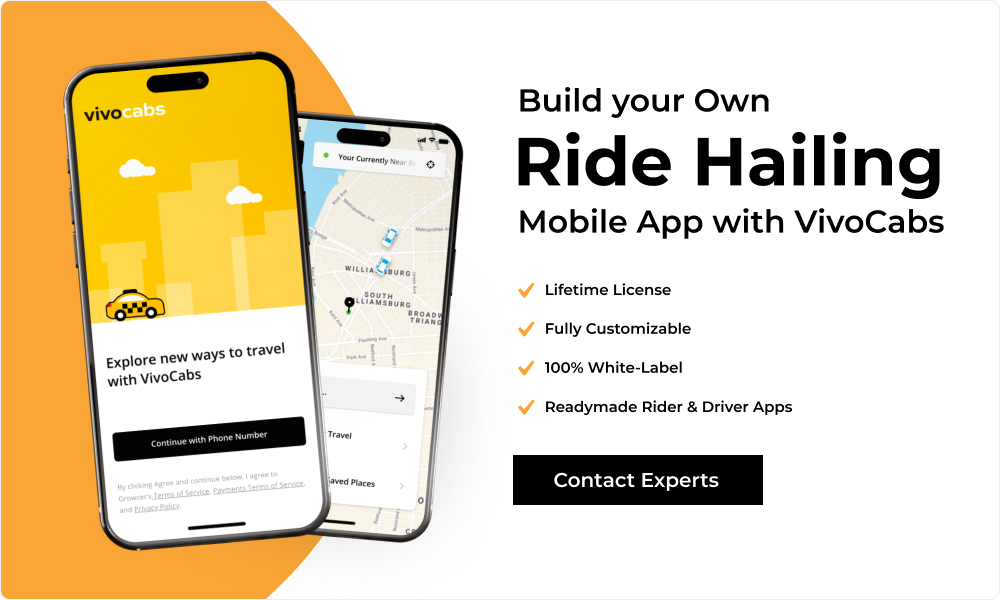
Developing a ride-sharing app from the ground up can require substantial investment, extended development timelines, and ongoing technical resources. For businesses seeking a faster and more efficient route to market, VivoCabs, FATbit Technologies’ white-label ride-sharing software, offers a scalable and deployment-ready alternative.
Purpose-built for entrepreneurs, transportation companies, fleet operators, and enterprises, VivoCabs provides a comprehensive solution to launch and manage a branded ride-sharing marketplace. The platform includes rider and driver applications, an advanced admin panel, real-time GPS tracking, secure payment integrations, fleet management, ride scheduling, and analytics tools required to streamline daily operations.
By choosing VivoCabs, businesses can benefit from:
- Faster time-to-market compared to custom development
- White-label solution with complete branding flexibility
- Feature-rich rider, driver, and admin applications
- Multi-payment gateway and multilingual support
- Highly customizable architecture to meet evolving business needs
- Ongoing technical support and software updates
- Scalable infrastructure to support business expansion
Whether you aim to launch a premium ride-sharing service like Alto, establish a corporate mobility platform, or expand into new transportation segments, VivoCabs provides a robust technological foundation that reduces development complexity, lowers implementation costs, and enables faster business growth.
See VivoCabs in Action
Step 5: Launch and Optimize Your Ride-Sharing App
Once your ride-sharing platform is thoroughly tested, it’s time to launch it to your target audience. However, launching the app is just the beginning. Sustained success depends on continuous optimization, performance monitoring, and feature enhancements that align with evolving customer expectations and market trends.
After the launch, regularly evaluate platform performance, gather customer feedback, and refine the overall user experience to improve customer satisfaction and business outcomes.
Key post-launch optimization activities include:
- Feature Enhancements: Introduce new functionalities and improve existing features based on customer feedback and market demand.
- Performance Optimization: Monitor app speed, server performance, and system stability to deliver a seamless user experience.
- Security Updates: Regularly update the platform to address security vulnerabilities, strengthen data protection, and comply with evolving regulations.
- Payment Integrations: Expand payment options by adding new digital wallets, regional payment gateways, or subscription-based payment methods.
- Marketing Campaigns: Execute targeted marketing strategies, referral programs, and promotional campaigns to attract new users and increase ride bookings.
- Customer Loyalty Programs: Reward frequent riders with discounts, memberships, referral incentives, or loyalty points to improve customer retention and lifetime value.
A successful ride-sharing platform requires continuous innovation. By adapting to customer needs, technological advancements, and industry trends, businesses can strengthen their competitive position, improve customer retention, and achieve sustainable long-term growth.
Conclusion
Alto’s success highlights the growing demand for premium ride-sharing services that emphasize reliability, safety, and a superior customer experience. As the mobility landscape evolves, businesses have a significant opportunity to differentiate themselves by offering professionally managed fleets, value-added services, and customer-centric transportation solutions.
Developing a ride-sharing app like Alto requires careful planning, the right technology stack, a clear monetization strategy, and a focus on operational excellence. Whether you choose to build from scratch or leverage a customizable white-label solution, investing in a scalable and user-centric platform will position your business for long-term growth in the rapidly evolving mobility industry.
For entrepreneurs and transportation businesses looking to launch efficiently, leveraging a proven ride-sharing solution can significantly reduce development time, optimize costs, and provide the technological foundation needed to scale in an increasingly competitive mobility market.
Ready to Launch Your Own Premium Ride-Sharing Marketplace?
Get In TouchPopular Posts