As on-demand mobility continues to reshape transportation, outdated practices like reimbursable taxi receipts and fragmented billing processes are rapidly becoming obsolete. Companies today seek tailored mobility solutions that offer more than convenience: they often require greater control, security, and cost-efficiency.
According to a report of precedenceresearch.com, The global corporate mobility market is estimated at $294.4 billion by 2034, growing at a CAGR of 22.9% from 2025 to 2034, with the U.S. alone expected to hit $86.13 billion by 2034. From automated billing and policy enforcement to live tracking and seamless scheduling, corporate ride apps create a unified ecosystem for managing ground transportation at scale.
Hence, building a corporate ride app that aims to enhance the mobility landscape for corporate transportation can open the door to new revenue streams, improved employee satisfaction, and smarter cost management.
In this blog, we’ll walk you through the key steps and strategies required to build an app for corporate rides, one that not only simplifies transportation but transforms how employees travel.
Table of Contents
What is an App for Corporate Rides and How Does It Work?
An app for corporate rides is a dedicated app designed to manage transportation services arranged specifically for a company’s employees, executives, or clients. Unlike regular ride-sharing meant for the general public, corporate rides are organized and managed by businesses to meet their transportation needs in a professional, cost-efficient, and secure manner. These apps are typically used for business travel, daily office commutes, airport transfers, client meetings, and other work-related transportation needs. Such apps aim to offer convenience, cost-efficiency, and control for both employees and company administrators.
Key Aspects of a Corporate Ride App
- Business-Focused Booking: Tailored for professionals, corporate rides offer flexible scheduling and reliable transportation including one-time trips, recurring commutes, and group transports for meetings or events.
- Centralized Management: All bookings, ride statuses, and billing details are managed through a unified dashboard, helping companies monitor usage, control costs, and enforce travel policies.
- Seamless Payment and Reporting: Payments are handled via corporate accounts, with easy expense tracking through integrations with accounting systems, automated invoicing, and receipt generation.
- Enhanced Security and Compliance: Providers ensure safer rides with stricter driver checks, real-time vehicle tracking, and adherence to company travel policies for transparency and safety.
Business Model of a Corporate Ride App
A corporate ride app streamlines employee transportation by connecting riders, drivers, and administrators on a unified digital platform. It automates booking, tracking, and billing to ensure efficient, secure, and transparent corporate travel management.
- User Registration and Authentication: Users create accounts and upload the required documents for verification on the app.
- Ride Request Initiation: Employees log in and request rides by entering pickup and drop-off locations, scheduling immediate or future rides as needed.
- Ride Matching and Assignment: The app matches ride requests with available drivers based on proximity, availability, and company policies.
- Driver Acceptance and Navigation: Drivers receive ride notifications, accept assignments, and use in-app navigation to reach the pickup point and complete the journey.
- Real-Time Tracking and Notifications: Both users and admins can track ride status in real time, receiving updates on driver location, estimated arrival, and trip progress.
- Payment and Expense Management: After the ride, the app processes payments through corporate billing or integrated gateways, automatically generating e-receipts and expense reports.
- Feedback and Ratings: Employees and drivers provide feedback and ratings to ensure service quality and address any issues.
- Admin Oversight and Reporting: Admins monitor all rides, manage users, enforce travel policies, and access detailed analytics and reports for compliance and optimization.
Popular Corporate Ride Apps in the Industry
Today, several ride-hailing apps are widely recognized for their corporate ride services, offering businesses reliable and scalable transportation solutions. Here are some of the popular corporate ride apps making an impact globally:
- Uber for Business: Offers a robust platform for centralized ride booking, real-time tracking, and consolidated billing, helping organizations manage travel efficiently while reducing administrative work.
- Lyft Business: Provides reliable, user-friendly corporate transportation with features like seamless scheduling, employee ride management, and flexible payment and reporting tools.
- Gett: Integrates multiple providers into one platform for corporate transport, offering cost control, automated expenses, and simplified ride booking for streamlined business travel.
- Careem: Focused on regional needs in the Middle East, Africa, and South Asia, Careem supports scheduled bookings, diverse payment options, and built-in safety features for scalable workforce mobility.
- Wingz: Specializes in scheduled, fixed-price rides ideal for airport transfers and routine commutes, offering dedicated drivers and predictable costs for a personalized experience.
- Bolt for Business: Delivers affordable, on-demand rides with centralized billing, real-time tracking, and policy controls, making it a cost-effective option gaining popularity in Europe and beyond.
Want to Build a Corporate Ride App Like the Above-Mentioned Industry Leaders?
Steps to Build an App for Corporate Rides
To build an app for corporate rides, it’s essential to follow a structured process that addresses both the user experience and backend infrastructure. A well-planned approach ensures efficient, reliable, and cost-effective transportation for employees.
Here are the key steps to focus on:
Step 1. Conduct Market & Competitor Research:
Begin by thoroughly researching the corporate mobility market. Analyze existing solutions, identify your target audience, and gather feedback from potential users to understand their pain points and expectations. This ensures your app addresses real business needs and stands out from competitors.
Step 2. Define and Prioritize Key Features:
List down essential features needed to build an app for corporate rides, like centralized booking, real-time tracking, expense reporting, and safety tools. Prioritize them based on user needs and business goals to focus on what the app must deliver initially.
- User Registration & Profile Management: Allow employees to seamlessly create and manage profiles, storing essential information like contact details, work ID, preferences, and travel history.
- Real-Time GPS Tracking: Integrate GPS for live vehicle tracking, ensuring accurate ETAs, enhanced safety, and real-time updates for both riders and drivers.
- Intuitive User Interface: Implement a sleek, user-friendly design allowing quick navigation, seamless booking, and efficient access to ride history, settings, and ride requests.
- Advanced Booking & Scheduling: Support seamless ride bookings, recurring trips, and scheduled pickups, enabling efficient travel planning and minimizing rider wait times.
- Multi-Stop & Multi-Passenger Rides: Enable users to add multiple destinations and fellow passengers in a single trip, optimizing route efficiency and ride-sharing convenience.
- Automated Billing & Invoicing: Generates detailed, automated invoices post-ride for seamless accounting, reducing manual errors and ensuring compliance with corporate billing standards.
- Multiple Payment Options: Support a variety of payment methods, including corporate accounts, credit/debit cards, wallets, or integrated company payment systems.
- Policy Enforcement & Approval Workflows: Ensure adherence to travel policies with pre-ride approvals, ride limits, and role-based access, streamlining compliance and management oversight.
- Push Notifications & Alerts: Provide real-time updates on ride status, driver arrival, delays, or policy alerts with push notifications, improving transparency and ride management.
- Fare Estimation & Transparent Pricing: Offer upfront fare estimates with an in-app fare estimator, ensuring cost clarity before booking and supporting corporate budgeting needs.
- Rating & Feedback System: Empower passengers to rate trips and submit feedback, helping improve service quality, driver performance, and user experience.
- Analytics & Reporting Tools: Delivers insightful ride data, usage trends, and cost reports to help companies track performance, optimize operations, and reduce expenses.
- Multi-Lingual & Multi-Currency Support: Support usage across multiple geographical boundaries with language and currency customization, ensuring consistency and ease for international users.
- In-app Communication: Facilitate direct messaging or calling between riders and drivers within the app for coordination without sharing personal contact details.
Launch a Feature-Rich Corporate Ride App
Step 3. Monetization Strategies for a Corporate Ride App
When you build an app for corporate rides, implementing diverse monetization strategies is essential to maximize revenue and ensure business sustainability.
- Ride Fares and Corporate Billing: Charge companies based on ride usage, using fare structures such as base fare, per kilometer/mile, or per minute.
- Subscription Plans: Offer businesses or frequent users tiered subscription packages with perks like discounted rates, priority booking, or exclusive features.
- Commission-Based Model: Take a percentage commission from each transaction between drivers and the company or employees.
- In-App Advertising: Display third-party advertisements or sponsored content within the app, targeting relevant corporate users.
- Strategic Partnerships and Affiliate Programs: Collaborate with hotels, airlines, or event organizers to offer bundled services or referral programs.
- Premium and Executive Services: Provide high-end ride options such as luxury vehicles, executive cars, or chauffeur-driven services at premium rates.
Step 4. Choose the Development Approach:
Choosing the right development approach to build an app for corporate rides is essential as it determines your speed to market, cost, and ability to scale. Here are the primary development approaches:
A. Custom Development: Custom app development allows you to tailor every element, whether features, design, or others, to your business’s exact needs, offering unmatched flexibility and full control over branding. However, it demands significant time, a high budget, and ongoing technical resources for maintenance and updates. This approach requires you to hire a dedicated team of developers, and can delay your launch and increase risk if priorities shift mid-project.
B. Readymade Software: Opting for a readymade software solution is an increasingly popular path for building a corporate ride app, as it offers a pre-built framework that allows for rapid deployment in a cost-efficient manner. These software typically offer all the essential features out of the box and can be further customized to address the unique requirements of different businesses and organizations.
Even with significant customization, readymade solutions remain far more cost-effective and require less time and technical effort than building a fully custom app from scratch. This approach enables companies to minimize risk, scale easily, and achieve a rapid return on investment without sacrificing critical capabilities or flexibility.
Our Recommendation: VivoCabs
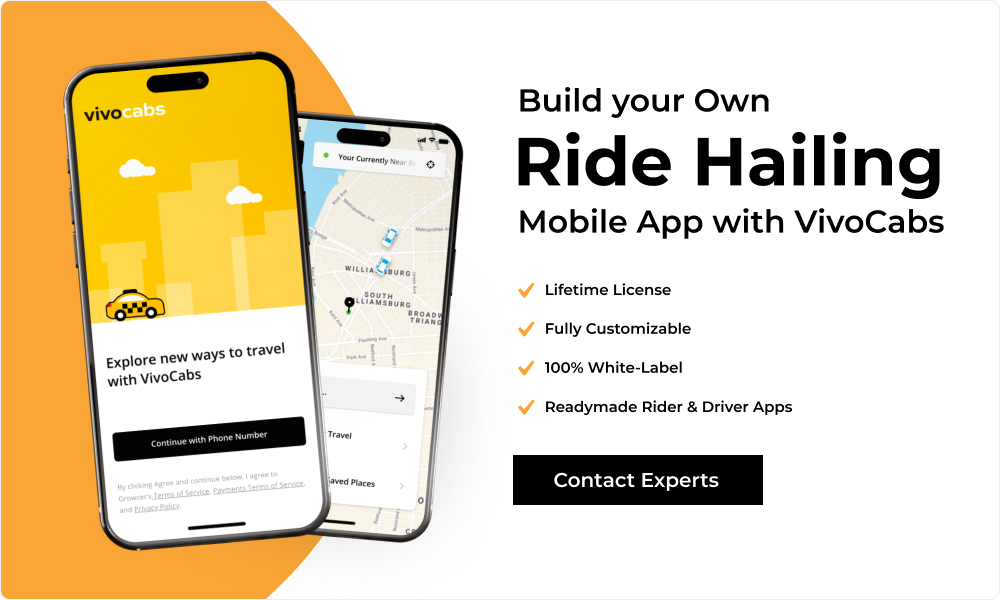
For businesses seeking a swift and efficient way to enter the corporate ride-hailing space, VivoCabs is a reliable ride-hailing software designed with unique business requirements in mind. VivoCabs comes equipped with essential features and integrations from the outset required to launch a fully functional corporate ride app quickly and cost-efficiently.
Instead of building an app from the ground up, businesses can customize VivoCabs to reflect their unique brand and specific operational requirements. Its scalable architecture supports businesses of any size, ensuring seamless growth as user demand increases. By choosing a proven solution like VivoCabs, businesses can minimize their initial investment and technical challenges, enabling them to focus on delivering a top-tier transportation experience for their workforce without delay.
Why Choose VivoCabs?
- Self-hosted Solution: Maintain full control over data and operations with the flexibility to host the software on your preferred choice of server.
- Pay Once, Own Forever: Avoid ongoing subscription fees by making a one-time upfront payment and gain lifetime ownership with full access to the features right from the beginning.
- Robust Feature Set: VivoCabs integrates all essential features such as user management, advanced booking, real-time tracking, automated invoicing, and analytics.
- Customization: The solution allows for extensive customization to match your brand and specific business processes.
- Scalability: Designed to support businesses as they grow, VivoCabs can handle increasing numbers of users and transactions without compromising performance.
- Security: Implements industry-leading security protocols to safeguard sensitive data and ensure compliance with regulations.
- Cost-Effective: Lower upfront investment compared to building from scratch. It allows businesses to launch quickly while minimizing development costs and resource allocation.
Schedule a One-on-One Demo Session to Know More About VivoCabs
Conclusion:
Building a corporate rides app requires a clear understanding of the unique needs of businesses and their employees, along with careful selection of core features to ensure a seamless experience. Whether through custom development or leveraging turnkey readymade software like VivoCabs, the focus should remain on delivering efficiency, security, and scalability.
In many cases, ready-made solutions offer a practical path to quickly enter the market with tested features and the flexibility to customize for specific business needs. Ultimately, the success of a corporate ride app depends on ongoing refinement and responsiveness to user feedback, enabling businesses to meet the rising demand for reliable, cost-effective employee mobility solutions.
Planning to Build a Corporate Ride App that Stands Out?
Contact UsPopular Posts