

Quick Overview:
Shuttle services require technology that efficiently coordinates passengers, routes, schedules, and vehicle availability across multiple trips. This blog explains the planning, feature selection, and development considerations involved in creating a shuttle booking application for airports, schools, hotels, corporate transport, and public transit. It also showcases how VivoCabs supports shuttle operators with configurable booking workflows, route management, driver allocation, and real-time trip tracking.
With the rise in urban mobility solutions and the increasing need for comfortable, economical, and scheduled transportation, shuttle services have become a go-to option for many commuters. These services not only bridge the gap between public transportation and private taxi services but also offer predictable, environment-friendly, and cost-efficient solutions. Whether it’s corporate employee transportation, school pickups, or airport transfers, shuttle services play a crucial role in today’s transportation ecosystem.
However, managing such operations manually is no longer viable in a fast-moving digital world. This is where shuttle service apps come in. For entrepreneurs and businesses looking to tap into the growing demand for organized transport services, shuttle service app development offers a promising opportunity. This blog will guide you through the essential steps and features required to build an app for shuttle services that scales efficiently.
Table of Contents
Understanding the Shuttle Service App Market
Before diving into the technicalities, it’s crucial to grasp the fundamental concept of an app for shuttle service and its diverse applications.
What is a Shuttle Service App?
A shuttle service app is a mobile and web-based platform designed to facilitate the efficient transportation of passengers over fixed or semi-flexible routes. Unlike traditional taxi apps that typically focus on individual rides, an app for shuttle service often serves multiple passengers simultaneously by optimizing routes and pick-up points.
Shuttle apps cater to a wide variety of transport needs, including daily commutes, airport transfers, corporate transport, and educational institution transit. They bridge the gap between conventional mass transit and private ride-hailing by offering convenience, cost-efficiency, and reliability.
Types of Shuttle Services
Shuttle service apps are transforming the way people commute by offering convenient, affordable, and reliable transportation solutions. Before diving deeper, let’s explore the different types of shuttle services available:
- Airport Shuttle Services: These shuttle services focus on transporting passengers between airports and key city locations such as hotels, business districts, and residential areas. They often operate on scheduled times to sync with flight arrivals and departures.
- Corporate Shuttle Services: Companies employ shuttle service apps to transport their employees between home, office, and other workplaces. Corporate shuttles help reduce traffic congestion, improve employee punctuality, and offer a greener commute option.
- School Transport Services: Shuttle apps serve schools by providing safe and reliable transportation for students. Parents and schools can track buses in real-time, ensuring children’s safety and punctuality.
- Event Shuttle Services: For concerts, festivals, and other events, apps for shuttle service help organizers efficiently move large crowds between venues and parking areas or public transport hubs.
- Community and Residential Shuttle Services: Many gated communities and residential complexes offer shuttle services for residents to nearby shopping centers, hospitals, or recreational areas.
Build a Scalable Shuttle Service App Aligned with Your Requirements
Key Stakeholders in a Shuttle Service App
For a shuttle service app to function optimally, it must address the needs of multiple stakeholders:
- Riders: The end-users who book shuttle rides. Their experience revolves around ease of booking, real-time tracking, transparent pricing, and reliable service.
- Drivers: Shuttle drivers or fleet operators who receive ride requests, follow optimized routes, and manage schedules through a dedicated driver app.
- Admins: The management team oversees the entire platform. They handle fleet management, driver onboarding, route planning, payments, customer support, and analytics via an admin panel.
How Does a Shuttle Service App Work?
Here’s how an app for shuttle service generally functions:
- User Registration: Riders sign up on the app using their mobile number, email, or social accounts.
- Booking a Ride: Users select the pickup and drop-off locations and see available routes and schedules.
- Seat Reservation: The rider chooses the seat and confirms the booking, often paying in advance via integrated payment gateways.
- Route Assignment: The system matches the rider with an appropriate shuttle based on the route and availability.
- Driver Notification: The driver receives the trip request along with rider details and scheduled time.
- Real-Time Tracking: Riders can track shuttle locations in real time, receive ETAs, and get notified upon arrival.
- Trip Completion and Feedback: Once the ride is completed, the rider can rate the experience and submit feedback.
- Admin Monitoring: The admin dashboard oversees all bookings, schedules, payments, and performance reports.
Monetization Strategies of a Shuttle Service App
To ensure your shuttle service app becomes a profitable and sustainable business, it’s essential to adopt the right revenue models. From per-ride charges to corporate partnerships, there are multiple ways to generate consistent income while providing value to your users. Below are some proven monetization strategies that can help drive growth and maximize the earning potential of your shuttle service app:
- Per-Ride Fare: Charge passengers a fee based on distance or time for each trip, ensuring revenue with every ride completed.
- Corporate Contracts: Partner with businesses to provide bulk transportation services for employees, generating consistent, high-volume bookings.
- Subscription Plans: Offer weekly or monthly passes granting unlimited or discounted rides, providing steady income and fostering customer loyalty.
- Premium Services: Offer value-added features like priority booking or luxury vehicles at higher rates, catering to customers seeking enhanced services.
- Commission from Drivers/Fleet Operators: Take a percentage of each fare from drivers or fleet operators as a commission for facilitating the ride.
- In-App Advertisements: Display targeted ads within the app to generate additional revenue without impacting user experience.
- Surge Pricing: Dynamically adjust fares during peak demand periods to balance ride availability and maximize revenue.
Essential Features of a Shuttle Service App
A robust shuttle service app development process requires implementing a comprehensive set of features tailored to meet the needs of all stakeholders. These features ensure smooth operations, enhance user experience, and provide valuable insights for business growth.
Rider App Features
The rider app is the primary interface for customers, and its features must ensure a smooth, user-friendly experience:
- User Registration & Profile Management: Enable riders to log in using email, phone number, or social media accounts.
- Ride Booking & Scheduling: Provide riders with the flexibility to book on-demand rides or schedule future trips.
- Real-Time Shuttle Tracking: Offer live GPS tracking with real-time location updates, ETAs, and detailed route information to keep riders well-informed.
- Multiple Payment Options: Integrate with secure payment gateways supporting credit/debit cards, mobile wallets, UPI, and cash payments.
- Fare Estimates & Transparent Pricing: Provide upfront fare estimates based on distance, time, and shuttle type.
- Ride History & Receipts: Allow users to access a comprehensive trip log, including routes, fares, invoices, and driver ratings, helpful for expense tracking and feedback.
- Notifications & Alerts: Send real-time push, SMS, and email notifications for ride confirmations, shuttle arrivals, delays, and offers.
- In-App Chat & Support: Allow riders and drivers to communicate directly within the app without sharing personal contact information.
- Multi-Language Support: To serve diverse users, the app should support multiple languages, ensuring a smooth and inclusive user experience across regions.
Launch a Shuttle Service App Equipped with Unmatched Features
Driver App Features
The driver app is designed to empower shuttle drivers with tools to efficiently manage their work:
- Driver Registration & Verification: Allow drivers to onboard by uploading documents and completing background checks seamlessly without any conflicts.
- Ride Requests & Acceptance: Notify drivers of incoming ride requests with trip details, giving them the option to accept or decline.
- GPS Navigation & Route Optimization: Provide real-time navigation with integrated maps, helping drivers choose the fastest and most efficient routes.
- Earnings & Payment Management: Offer a detailed dashboard where drivers can track daily, weekly, and monthly earnings, including fares, tips, and bonuses.
- Ride History & Ratings: Enable drivers to access trip history and customer ratings, helping them monitor performance and improve service quality.
- Status Management: Let drivers toggle their availability, manage online/offline status, schedule breaks, and adjust shift timings as needed.
- SOS & Safety Features: Include an emergency button that immediately alerts admins, authorities, or preset contacts during critical situations.
Admin Panel Features
The admin dashboard is the nerve center managing the entire shuttle service ecosystem:
- User Management: Allow admins to review, approve, and manage rider and driver profiles and oversee user behavior.
- Fleet Management: Enable real-time shuttle tracking, vehicle assignments, maintenance monitoring, and fleet availability management based on demand.
- Payment & Commission Management: Provide tools to manage fare structures, process payments, handle driver commissions, refunds, and dynamic pricing models.
- Analytics & Reports: Offer dashboards for monitoring trips, revenue, user engagement, and shuttle performance, with exportable reports for strategic planning.
- Customer Support Management: Equip admins to handle customer queries, complaints, and support tickets efficiently through an integrated management system.
- Promotions & Offers Management: Allow admins to run promotional campaigns, offer discount codes, and launch loyalty programs to boost engagement.
- Security & Access Controls: Implement role-based permissions to restrict sensitive data and administrative controls to authorized personnel only.
Development Approaches to Build an App for Shuttle Service
When deciding on how to build an app for shuttle service, you generally have two main development approaches: custom development and using readymade software. Each has its own set of advantages and disadvantages.
Custom Development: Custom development involves building a shuttle service app from scratch, tailored to your unique business requirements. You work with a software development team to design, develop, and deploy every feature based on your vision and operational needs.
Pros:
- Complete control over features, branding, and user experience.
- Scalable architecture to accommodate future growth and integrations.
Cons:
- Higher initial investment and longer development timelines (often 6–12 months).
- Requires ongoing collaboration with developers for updates and maintenance.
Readymade Software: Readymade software solutions are pre-built platforms designed to help you quickly build an app for shuttle service. They come with all essential features and business APIs, integrated from the beginning. These solutions enable fast branding and app launch with minimal setup time and lower investment.
Pros:
- Accelerated time-to-market with quicker deployment
- Minimal development effort required for launch
- Lower upfront costs compared to custom development
- Includes essential shuttle app features and integrations
- Supports extensive customization options for branding and workflows
- Built with scalability to handle growing user demand
Cons:
- May involve one-time upfront licensing fees or ongoing subscription costs, depending on the pricing model.
Factors Influencing the Cost to Build an App for Shuttle Service
The cost to build a shuttle service app varies widely based on several factors:
- Feature Complexity: Adding advanced or custom features like real-time tracking, dynamic routing, or seat selection increases development time and expenses.|
- Platform Choice: Developing for both iOS and Android will cost more than targeting a single platform.
- UI/UX Design: Custom, user-friendly designs tailored for your brand require more time and resources compared to using basic design templates.
- Backend Infrastructure: Building a strong backend to handle real-time data processing, route management, and analytics adds to the overall investment.
- Third-Party Integrations: Connecting the shuttle service app with external services like payment gateways, SMS/email notification tools, and mapping APIs may involve additional licensing and usage fees.
- Location and Team Expertise: The costs may also vary based on the team’s expertise and the geographic region where the development work is outsourced or done in-house.
- Testing and Maintenance: Regular testing, bug fixing, and post-launch updates are crucial for delivering a reliable shuttle booking app and ensuring long-term user satisfaction.
Taking into account the above shuttle service app development approaches and cost-related factors, the most practical and efficient way to enter the market and build an app for shuttle service is by leveraging a readymade shuttle service app solution. This route not only reduces development time and cost but also enables entrepreneurs to start operations faster with a tested and scalable platform. For businesses looking to launch a shuttle service app quickly without compromising on functionality, a pre-built solution offers the ideal balance of quality and affordability.
VivoCabs – The Best Readymade Software
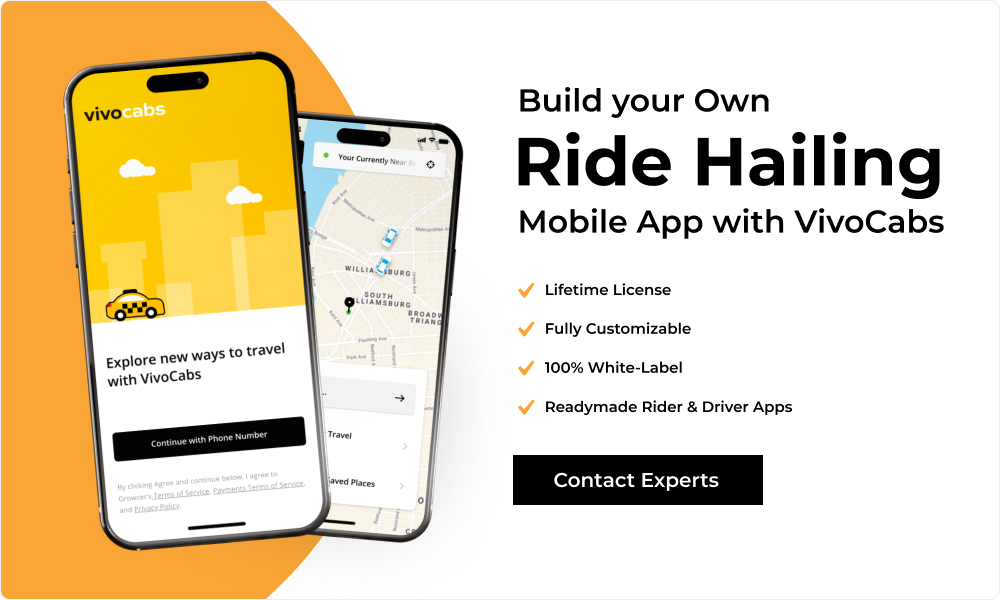
VivoCabs stands out as one of the most reliable and feature-rich software solutions for entrepreneurs looking to launch an app for shuttle service quickly and can be customized as per requirements. Designed with scalability, user experience, and operational ease in mind, it offers all the core functionalities required to manage a successful shuttle business, right out of the box.
Whether you’re planning to operate in a single city or across multiple regions, VivoCabs provides extensive scalability to grow your business across multiple geographies. Its intuitive interface, real-time tracking, route management, and multi-payment support make it ideal for modern transit needs. The solution also offers 100% white-labeling capabilities, so you can rebrand your app based on your unique business requirements.
Key Highlights of VivoCabs:
- 100% white-label
- Self-hosted software
- Pay once, own forever
- Highly scalable and customizable
- No monthly or annual recurring charges
- Multi-language and multi-currency Support
- Includes 1-year free technical support.
Schedule a Personalized Demo Session to Know More About VivoCabs
Final Thoughts
Creating a shuttle service app involves more than just building a platform; it’s about solving real commuting problems and offering a smooth, user-friendly experience. By focusing on the right features, choosing the right development approach, and keeping your users’ needs in mind, you can build an app for shuttle service that stands out in the market. Whether you’re catering to daily office-goers, airport travelers, or event attendees, a well-developed shuttle service app can take your transportation business to the next level.
Planning to Build an App for Shuttle Service?
Reach OutPopular Posts