

The demand for safe, convenient, and flexible transportation has grown rapidly across the world, and Singapore is no exception. With its tech-savvy population, world-class connectivity, and strong digital infrastructure, Singapore has become a thriving hub for mobility innovation. Backing this is the prediction by Statista, which states that the ride-hailing industry in Singapore will reach the market volume of $1.16 billion by 2030, growing at a CAGR of 3.56% from 2025 to 2030. Moreover, entrepreneurs today are actively exploring opportunities to build a ride-hailing app in Singapore and tap into this high-potential sector.
However, despite global leaders like Grab, Gojek, and ComfortDelGro dominating the market, Singapore’s progressive regulatory framework and growing demand for personalized ride options make room for new players with unique value propositions. However, entering this competitive space requires strong planning, regulatory compliance, and the right ride-hailing software.
Thus, this comprehensive blog will help you understand everything you need to successfully launch a ride-hailing app in Singapore, from market insights and required features to cost estimation and development methodologies. Whether you are a startup founder or an existing operator transitioning to digital mobility, this blog aims to provide clarity and direction for your business.
Table of Contents
- Market Overview: The Ride-Hailing Landscape in Singapore
- Top Ride-Hailing Players in Singapore
- Core Features Your Ride-Hailing App Must Have
- Development Approaches to Build and Launch a Ride-Hailing App in Singapore
- VivoCabs – A Ride-hailing Software to Launch a Ride-hailing App in Singapore
- Conclusion
- FAQs
Market Overview: The Ride-Hailing Landscape in Singapore
Singapore’s ride-hailing market is technologically advanced and highly regulated, offering huge opportunities for entrepreneurs with innovative service models. Rising urban mobility needs, strict compliance policies, and a digitally active population make it a prime market for ride-hailing apps. Further, let’s explore some of the reasons justifying this growth:
- High Smartphone & Internet Penetration: Singapore has one of the highest smartphone adoption rates globally, with seamless 4G/5G connectivity. This allows users to easily book, track, and pay for rides on the go, making the ride-hailing app ecosystem stronger and more dependable.
- Strong and Ever-Growing Ride Demand: Daily commuting, tourism, and business travel contribute significantly to ride requests. With limited private car ownership due to high COE (Certificate of Entitlement) costs, more people rely on app-based private hire vehicles for safe, fast, and convenient travel.
- Heavy Competition but New Opportunity Gaps: Major players like Grab, Gojek, TADA, and ComfortDelGro dominate, yet niche opportunities remain underserved. Hence, targeting specific user groups such as seniors, corporate employees, women-only, or eco-conscious users opens doors for disruptive ride-hailing startups.
- Increasing Adoption of Sustainable Mobility: The country is actively promoting electric vehicle usage and green mobility plans. Thus, new ride-hailing operators that adopt eco-friendly fleets or sustainability-driven pricing models can win customer trust and government incentives.
- High Consumer Expectations for Service Quality: Singapore passengers want reliability, transparent fares, quick response times, and professional behavior. This creates a higher bar for new entrants but also provides room to stand out by improving overall customer experience and driver service standards.
Opportunities & Challenges
1. Opportunities
- Niche segments: Premium rides, eco-friendly EV fleets, women-only ride services, senior-friendly solutions, and corporate commuting offer room for differentiated business models.
- Technology differentiation: Integrating features like AI-based driver-matching, predictive demand mapping, safety enhancements, and smarter pricing can help new platforms outperform traditional mobility apps.
- Untapped areas: Less-connected suburban zones and peak-hour mobility shortages create openings for better service availability and reduced wait times.
- Partnership potential: Collaborations with hotels, business hubs, hospitals, airports, and tourism operators can boost rider demand and visibility in the mobility ecosystem.
2. Challenges
- Regulatory hurdles: Operating a ride-hailing service in Singapore involves licensing, driver vetting, data protection, insurance, and more.
- Reliance on driver supply and fleet: Low driver availability results in longer waiting times and service unreliability, pushing users toward more established ride-hailing apps.
- High Competition & Customer Loyalty: Market leaders like Grab and Gojek have strong user habits and wide service adoption, making differentiation essential for new entrants.
- Costs: Driver incentives, fleet support, promotions, and customer acquisition require continuous investment, especially during early launch stages.
- Platform fees/charges: Increased platform fees and commission costs may affect profitability unless balanced with strong pricing strategies and cost control.
Top Ride-Hailing Players in Singapore
Singapore’s ride-hailing sector is shaped by a few top companies that have successfully captured large portions of the market through pricing strategies, reliable services, and strong brand positioning. Therefore, analyzing how these platforms attract riders and drivers will help entrepreneurs plan smarter before they build and launch a ride-hailing app in Singapore. Let’s explore the top ride-hailing players in Singapore:
- Grab: Grab dominates the Singapore ride-hailing market with extensive service availability, strong technology infrastructure, and a large fleet of drivers ensuring minimal wait times. Its focus on brand trust, professional ride quality, and various ride options helps attract different passenger segments daily, from regular commuters to premium users needing more comfort.
- Gojek: Gojek captures price-sensitive users by offering lower fares, promo codes, and attractive loyalty rewards. Its approach creates competitive pressure, making it a popular choice among daily commuters seeking budget-friendly rides. Gojek also focuses on rider-driver trust, helping generate stable user engagement despite market competition.
- TADA: TADA appeals to drivers by offering a zero-commission model, allowing them to earn a higher income while maintaining fair prices for passengers. This strong driver-first strategy encourages more vehicle supply on the platform. Further, transparent pricing and ethical operations build customer trust and support steady market penetration.
- ComfortDelGro: ComfortDelGro leverages long-established brand reliability and a vast taxi network that has been operating for decades. People rely on its professional drivers, strict safety regulations, and consistent service standards. Its strong presence in key business and residential areas ensures high trip availability and customer loyalty.
- Ryde: Ryde taps into shared mobility needs by promoting carpooling and eco-friendly travel options. It attracts riders who prefer affordable fares and sustainability-focused transportation. This niche positioning helps it expand gradually while contributing to Singapore’s environmental mobility initiatives and reducing private car usage.
Create a Niche-Specific Ride Hailing App to Stand Out In This Competitive Landscape
Core Features Your Ride-Hailing App Must Have
Developing a ride-hailing app involves multiple user personas (rider, driver, admin) and features across mobile, backend, and operations. Here’s a breakdown of the essential features that your ride-hailing software should include if you aim to build a ride-hailing app in Singapore.
Rider App
- Easy Registration & Login: Users can quickly sign up using phone number, email, or social accounts to access seamless ride booking services.
- Smart Ride Booking: Allows passengers to set pickup point, drop-off location, select vehicle type, and confirm ride in just a few taps.
- Real-Time Driver Tracking: Passengers can monitor vehicle movement live on the map, ensuring greater trust, route transparency, and improved waiting experience.
- Multiple Payment Options: Supports secure payment methods, including cards, wallets, PayNow, or cash, providing hassle-free convenience to diverse customer preferences.
- Fare Estimate Display: Upfront pricing helps users understand cost beforehand, eliminating uncertainty and ensuring full transparency before confirming each ride.
- SOS & Safety Features: Built-in emergency button with live location sharing ensures passenger safety and quick assistance during emergencies.
- Ratings & Reviews: Passengers can provide feedback to improve driver performance, service quality, and maintain trustworthy ride-hailing standards.
Driver App
- Driver Profile & Verification: Secure onboarding with required document uploads and approvals ensures licensed, trustworthy drivers operate within the platform.
- Ride Request Management: Drivers can accept or decline trips based on availability, promoting flexibility and better earning opportunities throughout their shift.
- Integrated Navigation System: Accurate GPS routing guides drivers to pickup and drop-off points faster, improving trip efficiency and reducing delays.
- Earnings Dashboard: Shows detailed income reports, commissions, and completed trips to help drivers track their performance and daily revenue.
- Availability Toggle: Drivers can easily switch between online/offline modes, enabling them to choose working hours and manage breaks conveniently.
- In-App Communication: Secure calling or messaging lets drivers contact passengers without sharing personal phone numbers, improving privacy and coordination.
- Alerts & Notifications: Drivers receive instant updates for new trips, surge pricing areas, payments, and important announcements for smooth operations.
Admin Panel
- Driver & User Management: Admin can approve registrations, monitor behavior, suspend accounts if necessary, and maintain service safety standards platform-wide.
- Real-Time Trip Monitoring: Live tracking of all rides helps administrators ensure route safety, quick dispute handling, and operational transparency anytime.
- Automated Commission Settings: Flexible commission rules ensure revenue is calculated accurately from every ride, supporting smart and scalable business models.
- Pricing & Surge Control: Admin can modify fares based on demand, peak hours, or location, balancing profits with customer satisfaction.
- Complaint & Support Handling: Centralized issue management ensures fast resolution of customer concerns, building trust and long-term brand loyalty.
- Analytics & Reports: Insightful dashboards reveal user behavior, revenue trends, and utilization metrics to support data-driven growth decisions.
- Promotions & Marketing Tools: Admin can create promo codes, referral bonuses, and loyalty rewards to attract users and boost app engagement.
Build a Feature-Rich Ride-Hailing App
Development Approaches to Build and Launch a Ride-Hailing App in Singapore
To successfully build and launch a ride-hailing app in Singapore, entrepreneurs must choose the right development approach based on budget, timeline, and scalability. However, the two most common methods are custom development and ready-made ride-hailing software, each offering unique advantages and challenges. Let’s have a look:
1.) Custom development: It allows businesses to build a fully tailored ride-hailing app in Singapore, based on unique business requirements, advanced features, and a personalized brand identity. Moreover, this method supports complete control over system architecture, integrations, and user experience, making it ideal for entrepreneurs targeting innovation-driven models or long-term scalability.
However, it requires a high budget, skilled technical resources, and time-intensive planning.
Pros:
- Offers flexibility and customization for unique business models.
- Exclusive UI, proprietary technology that stands out from competitors.
Cons:
- A longer development timeline causes delayed market entry.
- Higher investment requirements may challenge startups with limited funding.
- Requires continuous maintenance and dedicated technical support teams to ensure smooth app performance.
- Complex integrations and regulatory compliance checks increase project management workload and operational pressures significantly.
2.) Ready-Made Software: A ready-made ride-hailing software offers a faster and cost-effective option to launch a ride-hailing app in Singapore. These pre-built solutions come with essential rider, driver, and admin modules, which are already tested in real market environments. Further, entrepreneurs can customize branding, features, pricing configurations, and service categories according to Singapore’s regulations and business goals.
With significantly reduced development time, this approach allows quicker revenue generation and easier market experimentation. Hence, it is ideal for startups and SMEs aiming to enter Singapore’s ride-hailing market without heavy risks.
Pros:
- Faster time-to-market helps entrepreneurs launch operations quickly and start generating revenue without long development delays.
- Cost-effective solution reduces financial burdens, making entry into Singapore’s competitive ride-hailing industry easier for startups.
- Pre-tested features ensure reliable performance, minimizing technical issues and improving user satisfaction from the launch stage.
- Easy scalability allows adding new services like rentals, corporate rides, and EVs based on future market expansion needs.
- Technical support and updates ensure ongoing stability, security, and better compliance with evolving ride-hailing regulations.
Cons:
- Dependency on the vendor for updates, bug fixes, and ongoing support.
VivoCabs – A Ride-hailing Software to Launch a Ride-hailing App in Singapore
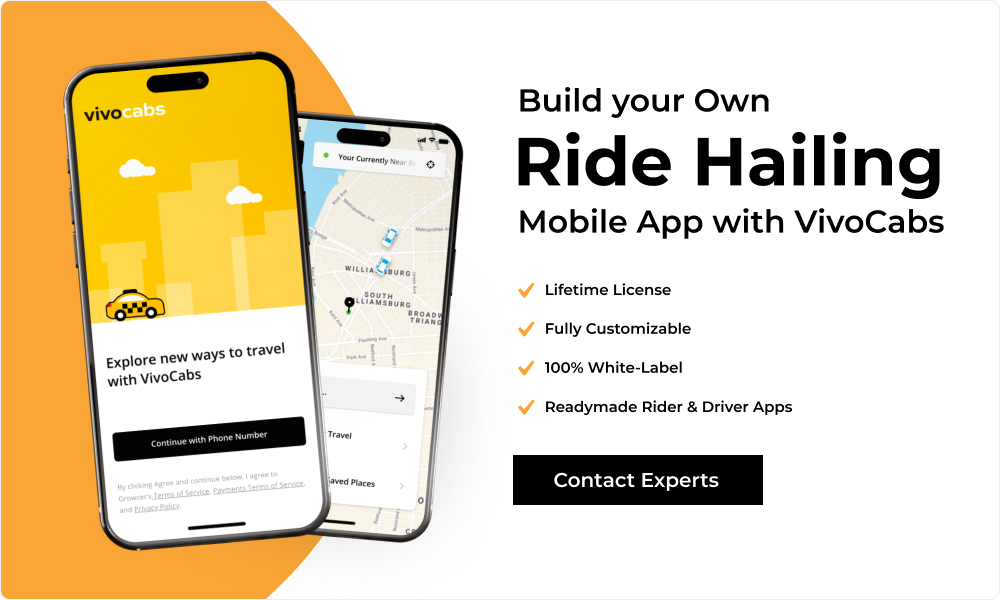
VivoCabs is a white-label, ready-made ride-hailing software built for entrepreneurs looking to launch a ride-hailing app in Singapore. The solution includes a feature-rich Rider App for seamless bookings, fare transparency, live tracking, and safe digital payments. Its Driver App empowers drivers with efficient trip management, navigation support, earnings summaries, and availability controls. Along with these, a powerful Admin Panel ensures smooth business operations with real-time tracking, data-driven analytics, driver onboarding tools, pricing controls, and support management.
Built for scalability, compliance, and high-performance mobility services, VivoCabs enables a fast go-to-market launch while maintaining long-term flexibility for business growth.
Key Highlights of VivoCabs
- Flexible and Market-Ready Solution: VivoCabs adapts effortlessly to Singapore’s transportation ecosystem with support for local mobility norms, regional configurations, and scalable fleet expansion.
- Multi-Language & Multi-Currency Support: Designed for Singapore’s diverse population, the solution supports multiple languages and currencies, making future international expansion seamless.
- Regional Payment Gateway Integrations: Works smoothly with secure and widely used Singaporean payment gateways, ensuring easy and fast transactions for riders and drivers.
- Complete Branding Freedom: White-label capabilities allow businesses to customize app design, user experience, pricing logic, and branding to establish a strong market identity.
- Cost-Efficient Deployment Model: A self-hosted solution with one-time licensing ensures long-term ownership, helping entrepreneurs avoid recurring development costs and high subscription fees.
- Built for Growth and Scalability: Whether starting in a single area or expanding across multiple zones in Singapore, VivoCabs offers a solid foundation to scale services confidently.
Discover How VivoCabs Fits Your Business
Conclusion
The ride-hailing industry in Singapore continues to evolve alongside technological advancements, urban mobility needs, and changing consumer expectations. Entrepreneurs aiming to enter this market must not only understand its competitive dynamics but also prioritize regulatory compliance, safety, and dependable service execution. Additionally, building a professional ride-hailing ecosystem requires seamless digital experiences for riders and drivers, backed by strong operational planning and continuous improvement.
With the right concept, strategic positioning, and careful development approach, businesses can successfully establish a presence in Singapore’s mobility sector. By focusing on long-term service quality, innovation, and customer trust, new entrants have the opportunity to contribute to Singapore’s future of transportation and shape the next era of convenient, efficient urban travel.
FAQs
Q 1: Is it profitable to launch a ride-hailing app in Singapore?
Ans. Yes, launching a ride-hailing app in Singapore is a profitable venture. Singapore has high mobility demand and strong digital adoption, making ride-hailing a revenue-generating business. However, profitability depends on pricing strategy, operational efficiency, driver retention, and the ability to differentiate from existing competitors in the market.
Q 2: How long does it take to build and launch a ride-hailing app in Singapore?
Ans. The duration to build and launch a ride-hailing app varies depending on the development approach. A fully custom-built solution may take 6-12 months, while a ready-made ride-hailing software can reduce this timeline to a few days to a few weeks, depending on the level of customization required.
Q 3: Can I scale my ride-hailing app to more areas or expand internationally from Singapore?
Ans. Yes, with a scalable technology infrastructure, such as a white-label solution like VivoCabs, you can scale your ride-hailing app to more areas or expand internationally from Singapore. These solutions support multi-zone expansion within Singapore and can easily adapt to new countries, regulatory shifts, and localized operations as your business grows.
Q 4: Is using white-label ride-hailing software a good option for startups in Singapore?
Ans. Yes, using white-label ride-hailing software is a good option for startups in Singapore. White-label ride-hailing software enables them to launch quickly with essential features already built, significantly lowering costs and development time. Thus, it’s an ideal approach for entrepreneurs entering Singapore’s competitive mobility market with limited budgets or urgent timelines.
Ready to Kickstart Your Ride-Hailing Business in Singapore
Get In TouchPopular Posts