

Lagos is not just the commercial capital of Nigeria; it is one of Africa’s fastest-growing megacities. It is also one of the most dynamic mobility markets, where consistent transportation demand is driven by dense population clusters, heavy traffic congestion, and high daily commute volumes. In such an environment, efficient and reliable mobility solutions are not optional but necessary.
As Nigeria’s commercial hub and a rapidly expanding megacity, Lagos is witnessing sustained urban growth, accelerated smartphone penetration, and strong digital adoption across consumer and business segments. Key commercial districts, including Victoria Island, Ikeja, Lekki, and Surulere, generate continuous movement, yet traditional transport systems remain fragmented and unable to meet evolving expectations for safety, reliability, and transparency.
This structural gap has opened a significant opportunity for organized, tech-enabled mobility solutions, especially ride-hailing apps, to deliver standardized services at scale.
For entrepreneurs, fleet operators, and mobility startups, launching a taxi app in Lagos offers entry into a high-demand, high-growth market with long-term potential.
Table of Contents
Why Lagos is a Profitable Market for Taxi Apps?
Lagos operates at a scale few African cities can match. With millions commuting daily across commercial and residential zones, transportation is a core enabler of economic activity. Let’s explore some of the factor that makes Lagis a profitable market for taxi apps:
1. Growing Urban Population
Lagos is home to over 20 million people, making it one of the largest cities in Africa. The population continues to grow rapidly due to rural-to-urban migration, expanding economic opportunities, rapid business development, and a thriving startup ecosystem. This sustained population growth directly translates into consistent transportation needs, creating a strong foundation for scalable ride-hailing platforms.
2. Traffic Congestion issues
Lagos is globally known for its traffic congestion. Long commute hours are common, especially during peak times. Informal transport options such as Danfo buses, Okadas, and traditional yellow taxis dominate the landscape, yet they often lack service consistency, pricing transparency, and standardized safety protocols. These structural inefficiencies create a significant opportunity for organized, app-based taxi services that provide predictable fares, driver accountability, optimized routing, and improved passenger experience.
3. Demand for Convenient Transport
Modern commuters in Lagos increasingly prioritize time efficiency, personal safety, seamless digital booking, and transparent pricing. As disposable income rises among professionals, entrepreneurs, and corporate employees, expectations around comfort and service reliability continue to grow. This behavioral shift reflects a broader transition toward structured mobility solutions, strengthening demand for professionally managed ride-hailing platforms.
4. Increasing Digital Adoption
Nigeria has experienced rapid growth in smartphone penetration, supported by affordable Android devices and competitive telecom infrastructure. As the country’s commercial center, Lagos leads in mobile app usage, eCommerce participation, digital service adoption, and fintech engagement. This digital maturity provides an enabling ecosystem for taxi booking applications to scale efficiently and capture a large, digitally active user base.
5. Growth of Mobile Payments
The growth of fintech platforms and mobile banking has accelerated the adoption of cashless payments. Consumers increasingly prefer card payments, bank transfers, digital wallets, and POS-enabled transactions for daily services. A robust digital payments ecosystem enhances transaction security, simplifies settlement processes, and enables ride-hailing platforms to operate more efficiently and transparently at scale.
Launch Your Taxi App to Capitalize on Lagos’ Transport Demand
Steps to Launch A Taxi App in Lagos
Launching a taxi app in Lagos demands a structured approach that balances market understanding, regulatory compliance, operational planning, and long-term scalability. Each step plays a critical role in reducing risk and strengthening your market position. Below is a practical roadmap to help you build a sustainable and competitive ride-hailing business.
Step 1: Conduct Market Research
Before investing in technology, you must clearly understand how the Lagos transportation market operates. Market research helps you identify demand patterns, customer expectations, pricing sensitivity, and operational challenges.
Additionally, market research helps you discover service gaps. These insights allow you to position your taxi app strategically, differentiate your offering, and build a foundation for sustainable, long-term profitability.
Key areas to focus on:
- Identify Target Audience: Your users define your pricing, branding, and feature priorities. Identify user segments that your app will cater to, target users include corporate commuters, airport travelers, tourists, students, and event attendees.
- Pricing Analysis: Study competitors’ base fare, per-kilometer rate, surge pricing strategy, and driver commission percentage. Set pricing that is competitive yet sustainable in Lagos’ fuel-sensitive economy.
- Local Transport Challenges: Evaluate traffic congestion, fuel price fluctuations, driver service standards, payment reliability, such as cash vs digital, and security concerns. Your app should address these real-world issues.
- Demand for Niche Services: Explore opportunities like bike taxis for heavy traffic zones, female-only rides, corporate fleet services, school transportation, or luxury car rentals to differentiate your platform.
Strong market research reduces risk, improves positioning, and lays a solid foundation for launching a successful taxi app in Lagos.
Step 2: Complete Legal & Regulatory Requirements in Lagos
Before launching your taxi app in Lagos, ensuring full legal and regulatory compliance is essential. Operating without proper registration and permits can lead to heavy fines, service suspension, or reputational damage. A legally structured business not only protects you from penalties but also builds trust with drivers, passengers, and corporate partners.
Key areas to focus on:
- Business Registration: Register your company with the CAC (Corporate Affairs Commission) to legally operate as a recognized business entity in Nigeria.
- Ride-Hailing Permits: Obtain the required operational licenses and permits from the Lagos State Government to run a ride-hailing platform in Lagos.
- Transport Compliance: Ensure adherence to state transport regulations, including vehicle standards, operational guidelines, and tax obligations.
- Driver Documentation: Verify driver licenses, vehicle registration papers, insurance coverage, and conduct proper background checks before onboarding.
- Insurance & Safety Policies: Implement commercial vehicle insurance, passenger coverage, and in-app safety measures such as ride tracking and emergency support.
By prioritizing compliance from the start, you reduce operational risk and position your taxi app as a trustworthy and professional mobility service in Lagos.
Step 3: Plan Must-Have Features for Your Lagos Taxi App
Your taxi app’s features directly impact user experience, driver satisfaction, and overall operational efficiency. In a competitive market like Lagos, having a smooth, reliable, and secure app is essential. Thus, given below are some of the must-have features that you should incorporate into your taxi app:
Passenger App
| Feature | Description | Business Impact |
| Easy Booking | Simple interface allowing users to request rides in a few taps | Improves user experience and reduces drop-offs |
| Fare Estimation | Displays approximate fare before ride confirmation | Builds trust and minimizes pricing disputes |
| Multiple Payment Methods | Supports cash, card, bank transfer, and digital wallets | Expands user adoption across segments |
| Real-Time Ride Tracking | Shows live driver location and ETA | Enhances transparency and passenger safety |
| Ride Scheduling | Enables pre-booking for airport trips, meetings, or events | Supports planned travel needs |
| SOS/Emergency Button | Provides instant access to emergency assistance | Increases user confidence and safety perception |
| Driver Ratings and Reviews | Displays feedback and performance ratings | Promotes accountability and service quality |
Driver App
| Feature | Description | Business Impact |
| Trip Management | Allows drivers to accept, reject, and complete rides efficiently | Streamlines operations |
| Smart Navigation | GPS routing optimized for Lagos traffic conditions | Reduces delays and fuel consumption |
| Earnings Dashboard | Shows daily, weekly, and monthly earnings | Improves income visibility and motivation |
| Heat Maps | Highlights high-demand areas in real time | Enables strategic positioning |
| In-App Wallet | Tracks commissions, bonuses, and payouts digitally | Ensures payment transparency |
| Availability Toggle | Drivers can switch online or offline anytime | Provides flexible work control |
Admin Panel
| Feature | Description | Business Impact |
| Commission Management | Set and adjust commission rates | Supports flexible revenue models |
| Driver Onboarding | Verifies documents before approval | Maintains compliance and safety standards |
| Reports and Analytics | Provides ride, revenue, and performance insights | Enables data-driven decisions |
| Surge Pricing Control | Adjust fares during peak demand | Maximizes revenue opportunities |
| Promo and Discount Management | Create and manage offers easily | Drives user acquisition and retention |
| Payment and Payout Tracking | Monitors transactions and driver payouts | Ensures financial transparency |
A well-balanced feature set ensures passengers enjoy convenience, drivers earn efficiently, and administrators maintain full control over operations, creating a scalable and competitive taxi app in Lagos.
Power Your Taxi Business With Smart Features
Step 4: Plan The Revenue Model
Your revenue model determines how profitable and sustainable your taxi app will be in the long run. In a market like Lagos, where fuel prices, traffic conditions, and driver expectations fluctuate, choosing the right monetization strategy is critical. A well-structured revenue plan ensures you generate consistent income while keeping rides affordable and drivers motivated. Many successful ride-hailing platforms combine multiple revenue streams to balance stability and growth.
- Commission Per Ride
This is the most widely adopted revenue model in the ride-hailing industry. The platform earns a percentage, typically between 15 to 25%, from each completed trip. This model scales naturally with ride volume and aligns your earnings with driver activity.
- Subscription Model
Drivers pay a fixed weekly or monthly fee to use your platform. This approach generates predictable recurring revenue regardless of individual ride frequency. It is particularly attractive to high-performing drivers who prefer fixed costs over percentage deductions.
- Surge Pricing
Surge pricing allows fares to increase automatically during peak demand periods such as rush hours, bad weather, or major events. This helps balance supply and demand while maximizing revenue. It also encourages more drivers to come online during high-demand windows.
- Corporate Contracts
Partnering with companies to provide transportation services at pre-agreed rates can create stable and recurring demand. Corporate clients often require employee transport, airport transfers, or executive travel solutions. These partnerships enhance revenue predictability and strengthen your platform’s market credibility.
- Advertising Revenue
Beyond ride commissions, your platform can generate additional income by offering in-app advertisements, featured listings, or brand partnerships. Local businesses, events, or service providers can promote themselves to your user base. This creates an additional income stream beyond ride commissions.
A diversified and strategically planned revenue model strengthens financial resilience and positions your taxi app for sustainable growth in Lagos’ competitive mobility landscape.
Step 5: Choose the Right Taxi App Development Model
Selecting the right development approach is a strategic decision that directly affects your budget, time-to-market, scalability, and operational risk. While some entrepreneurs prefer building everything from scratch, others opt for ready-made solutions to accelerate launch and reduce complexity. Understanding the strengths and trade-offs of each model will help you choose the one that aligns with your goals, timeline, and investment capacity.
Option A: Custom Development
Custom development means building your taxi app from the ground up with a dedicated development team. This approach offers you complete control but requires significant time, capital, and ongoing technical management.
- Higher Cost: Custom development involves hiring UI/UX designers, frontend and backend developers, testers, and project managers. The total investment can be substantial due to engineering, infrastructure, and maintenance expenses.
- Longer Development Timeline: Building a ride-hailing ecosystem, including passenger app, driver app, and admin panel from scratch, can take 6-12 months or more. Iterations and testing phases may further delay market entry.
- Full Flexibility: You have complete control over features, integrations, and custom workflows. This is ideal if you want highly unique functionalities or complex system integrations.
However, this option demands strong technical oversight and continuous upgrades. It also carries higher financial exposure, particularly in a fast-moving market where delayed launches can impact competitiveness.
Option B: Readymade/White-Label Taxi Software
Readymade or white-label taxi App software provides a pre-built, customizable ride-hailing solution that can be branded as your own. It is designed to help entrepreneurs launch quickly and efficiently.
- Faster Launch: Since the core system is already developed and tested, deployment can happen within weeks instead of months. This allows you to enter the market quickly and start acquiring drivers and passengers.
- Lower Upfront Cost: You avoid heavy development expenses because the technology is already built. Your investment focuses more on branding, marketing, and operations rather than engineering.
- Proven Business Model: These solutions come with tested features, optimized workflows, and scalable architecture. This reduces technical risk and ensures smoother operations from day one.
For most entrepreneurs in Lagos, especially those focused on speed, cost-efficiency, and quicker ROI, a white-label solution is often the smarter and more practical choice.
VivoCabs: Best Readymade Solution to Launch Ride-Hailing Mobile App
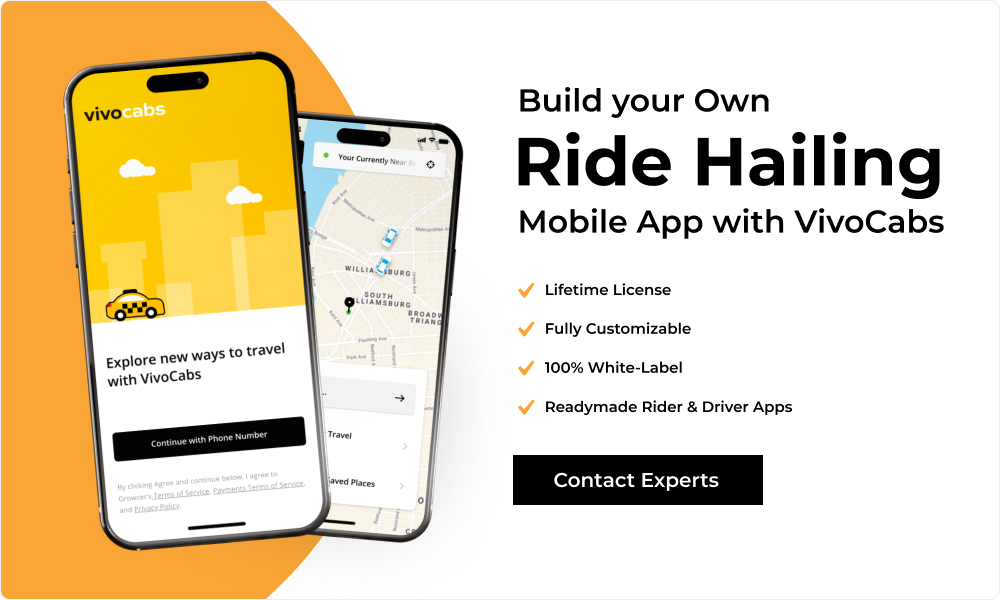
If you’re planning to launch a taxi app in Lagos without spending 6-12 months on development, leveraging a readymade solution like VivoCabs is the best choice. It is a powerful and scalable white-label solution tailored for modern ride-hailing businesses. Instead of building technology from scratch, you gain access to a ready-to-deploy ecosystem that allows you to focus on execution, onboarding drivers, building partnerships, and capturing market demand.
Designed for entrepreneurs, startups, and fleet operators, VivoCabs combines speed, flexibility, and business-focused features to help you enter the Lagos mobility market with confidence.
Why Choose VivoCabs?
- Complete Ride-Hailing Ecosystem: Includes Passenger App, Driver App, and Admin Panel, all fully integrated and optimized for smooth performance.
- Quick Deployment: Launch your branded taxi app within weeks, enabling faster market entry and early revenue generation.
- Custom Branding: You can add your logo, brand colors, and business identity to create a unique platform tailored to the Lagos market.
- Flexible Commission & Pricing Controls: Easily manage commission rates, surge pricing, promo codes, and service zones directly from the admin dashboard.
- Multiple Payment Integration: Supports various payment methods to align with Lagos’ cash and digital payment preferences.
- Advanced Reporting & Analytics: Track rides, revenue, driver performance, and business growth through real-time insights.
- Scalable & Future-Ready: Whether you start with 50 drivers or scale to thousands, the platform is built to grow with your business.
- Ongoing Technical Support: Regular updates, maintenance, and technical assistance reduce operational stress, technical risk, and ensure smooth performance.
Why It’s Ideal for Lagos Entrepreneurs
The Lagos market demands speed, reliability, and adaptability. VivoCabs allows you to reduce development risk, control upfront investment, and prioritize growth activities such as driver acquisition and marketing.
Instead of managing developers and technical complexities, you can concentrate on building partnerships, onboarding drivers, and scaling your brand across Lagos.
If your goal is to launch a professional, feature-rich taxi app quickly and efficiently, VivoCabs provides the technology foundation you need to compete and grow in the Lagos ride-hailing market.
Book a One-on-One Demo of VivoCabs
Ride-Hailing Apps Powered by VivoCabs
VivoCabs has been used by mobility businesses around the world to launch scalable, feature-rich ride-hailing apps quickly and efficiently. Mentioned below are some of the notable apps of Africa, built using VivoCabs:
- Tripli: It is a Nigeria-based ride-hailing platform built on the VivoCabs framework, designed to provide affordable, reliable transport with 24/7 availability and a seamless booking experience. With a versatile fleet and customer-first features, Tripli delivers cost-effective and efficient rides tailored to Nigeria’s mobility needs.
- Okra: Leveraging VivoCabs, Okra Rides offer efficient, affordable ride-hailing across Zambia. The platform connects riders with trusted drivers through an intuitive app interface, enhancing urban mobility with reliable service and smooth booking workflows.
- Kawasaa: Kwasaa is a ride-hailing app that redefines intra-city travel in Zimbabwe with dependable, locally optimized transport solutions. Built using VivoCabs, Kwasaa provides users with fast booking, transparent pricing, and a dependable commute experience tailored to the needs of regional commuters.
- Rideox: Rideox Cabs is a Nigerian ride-hailing service powered by VivoCabs, designed to offer affordable and comfortable travel around the city and the outskirts. With easy booking, live tracking, and promotional benefits like ride coupons, Rideox aims to make everyday commuting efficient and wallet-friendly.
Step 6: Marketing Strategy to Launch in Lagos
A strong marketing strategy is what turns your taxi app from a product into a growing business. In Lagos, competition is high, and user attention is limited, so visibility, trust, and incentives play a major role in adoption. Hence, your strategy should combine brand visibility, user incentives, and strategic partnerships that reinforce both demand and supply growth:
- Social Media Buzz: Build anticipation before launch using Instagram, X (Twitter), and Facebook. Highlight features, announce driver onboarding, and share countdown posts to create early awareness.
- Influencer Marketing: Partner with Lagos-based lifestyle, business, or travel influencers to introduce your app to their audience. Influencers help build credibility and fast initial traction.
- Early Bird Driver Incentives: Offer joining bonuses, higher earnings, or zero commission for the first set of drivers. This helps you build supply before customer demand peaks.
- Referral Campaigns: Reward both existing users and new users when referrals convert into completed rides. Referral programs drive organic growth at a lower acquisition cost.
- Corporate Tie-Ups: Secure long-term transportation contracts with companies for employee and client travel. This ensures steady, predictable revenue.
- Customer Loyalty Programs: Reward frequent riders with discounts, ride credits, or exclusive offers. Loyalty programs encourage repeat usage and brand stickiness.
Conclusion
Launching a taxi app in Lagos is a promising business opportunity, driven by factors like rapid urban growth, rising smartphone adoption, and increasing demand for convenient, reliable transportation. With thorough market research, proper legal compliance, smart feature planning, a sustainable revenue strategy, and the right development approach, you can build a scalable and competitive ride-hailing platform.
Long-term success, however, depends on strong execution; thus, choosing the right technology partner, onboarding reliable drivers, and implementing a strong marketing strategy is crucial. If you enter the market strategically and act at the right time, Lagos offers immense potential for building a profitable and sustainable taxi app business.
FAQs
Q 1. How much does it cost to launch a taxi app in Lagos?
Ans. The cost to launch a taxi app in Lagos depends on your development approach, branding needs, and marketing budget. A custom-built solution may require a significantly higher investment due to engineering and infrastructure costs, while a white-label, readymade taxi software solution reduces upfront expenses.
Q 2. How long does it take to launch a taxi app in Lagos?
Ans. With custom development, it can take 6-12 months to build and test the full ecosystem. However, leveraging a ready-made or white-label taxi software solution can reduce launch time to just a few weeks, allowing you to enter the market faster.
Q 3. Do I need technical knowledge to start a taxi app business?
Ans. No, you don’t necessarily need technical knowledge to start a taxi app business. If you choose a white-label taxi solution, the technical infrastructure is already handled, which allows you to focus on driver onboarding, partnerships, marketing, and day-to-day operations without managing complex development processes.
Q 4. Can I start with a small fleet and scale later?
Ans. Yes, many successful taxi platforms begin with a limited number of drivers and expand gradually. Using scalable technology ensures you can grow from dozens to thousands of drivers without rebuilding your system.
Q 5. Is a white-label taxi app solution suitable for long-term growth?
Ans. Yes, modern white-label solutions are designed with scalable architecture, advanced reporting tools, and flexible monetization options. They allow entrepreneurs to start quickly while maintaining the ability to expand operations over time.
Ready to Build Your Own Ride-Hailing Marketplace?
Get In TouchPopular Posts