

The rise of ride-hailing services has transformed the way people in Australia commute, offering a faster and more convenient alternative to traditional taxis. The growing popularity of these apps is driven by changing lifestyles, increasing urbanization, widespread smartphone use, and the shift toward flexible, on-demand mobility solutions.
With major players like Uber and DiDi leading the market, competition is strong, but opportunities remain for new entrants, especially those focusing on underserved areas, specialized services, or innovative features that enhance user experience.
If you’re an entrepreneur looking to launch a ride-hailing app in Australia, this guide will walk you through the market landscape, monetization strategies, essential features, and development approaches to help you launch a ride-hailing app in Australia successfully.
Table of Contents
Understanding the Australian Ride-Hailing Market
The ride-hailing industry in Australia has experienced steady expansion, thanks to urbanisation, smartphone adoption, and the public’s increasing preference for on-demand convenience. According to industry research, the Australian ride-hailing market is expected to grow to an impressive $18.7 billion by 2033, representing a compound annual growth rate (CAGR) of nearly 13.9%.
The growth is especially strong in major cities such as Sydney, Melbourne, Brisbane, and Perth, where dense populations, vibrant nightlife, and tourism create high demand. At the same time, regional towns present exciting opportunities, as ride-hailing services can fill the gap left by limited traditional taxi options and enhance local connectivity.
Top Leaders in the Australian Ride-Hailing Market
Australia’s ride-hailing market features a mix of global giants and local innovators. While established brands dominate in reach and resources, niche players continue to compete by targeting specific user segments and service gaps.
- Uber – Launched in 2012, Uber remains the largest ride-hailing app in Australia, serving all major cities and many regional areas. It offers diverse ride options, transparent pricing, and advanced app features, making it the market leader.
- DiDi – Entering Australia in 2018, DiDi has grown rapidly in price-sensitive segments. Known for competitive fares and driver incentives, it operates in key urban hubs, attracting budget-conscious passengers with frequent promotional offers.
- GoCatch – An Australian-founded ride-hailing app that connects passengers with taxis and private hire cars. GoCatch differentiates itself with fixed upfront fares, no surge pricing, and a focus on supporting local drivers and fleets.
- Bolt – Present in selected Australian cities, Bolt focuses on competitive pricing and a simple booking experience. It targets riders looking for affordable trips and drivers seeking lower commission fees compared to larger competitors.
- Shebah – A unique Australian service providing rides exclusively driven by women for women and children. Shebah prioritises safety, comfort, and empowerment, catering to passengers seeking a secure and gender-specific ride-hailing option.
Monetization Strategies of Ride-Hailing Apps
A sustainable ride-hailing business model requires multiple revenue streams to ensure profitability. These strategies help operators generate consistent income while offering value to both passengers and drivers.
- Commission per Ride – The platform takes a fixed percentage from each completed trip through the app, providing a stable income source while incentivising drivers to complete more rides for higher earnings.
- Surge Pricing – Charges higher fares during peak demand periods such as rush hours, special events, or bad weather, maximising revenue while balancing supply and demand.
- Subscription Plans for Drivers – Offers drivers the option to pay a fixed weekly or monthly fee in exchange for exclusive benefits, such as reduced commissions or priority bookings.
- In-App Advertising – Display targeted ads from third-party businesses within the passenger or driver app, creating additional revenue without affecting the core ride-booking experience.
- Premium Ride Options – Provide high-end services such as luxury cars, larger vehicles, or extra amenities at a higher fare, appealing to customers willing to pay more for comfort.
- Corporate Partnerships – Collaborate with businesses to offer ride services for employees, often on a contract or discounted bulk rate, ensuring steady revenue and brand visibility.
- Late Cancellation Fees – Charge passengers a fee for last-minute cancellations to compensate drivers for lost time and keep the booking system efficient.
Build a Ride-Hailing App that Maximizes Revenue with Hybrid Monetization
Essential Features of a Ride-Hailing App
Essential features of a ride-hailing app play a key role in ensuring a seamless, safe, and reliable experience for both riders and drivers, ultimately contributing to the platform’s success and user satisfaction.
Passenger App Features
- Easy registration & login – Allow passengers to quickly create an account using social media, email, or mobile numbers, ensuring a seamless onboarding process.
- Ride booking with real-time tracking – Allows passengers to book rides instantly and track the driver’s location in real time, providing transparency and accurate arrival time estimates.
- Multiple payment methods – Supports multiple payment methods such as credit/debit cards, digital wallets, bank transfers, and cash, enabling users to pay via their preferred payment method for convenience and flexibility.
- Fare estimation before booking – Integrate an in-app fare estimator to display the estimated trip cost before confirming the ride, helping passengers make informed decisions.
- SOS emergency button – Equip an in-app emergency toggle that allows passengers to share their ride details with their pre-set emergency contacts, ensuring safety during rides.
- Ratings & reviews – Enables passengers to rate drivers and leave feedback, improving service quality and accountability across the ride-hailing app.
Driver App Features
- Ride request notifications – Instantly alert drivers about new ride requests, allowing them to accept or decline based on their availability and preferences.
- Navigation & route optimisation – Integrate GPS maps to provide the fastest routes, reduce travel time, and improve driver earnings by increasing completed trips.
- Earnings tracking – Allow drivers to view daily, weekly, or monthly earnings in the app, offering transparency and helping them plan work schedules.
- Availability toggle – Allow drivers to set their availability status, giving them control over when they are open to accepting ride requests.
- Passenger rating system – Enable drivers to rate passengers, fostering mutual respect and ensuring a safer and more positive ride environment.
Admin Panel Features
- Driver onboarding & management – Allows admins to verify driver credentials, approve applications, and manage active driver profiles efficiently.
- Ride analytics & reporting – Provides detailed insights into trips, user activity, revenue trends, and service performance, aiding in data-driven decision-making.
- Fare management – Enables admins to set, adjust, or create dynamic fare structures based on time, distance, vehicle type, location, or demand patterns.
- Dispute resolution tools – Offers features for addressing passenger-driver conflicts quickly, ensuring fair resolutions and maintaining service reputation.
- Promotions & offers management – Allows the creation and tracking of discount codes, loyalty rewards, and referral bonuses to attract and retain users.
Development Approaches to Build a Ride-Hailing App in Australia
Choosing the right development approach is critical for balancing cost, time-to-market, and scalability. The two most common methods of building a ride-hailing app are custom development and readymade software, each with distinct benefits and trade-offs.
- Custom Development – This approach involves building the ride-hailing app from scratch, tailored to unique business requirements and brand identity. It offers complete flexibility in features, integrations, and user experience. However, it also demands a higher investment and consumes a longer development timeline, ranging anywhere from 6 months to over a year. Additionally, you need to hire a dedicated team of developers, designers, and quality analysts to ensure a successful development.
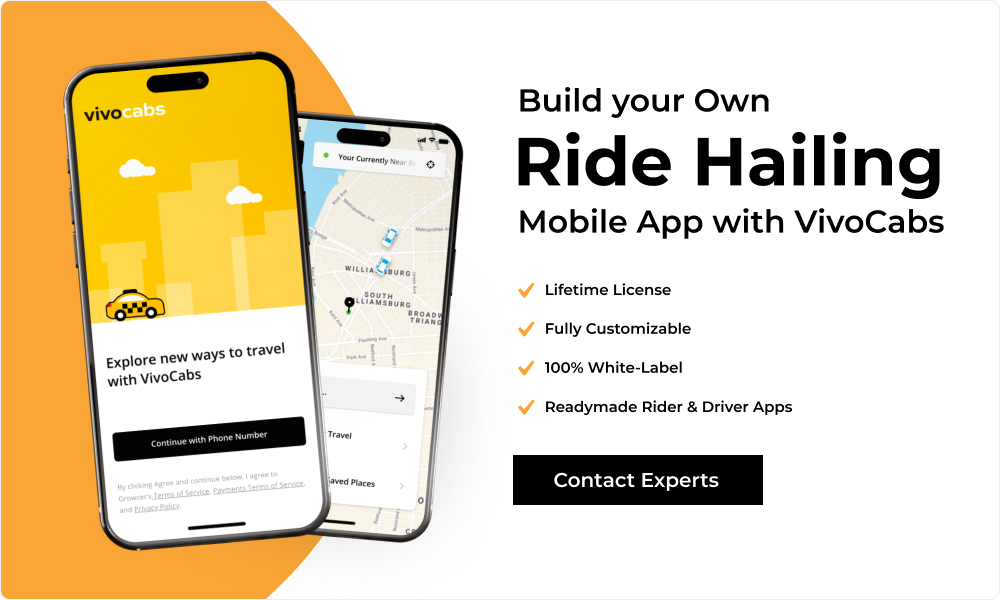
- Readymade Software – Readymade software solutions are pre-built ride-hailing app solutions that can be customized to build a ride-hailing app that matches your unique brand identity and operational needs. Readymade software offers faster launch times, lower initial costs, and proven, tested features. One example is VivoCabs by FATbit Technologies, a scalable, white-label ride-hailing app designed to help businesses looking to launch a ride-hailing app quickly without compromising on quality.
How VivoCabs Helps You Launch a Ride-Hailing App in Australia?
VivoCabs is a ready-to-deploy ride-hailing software built to help entrepreneurs launch a ride-hailing app quickly in the competitive market. Built for global scalability, it supports multiple languages and currencies, making it ideal for businesses keen to launch a ride-hailing app in Australia. With all essential features, native rider and driver apps, and a powerful web admin panel, VivoCabs eliminates the need for lengthy custom development.
VivoCabs is a highly adaptable solution, giving you the flexibility to personalize the design, features, and workflows to suit your business vision. Whether you want to operate in one Australian city or expand across multiple regions, VivoCabs supports localization, regional payment gateway integrations, compliance with local regulatory standards, and smooth scalability. Moreover, as a self-hosted solution, it offers lifetime ownership with a one-time investment, ensuring complete control and long-term value.
Some of the benefits of VivoCabs are:
- Completely White Label
- Self-hosted Solution
- Source Code Ownership
- One-Time License Fee
- Lifetime Ownership
- No Recurring Charges
- Robust and Scalable
- Highly Customizable
- One Year of Free Technical Support
Secure a Personalized Demo to Know More About VivoCabs
Conclusion
Launching a ride-hailing app in Australia is an exciting but competitive venture that requires thorough planning, market understanding, and the right technology. The Australian ride-hailing industry continues to grow, but only those who deliver exceptional service, maintain operational efficiency, and adapt to changing customer expectations will stand out.
From analysing local market dynamics and understanding legal regulations to designing a user-friendly app and implementing effective monetisation strategies, every step plays a crucial role in long-term success. Hence, by combining innovative features, robust marketing, and a scalable business model, entrepreneurs can carve a strong presence in this evolving market.
FAQs
Q1. How much does it cost to launch a ride-hailing app in Australia?
Ans. The cost can vary widely depending on the development approach. Building a fully custom app from scratch may cost anywhere from $20,000 to $100,000 and take several months, while using a readymade software significantly reduces these expenses by up to 5 times.
Q2. Is it possible to start small and scale later?
Ans. Absolutely. You can begin by launching the ride-hailing app in a single city and later expand to multiple regions. Scalable ride-hailing solutions are designed to support growth with features like multi-city management, localization, regulatory compliance, payment gateways, and seamless integration with regional tax regulations.
Q3. Do I need technical expertise to manage the ride-hailing app?
Ans. No, you don’t need technical expertise to manage the ride-hailing app built with a readymade software solution. The solution comes with an intuitive admin panel that allows you to easily oversee operations, manage user profiles, track trips, and handle payments, all without coding knowledge. Additionally, most readymade software also offers technical support and documentation to guide you throughout the process.
Q4. Can I customize the ride-hailing app built with VivoCabs to match my unique branding?
Ans. Yes, you can easily customize the ride-hailing app built with VivoCabs. From the logo, colors, and design elements to specific features and workflows, the software is highly adaptable, allowing you to align the app with your unique branding and business requirements. Please note that advanced or complex customizations may involve additional costs, so it’s best to consult our experts for detailed guidance.
Planning to Launch a Ride-Hailing App in Australia that Stands Out?
Reach ExpertsPopular Posts