

The rise of mobile technology has revolutionized the way we commute. Ride-hailing apps like Uber, Lyft, and Grab have transformed urban transportation, creating convenience for passengers and lucrative opportunities for entrepreneurs. For startups, the ride-hailing market offers a chance to enter a booming industry with immense growth potential.
However, starting a ride-hailing app business isn’t just about developing an app and launching it. It requires careful planning, understanding market dynamics, ensuring regulatory compliance, and implementing the right marketing and operational strategies. Thus, this blog provides a step-by-step roadmap for entrepreneurs who want to start a ride-hailing app business as a startup, offering practical insights, strategies, and actionable advice.
By the end of this blog, you will understand everything from market research to app development, launch strategies, and overcoming challenges, enabling you to make informed decisions and increase the chances of building a successful ride-hailing startup.
Table of Contents
Why Start a Ride-Hailing App Business as a Startup?
The ride-hailing industry is one of the fastest-growing sectors in the global economy, offering massive opportunities for startups. With urbanization, increasing smartphone adoption, and a growing preference for on-demand transportation, launching a ride-hailing app has become a viable and profitable venture for new entrepreneurs. Here’s why startups should consider entering this market:
- Huge Market Potential: As per a report by Statista, the ride-hailing market is expected to result in a projected market volume of $229.98 billion by 2030 (worldwide). Urban commuters, especially in developing countries, are shifting from personal vehicles to on-demand transport solutions. For startups, this represents a large, ready-to-target audience seeking convenience and affordability.
- Opportunities for Niche Innovation: While giants like Uber and Lyft dominate mainstream markets, there are underserved niches where startups can thrive. Options include eco-friendly rides, female-only driver services, luxury commuting, or rides in tier-2 and tier-3 cities. Focusing on a niche allows startups to differentiate themselves and attract loyal customers.
- Flexible and Scalable Business Model: Ride-hailing apps allow for multiple revenue streams such as per-ride commissions, subscription plans, advertisements, or premium services. Additionally, once a startup gains traction in one city, the app can be scaled to multiple locations, making it a highly scalable business model.
- Increasing Urban Mobility Demand: As traffic rises, more commuters prefer on-demand transport over private vehicle ownership. Startups can capitalize on this trend by providing reliable, efficient, and affordable services, fulfilling an essential urban need.
- Technology-Driven Efficiency: Modern ride-hailing apps leverage GPS tracking, automated payments, and analytics to optimize operations. For startups, this means a tech-driven approach reduces operational costs, improves efficiency, and ensures a superior user experience.
Cost to Start a Ride-Hailing App Business
The cost to start a ride-hailing app business depends on your development method, features, and operational needs. Expenses may include app development, licensing, marketing, server hosting, driver onboarding, and ongoing maintenance. However, startups can choose between custom development or readymade software based on budget and launch timelines. Let’s have a look at both the approaches:
- Custom Development: Building a custom ride-hailing app requires a higher investment as everything is developed from scratch. No doubt, you get complete control over design, features, and overall user experience, but the cost involved in hiring developers, designers, QA testers, and project managers is significantly high. Moreover, this approach can take several months and generally costs between $40,000 to $250,000+, depending on the complexity of the app.
- Readymade Ride-Hailing Software: It is a more affordable and faster option for startups. The solution comes with pre-built features for riders, drivers, and admins. You can customize branding, add features, and launch quickly without long development cycles. Additionally, costs usually range from $2,000 to $10,000, making it ideal for new businesses with limited budgets.
Start Your Ride-Hailing App with a Cost-Effective Solution
Steps to Start a Ride-Hailing App Business
Starting a ride-hailing app business requires careful planning, market analysis, and strategic execution. In this section, you will explore the essential steps entrepreneurs need to start a ride-hailing app business, from research and business modelling to app development, launch, and marketing.
STEP 1. Conduct Market Research
Before you start a ride-hailing app business, conducting thorough market research is crucial. During market research, you should
- Identify target audiences
- Study competitors
- Analyze pricing models
- Understand user pain points.
Insightful research helps startups design an app that meets customer expectations, fills market gaps, and increases the chances of building a successful ride-hailing business.
STEP 2. Define Your Revenue Model
Your revenue model determines how your ride-hailing business will generate consistent income. Moreover, selecting the right mix of revenue channels helps ensure long-term profitability, sustainability, and steady business growth. Common revenue models include:
- Commission on Rides: The platform earns a percentage from each completed ride. This is the most common and stable revenue stream for maintaining regular cash flow.
- Surge Pricing Fees: Higher prices are charged during peak hours, high-demand zones, or limited driver availability, helping increase earnings when demand rises sharply.
- Subscription Plans for Drivers: Drivers pay weekly or monthly subscription fees instead of per-ride commissions, offering predictable revenue and attractive earning options for frequent drivers.
- In-App Advertisements: Display ads from local businesses or partner brands within the app. This creates an additional income channel without affecting the core service.
STEP 3. Legal & Regulatory Compliance
Compliance with local laws is essential to start a ride-hailing app business. Obtain necessary licenses, ensure drivers are verified, provide insurance coverage, and adhere to safety regulations. Furthermore, meeting legal requirements safeguards your startup from penalties and builds trust with both riders and drivers.
STEP 4. Key Features to Include
To build a competitive ride-hailing app, you must include essential features that simplify booking, ensure safety, automate operations, and offer a seamless user experience. These features should be designed to support both drivers and riders while maintaining the reliability of your platform.
| Rider App | Driver App | Admin Panel |
| User-Friendly Interface | Easy Registration & Verification | Centralized Dashboard |
| Real-Time GPS Tracking | Real-Time Ride Requests | Trip & Fare Management |
| Multiple Payment Options | Navigation & Route Optimization | Driver & Rider Management |
| In-App Chat & Calls | In-App Chat & Calls | Payment & Commission Control |
| Ride Scheduling | Earnings Dashboard | Real-Time Fleet Tracking |
| Ride History | Ride History | Analytics & Reporting |
| Ratings & Reviews | Ratings & Reviews | Promo Codes & Offers Management |
Launch a Feature-Packed Ride Hailing App
STEP 5. Choose the Right Development Approach
Selecting the right development approach helps startups start a ride-hailing app business efficiently. Consider app complexity, budget, timeline, and scalability while choosing between custom development or readymade software solutions.
| Criteria | Custom Development | Readymade Software |
| Time to Launch | Longer development timeline | Launch-ready in a short time |
| Cost | Higher investment required | Budget-friendly for startups |
| Customization | Fully tailored to unique needs | Everything is built in, reducing customization effort |
| Scalability | Highly scalable for future growth | Scalable with flexible expansion options |
| Feature Flexibility | Build any feature from scratch | Comes with pre-built features |
| User Experience | Superior, fully personalized UX | Standard UX suitable for quick launch |
| Market Testing | Ideal after full product build | Perfect for MVP and early validation |
STEP 6. Launch and Market
A strong marketing strategy is essential to start a ride-hailing app business successfully. Promote your app through social media, referral programs, influencer campaigns, and App Store Optimization to attract riders and drivers effectively.
Challenges & How to Overcome Them
Starting a ride-hailing app business comes with several challenges related to competition, technology, operations, and customer trust. However, with the right strategies, planning, and continuous improvements, startups can overcome these hurdles and build a strong, scalable, and reliable ride-hailing platform. Below are some common challenges and ways to overcome them:
1. High Competition: Ride-hailing markets often have established players, making it difficult for startups to gain visibility.
💡 Solution:
2. Driver Retention Issues: Many drivers shift platforms due to income instability or high commissions.
To overcome this, focus on unique positioning, offer niche services, maintain affordable pricing, and invest in hyper-local marketing campaigns that directly target underserved customer segments.
💡 Solution:
Address this challenge by offering transparent payouts, fair incentives, loyalty bonuses, insurance benefits, and quick payment settlements to build long-term trust and encourage drivers to stay active on your platform.
3. Customer Trust & Safety Concerns: New ride-hailing apps often struggle to convince users about safety.
💡 Solution:
Provide features like verified drivers, SOS buttons, trip tracking, contactless communication, and quick support. Ensuring strong safety protocols builds user confidence and encourages repeated bookings on your platform.
4. Regulatory Restrictions: Ride-hailing regulations differ across cities and can complicate operations.
💡 Solution:
Work closely with legal experts, learn local transport laws, obtain required licenses, and maintain compliance. Staying legally aligned prevents fines, operational interruptions, and long-term complications for your startup.
5. Technical Glitches: App downtime, bugs, or slow performance can disrupt the user experience.
💡 Solution:
Invest in a strong development team, carry out testing regularly, and ensure powerful server support. Continuous improvements and timely updates help maintain smooth functionality and user satisfaction.
6. Marketing & User Acquisition Costs: Attracting your first set of customers often requires heavy spending on marketing.
💡 Solution:
Overcome this by using referral programs, influencer partnerships, social media promotions, and targeted ads. Smart marketing helps maximize visibility without exhausting the startup budget.
7. Managing Operational Challenges: Balancing drivers, rides, payments, and customer queries can be demanding.
💡 Solution:
Implement automated management systems, route optimization tools, and strong analytics dashboards. Efficient backend operations ensure better decision-making, reduced manual work, and improved overall service quality.
Starting a ride-hailing app comes with its share of challenges, but with the right strategies and solutions, these hurdles can be overcome. For those looking to streamline the launch process and address these challenges, VivoCabs is one such solution that helps startups address key obstacles, enabling a faster, smoother launch of a competitive and scalable ride-hailing business.
VivoCabs-A Powerful Solution to Launch and Scale Your Ride-Hailing App
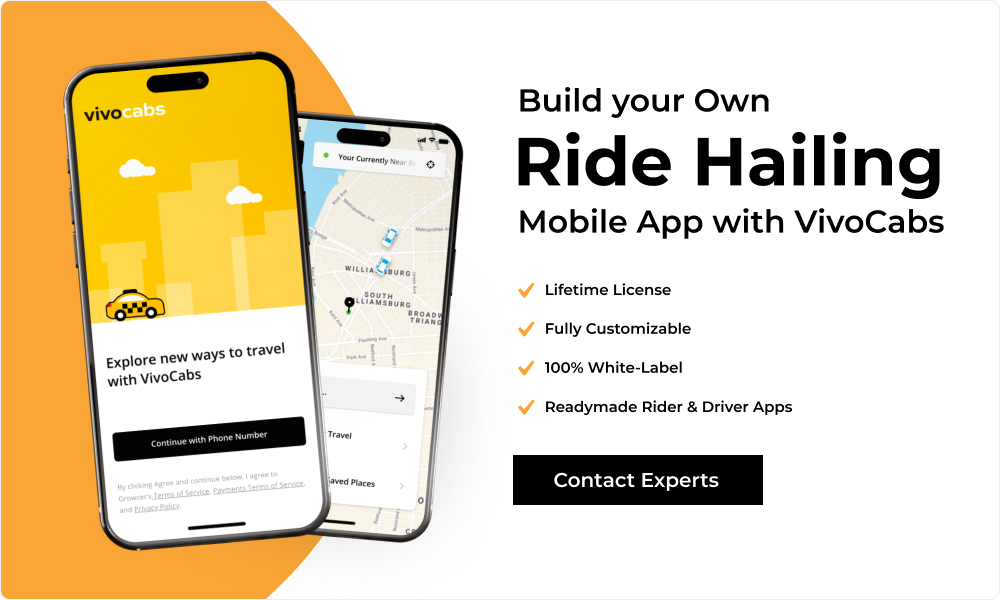
VivoCabs is a fully equipped, readymade ride-hailing software designed to help entrepreneurs quickly launch a feature-rich taxi booking platform. It offers rider and driver apps, an advanced admin dashboard, automated fare calculation, real-time tracking, multi-language support, and secure payment options. The solution is fully customizable, scalable, and built to handle high-volume operations. Moreover, with faster deployment, strong performance, and a smooth user experience, VivoCabs enables startups to enter the market confidently and grow their ride-hailing business with ease.
Why Choose VivoCabs?
- Quick Market Launch: VivoCabs helps entrepreneurs launch their ride-hailing app rapidly with pre-built features, reducing development time and allowing faster business entry.
- White-Label: It is a fully white-label solution, allowing you to add your logos, colours, and features, delivering a ready-made app that is uniquely yours.
- Fully Customizable Solution: The solution allows complete customization of design, features, branding, and workflows, ensuring your ride-hailing business reflects your unique vision and services.
- Scalable Architecture: VivoCabs supports growing user traffic, increasing ride requests, and expanding operations across multiple cities without performance issues or system limitations.
- Advanced Safety Features: The solution includes SOS buttons, trip tracking, and verified driver profiles to guarantee safer rides and build passenger trust effectively.
- Multi-Language and Multi-Currency Support: VivoCabs enables global expansion by supporting multiple languages and currencies, helping you operate seamlessly across various regions and customer segments.
- Powerful Admin Dashboard: The admin panel provides complete control over drivers, fares, earnings, promotions, and reports, ensuring efficient business management and smooth daily operations.
- Seamless Rider and Driver Experience: Both apps are designed with intuitive interfaces that ensure easy ride booking, smooth navigation, quick support, and seamless end-to-end user journeys.
- Source Code Ownership: You get full access to the app’s source code. Thus, you can customize, update, and make future enhancements, ensuring your ride-hailing app evolves with your business needs.
For more details, visit here.
Experience VivoCabs Firsthand
Final Thoughts
Starting a ride-hailing app business as a startup is an exciting opportunity in today’s fast-growing mobility market. With the right research, clear business model, legal understanding, and well-planned development approach, entrepreneurs can build a platform that genuinely solves transportation challenges.
While competition and operational hurdles exist, they can be managed through smart strategies, technology, and customer-focused improvements. Success comes from offering reliable service, maintaining safety, and continuously adapting to user needs. With consistent effort, your ride-hailing app can grow into a sustainable and impactful business.
FAQs
Q 1. How long does it take to build a ride-hailing app?
Ans. The timeline to build a ride-hailing app depends on the development method you choose. Custom apps may take 6-12 months or even more, while readymade solutions allow you to launch your app in 1-2 weeks after branding, configuration, and minor customizations.
Q 2. What is the best development approach for a new startup?
Ans. If you’re on a tight budget and timeline, leveraging readymade software is the best development approach for you. Not only does this approach allow rapid entry, but offers full customization and long-term scalability. Hence, for a new startup, this is an ideal choice.
Q 3. Is VivoCabs suitable for startups with a limited budget?
Ans. Yes, VivoCabs is suitable for startups with a limited budget. Designed for early-stage startups, it offers a readymade structure that reduces development time and costs. Moreover, you can launch quicker without investing heavily in full custom development from scratch.
Q 4. Can I customize the VivoCabs software according to my brand?
Ans. Yes, you can customize the VivoCabs software according to my brand. It allows complete customization of colours, logos, features, and app flow. This makes it easy to align the platform with your brand identity while maintaining a professional, user-friendly ride-hailing experience.
Q 5. Is VivoCabs a one-time purchase or subscription-based?
Ans. VivoCabs is a one-time purchase, licensed solution, allowing you long-term ownership without recurring subscription costs. Thus, it is ideal for startups wanting full control over expenses.
Ready to Start Your Ride-Hailing Startup
Reach OutPopular Posts