The global transportation landscape is evolving rapidly, with ride-sharing app development playing a major role in reshaping urban mobility. Ride-sharing apps like Uber, Lyft, and Careem have revolutionized how people commute, offering convenience, affordability, and efficiency. As urban populations grow and technology advances, the demand for modern ride-sharing apps continues to soar.
Suppose you’re looking to build a ride-sharing app and tap into this high-growth market. In that case, this guide will walk you through everything you need to know, from essential features and technology stack to ride-sharing app development options and cost considerations. By the end, you’ll also discover a readymade solution that can help you launch your ride-sharing app faster and more cost-effectively.
Table of Contents
- How does a Ride-Sharing App Work?
- How does a Ride-Sharing App Earn Revenue?
- Why the Demand for Ride-Sharing Apps Growing
- Key Features of a Successful Ride-Sharing App
- Ride-Sharing App Development—Step-by-Step Process
- Cost of Developing a Ride-Sharing App
- Right Approach to Build a Ride-Sharing App: Custom Development v/s Readymade Software
- VivoCabs: The Best Readymade Ride-Sharing App Software Solution
- Conclusion
How does a Ride-Sharing App Work?
Ride-sharing apps have revolutionized urban transportation by making it easy for users to book rides in real-time through their smartphones. Here’s a simplified step-by-step breakdown of how a typical ride-sharing app functions:
- The passenger navigates through the ride-sharing app, enters their pickup and drop-off locations, and selects a preferred ride option (e.g., Economy, XL, Eco).
- The app calculates the estimated fare based on distance, time, ride type, and potential surge pricing.
- The system identifies the nearest available driver and sends them the trip request with pickup, drop-off, and fare details.
- If another passenger nearby is headed in the same direction, the system may offer a shared ride to optimize route efficiency and cost.
- Once the driver accepts the request, trip details are shared with all involved parties. Passengers can track the driver’s real-time location through the app.
- The driver picks up the passenger(s) and uses GPS navigation to follow the most efficient route, ensuring shared passengers are dropped off in the correct order.
- Upon ride completion, the fare is automatically processed, with the app deducting the admin’s commission and transferring the remaining amount to the driver’s digital wallet.
- After the trip, both the passenger and driver can rate each other and provide feedback to help maintain service quality.
How does a Ride-Sharing App Earn Revenue?
Ride-sharing apps follow a commission-based business model, generating revenue through various channels. Here’s how a ride-sharing app typically earns:
- Commission on Rides: A fixed percentage or variable commission is deducted from each fare paid by the passenger before transferring the rest to the driver.
- Surge Pricing (Dynamic Pricing): During high-demand periods, the ride-sharing app applies surge pricing, increasing fares and, in turn, boosting the app’s earnings.
- Ride-Pooling Margin: In shared rides, the app can earn more by combining multiple passengers on similar routes while optimizing driver payouts.
- Subscription Plans: Some ride-sharing apps offer premium plans or memberships to drivers for lower commission rates or exclusive features.
- In-App Advertising: Ride-sharing apps can display ads or promotional offers, generating additional ad revenue from third-party advertisers.
- Cancellation & Convenience Fees: The app may charge cancellation fees, wait-time charges, or booking fees that contribute directly to its income.
- Partnerships & Brand Collaborations: Strategic brand partnerships or tie-ups with local businesses (e.g., restaurants, fuel stations) offer another revenue stream.
Build a Profitable Ride-Sharing App and Unlock Multiple Revenue Streams
Why the Demand for Ride-Sharing Apps Growing?
Several factors are driving the popularity of ride-sharing apps:
- Convenience: On-demand booking, cashless payments, and real-time ride tracking make ride-sharing hassle-free.
- Affordability: Ride-sharing and carpooling often cost less than traditional taxis or owning a car.
- Sustainability: Shared rides contribute to reducing traffic congestion and carbon emissions.
- Digital adoption: Smartphone penetration and internet availability enable more users to access these services.
Given these advantages, entrepreneurs worldwide are considering ride-sharing app development as a lucrative business opportunity.
Key Features of a Successful Ride-Sharing App
If you want to build a ride-sharing app that competes effectively, you need to include features that enhance both the user and driver experience. Below are the must-have components.
Passenger App Features
- User registration and profiles – Allow passengers to sign up easily using email, phone, or social media, and manage their personal details securely.
- Ride booking and scheduling – Enable users to request rides instantly or schedule trips in advance with just a few taps.
- Real-time GPS tracking – Show passengers the driver’s location, ETA, and route progress through an interactive map for transparency.
- Fare estimation and digital payments – Provide upfront fare estimates and offer multiple secure payment options, including credit cards, wallets, or UPI.
- Ratings and reviews – Let users rate drivers and leave feedback, helping maintain quality service on the app.
- Notifications & trip history – Send real-time updates about trip status and maintain records of past rides for easy reference.
Driver App Features
- Driver onboarding and verification – Streamline driver registration with document uploads and background checks for safety.
- Trip requests & navigation – Allow drivers to accept or reject rides, and provide built-in maps for accurate navigation.
- Earnings dashboard – Show drivers their earnings, completed trips, and incentive progress in one place.
- Availability toggle – Let drivers mark themselves online or offline as per their availability.
- Ratings and feedback – Drivers can view their ratings and passenger reviews, encouraging high service standards.
Admin Panel Features
- Fleet management – Manage and monitor all registered drivers and vehicles efficiently.
- User & driver management – Handle account registrations, approvals, suspensions, and more from a centralized admin dashboard.
- Pricing and commission settings – Configure dynamic pricing, promo codes, and commission structures.
- Analytics & reporting – Access detailed insights on rides, revenue, and user behavior to make data-driven decisions.
- Promo codes and offers – Create and manage marketing campaigns to attract and retain users.
Launch a Feature-Rich Ride-Sharing App
Ride-Sharing App Development—Step-by-Step Process
Building a ride-sharing app involves a structured approach to ensure it meets both business goals and user expectations. Here’s a streamlined overview of the process:
- Conduct Market & Competitor Research – Conduct in-depth market research to understand user needs, analyze top competitors, and identify market gaps. This helps define your unique selling point and ensures your app offers real value and differentiation in a competitive space.
- Define Features & Plan Development Roadmap – Outline key app features like real-time tracking, payments, and ride-matching. Prioritize them based on business goals and user expectations to create a ride-sharing app development roadmap that aligns with your time-to-market and budget.
- Design Seamless User Experiences – Design clean, intuitive interfaces for riders, drivers, and admins. Focus on simplicity, accessibility, and ease of navigation to ensure a smooth and enjoyable user experience across all platforms and user roles.
- Choose between Development Approaches – Decide whether to build the ride-sharing app using custom development for full flexibility or opt for a readymade solution to save time and cost. Evaluate factors like budget, time-to-market, scalability, and feature requirements before choosing the right ride-sharing app development approach.
- Test for Quality, Performance & Security – Perform rigorous testing, including functional, performance, and security checks. This ensures the ride-sharing app is bug-free, stable under load, and secure against vulnerabilities before launch.
- Ride-Sharing App Deployment – Launch the ride-sharing app on platforms like the App Store and Google Play. Ensure backend servers and databases are properly configured for scalability and uptime, and monitor the initial performance closely.
- Monitor, Support & Improve Continuously – Continuously gather user feedback, fix bugs, and release updates. Use analytics to track app usage and make informed improvements to ensure long-term growth and customer satisfaction.
Cost of Developing a Ride-Sharing App
The cost of ride-sharing app development depends on several key factors like:
- Development Approaches
- Feature complexity
- UI/UX
- Technology stack
- Choice of platforms (iOS, Android, web)
- Developer location and hourly rates
Custom app development: Developing a ride-sharing app from scratch may cost anywhere between $15,000 to $150,000+, depending on your specific business requirements.
Readymade or white-label solutions: These pre-built solutions are up to five times more affordable than custom development and can be deployed quickly. Ideal for startups or MVPs, they reduce time-to-market but may have limitations in customization and scalability.
Kickstart Your Ride-Sharing App Business with Turnkey Software
Right Approach to Build a Ride-Sharing App: Custom Development v/s Readymade Software
When building a ride-sharing app, choosing between custom development and a readymade software solution is a crucial decision. Each approach offers distinct advantages and considerations based on your business goals, budget, and timeline.
1. Custom Ride-Sharing App Development
Perfect for businesses aiming to build a highly tailored ride-sharing app with complete control over features and design.
Pros:
- Unique branding and design
- Full control over features and architecture
- Easy to add advanced features and custom integrations
- Better long-term scalability
Cons:
- Higher initial investment
- Longer development timeline (6–12 months)
- Requires significant technical oversight
- Need to hire a dedicated team of developers
- Continuous updates and maintenance charges
- Risks of encountering any bugs or downtime errors
2. Readymade Ride-Sharing Software
An increasingly popular alternative in ride-sharing app development is to use white-label or readymade ride-sharing software solutions. These pre-built solutions are a convenient option for launching quickly with essential features already built in.
Pros:
- Faster time-to-market, allowing you to launch your ride-sharing app in a few weeks.
- Lower upfront costs compared to custom development make it a cost-effective alternative.
- Pre-built essential features and integrations right from the beginning.
- Technical support is provided to ensure smooth onboarding and timely issue resolution.
- Proven reliability and performance, as the solution is often tried and tested
- Easy scalability and configuration options to adapt the platform as your business grows.
Cons:
- May incur additional costs for extensive customization, as modifying the core system beyond standard options often requires vendor involvement or paid extensions.
While custom development is ideal for businesses with unique requirements and ample budgets, readymade software is a practical and efficient approach for startups and entrepreneurs looking to launch quickly, minimize risk, and scale as they grow.
VivoCabs: The Best Readymade Ride-Sharing App Software Solution
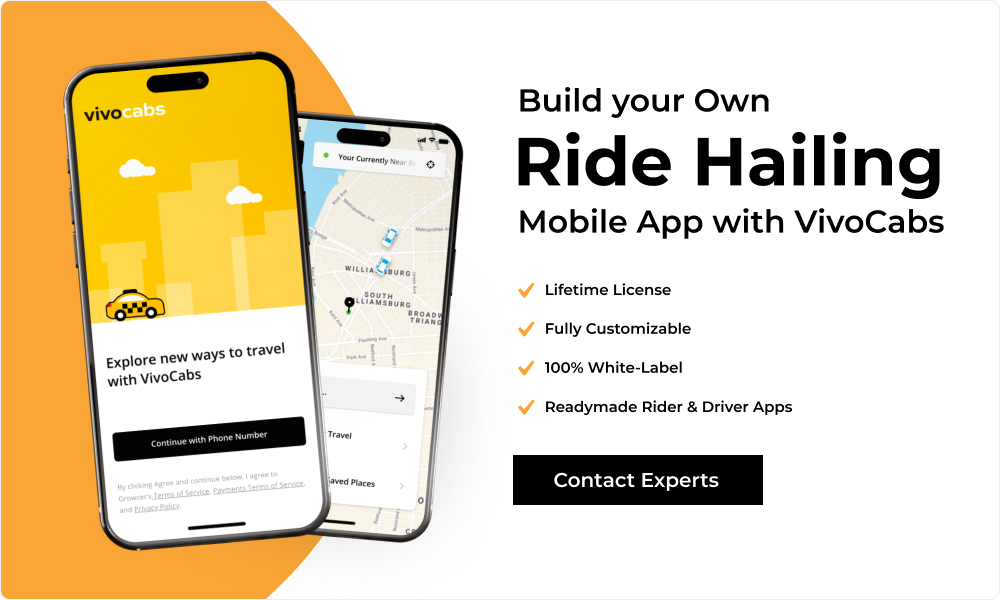
If you’re looking for a reliable, scalable, and feature-packed readymade ride-sharing app software solution, VivoCabs stands out as a top choice. Designed to meet the needs of startups and growing enterprises alike, VivoCabs combines flexibility, performance, and ease of use to help you launch and manage a full-fledged ride-sharing app effortlessly.
Why choose VivoCabs?
- Fully branded passenger and driver apps for iOS and Android.
- A powerful admin panel to manage operations, pricing, and promotions.
- Seamless integration with over 20 popular payment gateways.
- As a self-hosted solution, VivoCabs gives you complete ownership at a one-time upfront payment.
- Integrated with advanced features and integrations.
- Scalability to support your growth from startup to enterprise.
By choosing VivoCabs, you eliminate the high costs, long timelines, and technical complexities of custom ride-sharing app development from scratch. Instead, you get a ready-to-launch solution that’s reliable, customizable, and equipped with everything you need to succeed in the on-demand mobility space, without compromising on quality or performance.
Schedule a Personalized Demo Session to Explore the Functionalities of VivoCabs
Conclusion
The opportunity in the ride-sharing sector is massive, but success hinges on having a well-designed, user-friendly, and feature-rich ride-sharing app. Whether you opt for custom ride-sharing app development or choose a readymade solution like VivoCabs, the key is to offer value, safety, and reliability to your users.
Planning to Launch a Scalable Ride-Sharing App?
Contact UsPopular Posts