Over the last decade, the way people commute has changed dramatically. Standing on the roadside and waving down a taxi is now a thing of the past. With the rise of on-demand ride-hailing apps like Uber, Lyft, Bolt, and Careem, transportation has become more convenient, accessible, and reliable.
For entrepreneurs, this digital shift has opened new doors of opportunity. Building an Uber-like app not only allows you to tap into a fast-growing market but also offers a chance to disrupt traditional taxi businesses with technology-driven solutions. However, developing such an app requires proper planning, market research, and execution.
In this blog, we will provide a step-by-step guide to Uber like app development, covering everything from features, workflow, cost, challenges, and choosing the right development partner.
Table of Contents
Why Should Businesses Invest in Uber Like App Development?
Investing in Uber like app development opens the door to a booming on-demand economy where convenience drives customer choices. For businesses, it means tapping into a proven model that ensures scalability, boosts revenue, enhances customer experience, and creates long-term competitive advantage in the transportation industry. Here’s why businesses should consider investing in Uber like app development:
- Rising Market Demand: According to Statista, the global ride-hailing market is expected to cross $229.98 billion by 2030. This growth is driven by urbanization, smartphone penetration, and the need for convenient transportation.
- Shift in Consumer Behavior: Modern users prefer instant solutions. With just a few taps, they can book a cab, track their ride, and make cashless payments.
- Business Opportunity: For startups and traditional taxi businesses, launching an Uber-like app opens multiple revenue streams through commissions, surge pricing, and subscriptions, ensuring consistent and scalable income.
- Digital Transformation of the Ride-hailing Industry: Traditional cab operators are facing declining demand. By embracing app-based booking systems, they can modernize operations, attract tech-savvy riders, and remain competitive.
How Does an Uber-Like App Work?
Understanding how a ride-hailing app operates is essential for anyone exploring Uber Like App Development. From booking a ride to payment and feedback, each step is powered by seamless technology designed to deliver convenience for both riders and drivers. Here’s how a ride-hailing app like Uber works:
- Passengers request a ride through the app by entering essential information like pickup and drop-offs and preferred vehicle type.
- The app broadcasts the ride request to the nearby available drivers, allowing them to accept or reject the ride requests based on their preferences.
- Once a driver accepts the requests, the app provides the driver’s essential information to the passenger and vice versa, along with ETA updates.
- The driver drives to the pickup location and commences the ride by entering the OTP provided by the passenger for verification.
- Upon reaching the destination, the driver marks the ride as ‘Complete’ and the passenger makes the payment through their preferred payment method.
- Both rider and driver are encouraged to leave ratings and reviews, helping maintain service quality, accountability, and trust across the platform.
Essential Features of an Uber-Like App
For successful uber like app development, it must deliver a smooth and reliable user experience. Typically, a ride-hailing solution has three main interfaces: Rider App, Driver App, and Admin Panel.
Rider App Features
- Quick Ride Booking: Riders can instantly request a ride or schedule it for later, ensuring flexibility and convenience based on travel needs.
- Fare Estimation: The app provides an upfront, transparent fare calculation before booking, helping users make informed decisions and avoid unexpected ride charges.
- Real-Time Tracking: Riders can monitor the driver’s exact location, estimated arrival time, and route progress in real time, ensuring safety and reliability.
- Multiple Payment Options: Integrated payment methods like cards, wallets, and cash allow users to pay conveniently, catering to diverse preferences and enhancing user satisfaction.
- Ratings & Reviews: Riders can share their experience by rating drivers and writing reviews, ensuring service quality is maintained and drivers stay accountable.
- Ride History: The app maintains detailed trip records with invoices, enabling riders to view, download, and track their ride history for future reference or reimbursements.
Driver App Features
- Trip Requests: Drivers receive detailed ride requests with pickup and drop-off information, allowing them to accept or reject rides based on their availability.
- Navigation & GPS: Built-in GPS integration ensures drivers can access turn-by-turn directions, reducing delays, saving time, and improving the overall travel experience.
- Earnings Dashboard: Drivers can track their income with a comprehensive dashboard displaying daily, weekly, and monthly earnings, helping them manage finances effectively.
- Availability Toggle: A simple online/offline switch allows drivers to control their working hours easily, offering them complete flexibility to drive when convenient.
- Ratings & Feedback: Drivers can also share ratings and feedback for riders, helping maintain trust, accountability, and a safer ride-hailing environment.
Admin Panel Features
- User & Driver Management: Admins can efficiently manage user and driver profiles, monitor activity, and ensure smooth operations by handling registrations, approvals, or suspensions.
- Commission Tracking: The system automatically calculates earnings and commissions from rides, ensuring transparent transactions and smooth financial operations for platform owners.
- Analytics & Reports: Admins can access detailed analytics on trips, revenues, and user activity, helping them make data-driven decisions to grow the business.
- Pricing Control: Admins can configure and adjust base fares, surge pricing, and discounts, ensuring competitive pricing strategies while maximizing profitability.
- Dispute Management: A centralized system that allows admins to resolve conflicts between riders and drivers, ensuring quick resolutions and maintaining trust within the platform.
Launch an Uber-like App Equipped with Unparalleled Features
Step-by-Step Guide to Successful Uber Like App Development
Developing a successful Uber-like app requires strategic planning and precise execution. This step-by-step guide to Uber like app development helps entrepreneurs navigate the entire process, from market research and feature selection to testing, launch, and long-term scalability.
Here’s a step-by-step process to build an Uber-like app:
Step 1: Conduct Market Research & Define Your Business Model
Before beginning Uber like app development, research the target market, analyze competitors, and study customer expectations. Additionally, choose the right business model that aligns with your budget, goals, and scalability. This ensures your Uber-like app fits user needs and stands out in the competitive ride-hailing industry.
Step 2: Finalize Features & App Flow
Clearly define must-have and advanced features for riders, drivers, and admins. Create a user-friendly flow that ensures quick ride bookings, smooth navigation, transparent payments, and efficient management. Well-planned features help attract users and deliver a seamless experience across the platform.
Step 3: Select the Development Approach
Decide whether to build a custom solution from scratch or use a readymade software. The right approach depends on your budget, launch timeline, and scalability requirements for the ride-hailing app. Here’s an overview of both:
- Custom Development: Custom app development gives you complete control over features, design, and integrations. Unlike off-the-shelf products, a custom-built application can be tailored precisely to meet specific operational needs, ensuring scalability, flexibility, and usability. However, businesses should also consider that this approach often requires a higher upfront investment, longer development timelines, and a dedicated technical team.
- Readymade Software: Readymade solutions provide a faster, cost-effective way to launch a ride-hailing app like Uber. They come with pre-built features and integrations, allowing you to launch a fully functional Uber-like app. Most solutions are also highly customizable and scalable, allowing entrepreneurs to adapt the design, branding, and select features to suit their target audience and expand globally.
Step 4: Testing & Launching your app
Before going live, perform extensive testing to eliminate bugs, check navigation, verify payment systems, and ensure smooth performance. After quality assurance, launch the Uber-like app on app stores with an effective marketing plan. Promoting through SEO, social media, and referral campaigns ensures visibility, downloads, and early user adoption.
VivoCabs – Best Readymade Software to Build an App Like Uber
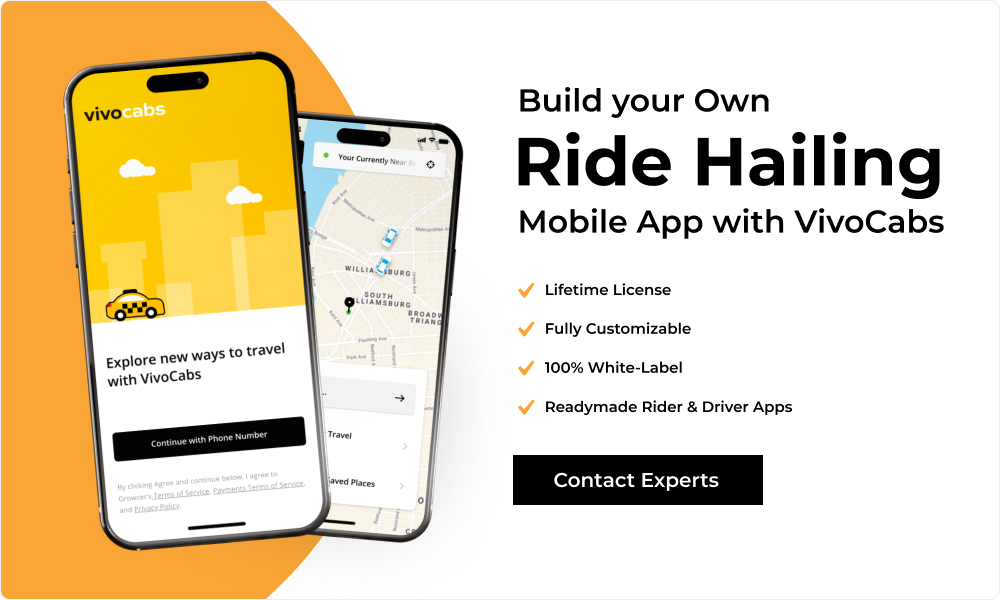
VivoCabs is a fully customizable, powerful ready-made ride-hailing software solution designed for entrepreneurs who want to launch an Uber-like app quickly without investing a hefty amount in custom development.
It comes with dedicated mobile apps for both Android and iOS platforms for riders and drivers, ensuring seamless accessibility and convenience across devices. Along with the apps, it includes a robust web-based admin panel that allows businesses to manage operations, monitor performance, and track earnings in real time.
Offering advanced features, seamless scalability, a lifetime license, and cost-effectiveness, VivoCabs is an ideal choice for startups and established businesses aiming to confidently enter and succeed in the competitive ride-hailing industry.
Key Highlights to Choose VivoCabs:
- Pre-built solution enables faster market entry with reduced development efforts.
- Self-hosted solution with a lifetime license at a one-time payment.
- Dedicated rider and driver apps for both Android and iOS platforms.
- Robust web-based admin panel for smooth operations and business management.
- Pre-integrated over 20 payment gateways for convenient, cashless transactions.
- Fully customizable design and features tailored to your business requirements.
- Scalable architecture supports business growth and handles increasing user demand.
- Supports multi-lingual and multi-currency functionalities to expand into international markets.
- Offers 1 year of free dedicated technical support for smooth onboarding and assistance.
Schedule a Free Personalized Demo to Explore the Capabilities of VivoCabs
Conclusion
The ride-hailing industry continues to expand at a rapid pace, creating immense opportunities for entrepreneurs to enter and grow. Uber like app development is not just about technology; it requires careful planning, a strong business model, and a focus on delivering seamless user experiences. By conducting thorough market research, finalizing the right features, selecting an appropriate development approach, and ensuring rigorous testing, you can launch a ride-hailing app like Uber that stands out in a competitive landscape. With consistent updates, effective marketing, and reliable support, your Uber-like app can evolve into a sustainable and profitable business in today’s dynamic mobility market.
FAQs
Q1. How long does it take to develop an Uber-like app?
Ans. The timeline for successful Uber like app development depends on the chosen development approach. With custom development, building from scratch may take 6 – 12+ months due to design, coding, and testing requirements. In contrast, using readymade software like VivoCabs significantly reduces this time, allowing you to launch within weeks since core features and integrations are already developed.
Q2. What is the minimum budget required to build an app like Uber?
Ans. The budget varies depending on features, complexity, and platforms. In custom development, costs are higher since everything is built from scratch, often starting around $50,000 – $100,000. With a readymade solution, most essential features are already developed, making it a more practical option for businesses seeking to launch an Uber-like app quickly and cost-effectively.
Q3. Do I need both Android and iOS apps at launch?
Ans. While it’s possible to start with just one platform, launching on both Android and iOS apps together is highly beneficial. It ensures you reach a wider audience, attract more riders and drivers, and provide equal accessibility, which ultimately helps your ride-hailing business grow faster from the beginning.
Q4. Can I scale my Uber-like app to other cities or countries?
Ans. Absolutely. With the right software like VivoCabs, you can expand geographically by adding multi-language, multi-currency, and region-specific compliance features.
Planning to Build an App Like Uber that Stands Out?
Contact UsPopular Posts