The taxi and ride-hailing industry in the USA has experienced a massive transformation, shifting from traditional call-based bookings to smart, app-driven transportation. Today’s customers expect speed, transparency, and convenience, which means businesses must stay updated with technology to survive in such a competitive space. Whether you’re an entrepreneur planning to launch a local taxi service or a company aiming to scale across multiple states, choosing the right taxi booking software has become the deciding factor between success and struggle.
Moreover, a powerful taxi booking system not only simplifies the booking experience for riders and drivers but also gives business owners full control through automation, real-time tracking, and data-backed decision-making. As the demand for reliable ride-hailing platforms grows in the USA, selecting the right software becomes crucial. This blog will help you understand the technology, explore its benefits, evaluate the top taxi booking software in the USA, and make an informed decision that supports long-term growth.
Table of Contents
Understanding Taxi Booking Software
Taxi booking software is a digital system that powers modern ride-hailing businesses by automating ride requests, driver allocation, real-time tracking, payments, and fleet management. With the global ride-hailing market projected to reach $229.98 billion by 2030 worldwide, with the growth rate of 5.06% (2025-2030) (Statista), and the USA contributing a major share, the demand for app-based transportation continues to rise. This growth highlights a clear opportunity for entrepreneurs to invest in reliable taxi booking software, not only streamlining operations but also positioning a business to meet increasing customer expectations, scale efficiently, and compete in this rapidly expanding mobility sector.
Why This Sector is a Strong Investment Opportunity?
- Rapid Market Growth & Revenue Potential: The robust projected growth (global ride-sharing market expanding nearly 5× by 2034) indicates a huge opportunity. As a result, businesses launch new ride-hailing platforms and established taxi companies digitize their services, fueling demand for reliable taxi booking software.
- Changing Consumer Behavior: More people, especially in urban areas, now prefer app-based bookings for speed, convenience, and transparency. As ride-hailing becomes a lifestyle choice rather than just a service, ride demand will keep rising.
- Flexibility and Scalability for Businesses: Taxi booking software allows fleet owners and entrepreneurs to scale from a small local service to multi-city operations. Further, features such as automated dispatching, real-time tracking, digital payments, and data analytics reduce manual work and operational costs while increasing reliability.
- Market Shift from Traditional Taxi to Digital Platforms: Traditional taxi businesses are losing ground to modern, app-based ride services. Taxi booking software helps businesses stay competitive, adapt to modern demands, and reach users who expect on-demand mobility.
- Diverse Use Cases and Services: Beyond personal ride-hailing, taxi booking software can support airport transfers, corporate transportation, medical transport, on-demand shuttle services, and more, increasing revenue streams and business versatility. In such a dynamic mobility landscape, using robust software becomes a strategic necessity.
Advantages of Taxi Booking Software
Taxi booking software brings efficiency, convenience, and growth opportunities for taxi businesses. It streamlines operations, improves customer satisfaction, and allows companies to manage their fleet more effectively.
- Streamlined Booking Process: The software allows passengers to book rides instantly via mobile or web apps. Automated dispatch ensures the nearest available driver is assigned, reducing waiting time and enhancing operational efficiency.
- Real-Time Tracking and Navigation: GPS-enabled tracking provides drivers with optimal routes, while passengers can monitor their ride in real-time. This increases transparency, reduces delays, and improves overall customer trust.
- Secure Payment Integration: Multiple payment options, including cards, digital wallets, and cashless systems, make transactions smooth. Automated invoicing and receipts also minimize accounting errors and enhance financial management.
- Improved Operational Efficiency: Taxi booking software automates scheduling, dispatching, and fleet management, reducing manual errors. Further, admins can monitor driver performance and manage resources efficiently, saving time and operational costs.
- Enhanced Customer Experience: Features like estimated fares, driver ratings, and instant notifications create a seamless ride experience. Moreover, happy customers are more likely to return, boosting loyalty and repeat business.
- Data-Driven Insights: Built-in analytics provide information on ride patterns, revenue, and driver performance. This helps taxi companies make informed decisions, optimize routes, and identify profitable growth opportunities.
- Scalability and Flexibility: Whether managing a small fleet or expanding to multiple cities, the software adapts to business needs. New drivers, vehicles, and services can be integrated easily as the business grows.
- Reduced Operational Costs: By automating manual tasks and improving resource allocation, taxi booking software lowers fuel consumption, reduces idle time, and minimizes administrative costs, leading to higher profitability.
Top Taxi Booking Software in the USA
The USA has several companies offering advanced taxi booking solutions. Each software has its strengths in terms of design, technology, pricing, and scalability. Below is a detailed overview of the best-performing and most reliable options available in the market. Let’s begin:
1. VivoCabs
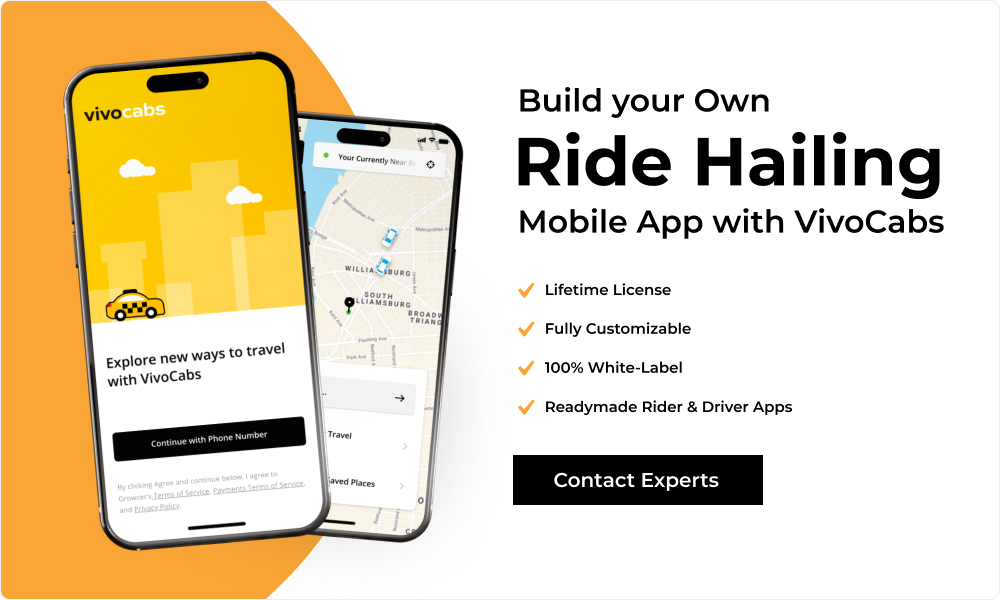
VivoCabs is one of the most advanced and business-ready taxi booking software solutions available in the USA. Built by a highly experienced team and designed to meet the expectations of modern ride-hailing users, VivoCabs is a complete white-label solution that comes with a rider app, driver app, and admin panel.
Additionally, its design is sleek and performance-driven, while features like real-time tracking, route optimization, surge pricing, and automatic payouts ensure a smooth experience for both drivers and customers. With fast deployment, deep customization options, and strong scalability, VivoCabs helps entrepreneurs launch quickly and scale seamlessly.
Key Features:
- Real-time tracking and route optimization ensure smooth navigation and efficient trip handling.
- Fully white-label rider, driver app, and admin panel support complete branding and business identity.
- Automated payouts and surge pricing improve financial management and operational flexibility.
- Integrated with multiple payment gateways for smooth transactions.
- Multilingual and multi-currency support to expand globally.
Pros:
- Fully self-hosted with complete control over infrastructure and data
- Highly scalable architecture to grow with your business
- One-time license cost with lifetime ownership and no hidden charges
- Include 1-year free technical support after purchase
Cons:
- Requires separate hosting infrastructure.
Schedule Your Personalized VivoCabs Live Demo
2. Yelowsoft
Yelowsoft offers a scalable ride-hailing software solution that includes basic dispatch functionality, rider and driver apps, and payment gateway integration. It suits small and mid-sized taxi services looking for straightforward features without complex customization.
Key Features:
- The dispatch system helps assign rides quickly using automated matching algorithms.
- Supports online payments with integrated gateways for seamless rider transactions.
- Offers analytics dashboards for monitoring fleet activities and business performance.
Pros:
- Provides a dependable platform suitable for steady day-to-day fleet operations.
- Known for its straightforward layout, it helps teams learn and adapt quickly.
Cons:
- Customization options are more limited than fully flexible platforms.
- Some advanced automation features may not be available in all plans.
3. Atom Mobility
Atom Mobility delivers a modern SaaS-based taxi booking solution with essential features like real-time tracking, booking management, and driver-rider matching. This software is generally affordable and easy to deploy, making it suitable for startups exploring the ride-hailing market.
Key Features:
- Cloud-based system allows quick deployment and easy scaling for mobility startups.
- Real-time booking management enables smooth coordination between drivers and customers.
- Automated notifications keep users updated on ride status and driver arrival.
Pros:
- Ideal for startups looking to enter the market with minimal technical barriers.
- Affordable entry point makes it easier for new businesses to test mobility models.
Cons:
- Subscription pricing can increase long-term operational expenses.
- Limited control over backend and customization due to SaaS structure.
4. TaxiWheel
TaxiWheel delivers a flexible taxi‑booking and dispatch solution tailored for diverse transportation needs, from daily commutes to airport transfers and rentals. Its streamlined booking process, real‑time tracking, and support for different ride types help businesses meet varied customer demands.
Key Features:
- Supports multiple ride categories, including rentals and airport transfers for diverse operations.
- An integrated tracking system provides real-time ride monitoring and enhanced customer transparency.
- A simple booking interface makes it easy for customers to request rides instantly.
Pros:
- Works well for operators serving varied transportation needs under one system.
- Simplifies operational oversight, making it easier for small teams to manage service delivery.
Cons:
- Operators may require direct support to understand the full scope of its features due to limited public documentation.
- May not offer advanced analytics or detailed operational insights.
5. V3Cube
V3Cube offers a comprehensive taxi booking application with features such as rider & driver apps, dispatcher panel, digital payments, and admin reports. Its flexibility allows customization, but it often requires more setup and attention compared to plug-and-play solutions.
Key Features:
- Customizable rider and driver apps adapt to various business requirements and models.
- Digital payment integration ensures secure transactions for all ride operations.
- The dispatcher panel helps manage bookings, drivers, and routes efficiently.
Pros:
- Flexible to different business concepts, allowing operators to shape their own service approach.
- Helpful for companies wanting broad functionality under one solution.
Cons:
- Some design elements and UX patterns may feel dated compared to newer, modern app interfaces.
- Customizations may extend project timelines depending on the complexity of the requested changes.
6. Gofer
Gofer is a cost-effective ride-hailing software solution offering essential features like GPS tracking, ride requests, and payment options. It’s generally preferred by smaller fleets or new entrants aiming for minimal setup complexity. Primarily, it is an Uber clone script.
Key Features:
- GPS-based ride tracking enables accurate driver navigation and customer updates.
- Secure payment options support smooth and reliable fare transactions.
- Basic admin tools assist with managing trips, drivers, and platform operations.
Pros:
- The solution supports new entrepreneurs getting started with limited resources.
- Easy to manage, making it suitable for smaller fleets.
Cons:
- Limited feature depth for businesses planning rapid growth.
- Basic UI/UX compared to newer tools in the market.
7. Quickrides
Quickrides provides a streamlined taxi dispatch and booking solution designed for small and mid-sized operators. Its platform includes essential features like real-time tracking, trip management, and digital payments, helping businesses automate daily operations and improve customer experience with minimal complexity.
Key Features:
- Trip management tools streamline assigning, tracking, and completing daily ride operations.
- Real-time tracking improves transparency for riders and enhances fleet control.
- Built-in payment support allows quick and secure fare processing.
Pros:
- Minimizes operational confusion with its clean and organized workflow.
- Helps small operators maintain consistency without needing extra manpower.
Cons:
- Limited advanced automation features for businesses planning rapid expansion.
- May require additional integrations for specialized operational needs.
8. SpotnRides
SpotnRides is a ready-made taxi booking software built for entrepreneurs aiming to enter the ride-hailing market quickly. It includes rider and driver apps, fare estimation, GPS tracking, and basic customisation options, offering a practical starting point for new mobility businesses.
Key Features:
- The fare estimation feature helps riders calculate trip costs before booking instantly.
- GPS navigation assists drivers with accurate routing and time-saving travel directions.
- Rider and driver apps support easy communication and smooth trip coordination.
Pros:
- Offers a simple foundation that businesses can build upon as they grow.
- Easy for new business owners to manage without technical expertise.
Cons:
- Some advanced features may only be available through custom development.
- UI/UX may feel simplistic for operators seeking a more premium app experience.
9. RydeX Taxi
RydeX Taxi is a versatile ride-hailing solution with core features such as ride requests, driver onboarding, live tracking, and simple dispatch tools. It is suitable for operators seeking an easy-to-manage system with essential functionality and straightforward workflow support.
Key Features:
- Driver onboarding tools simplify registration and approval for new drivers.
- Live tracking system ensures visibility of driver movement throughout rides.
- Simple dispatch workflow helps manage trips without technical complexity.
Pros:
- Provides a stable setup that works well for straightforward ride operations.
- The software supports small-scale operators without overwhelming complexity.
Cons:
- Limited in-depth analytics or advanced reporting tools.
- May not support complex ride types or multi-city expansion.
10. CabStartup
CabStartup is a cloud-based taxi management solution with white-label apps, automated dispatching, trip monitoring, and payment integration. Its solution is designed for growing fleets that want scalable software and reliable mobility tools to manage drivers, bookings, and customer interactions efficiently.
Key Features:
- The dispatch system assigns rides efficiently based on availability and location.
- White-label apps provide full branding control for growing mobility businesses.
- Payment integration supports multiple methods for convenient rider transactions.
Pros:
- Cloud-based platform enabling scalability for growing fleets.
- Supports modern mobility operations with integrated payments and fleet tools.
Cons:
- Full customization may extend development time depending on requirements.
- Pricing may increase based on deployment or feature add-ons.
Tips for Choosing the Right Software
Choosing the right taxi booking software is essential for building a reliable, scalable, and future-ready ride-hailing business. The right platform ensures smooth operations, satisfied users, and long-term growth. Below are the key points entrepreneurs must consider while selecting a taxi booking software in the USA:
- Understand Your Business Goals: Choose software that aligns with your long-term objectives, whether you plan to operate locally or expand across multiple cities. Clear goals help you select features and functionalities that support your business vision effectively.
- Prioritize Scalability: Select a platform that can grow with your business, handle increasing ride volume, and support multi-city expansion. Scalable software prevents limitations and ensures smooth operations as your customer base rises.
- Look for Essential Features: Ensure the software includes real-time tracking, secure payments, driver and rider apps, analytics, and automated dispatch. These core features are necessary for efficient operations and a modern user experience.
- Customization Options: Pick a solution that allows customization of branding, interface, workflows, and integrations. Custom features help your taxi service stand out and meet unique operational needs that generic software cannot fulfill.
- Security and Compliance: Choose software that follows strong security practices like data encryption, secure payments, and privacy protection. This builds trust and ensures your platform complies with U.S. industry regulations.
- Technical Support: Select a company that provides reliable technical support during and after launch. Consistent assistance helps resolve issues quickly and ensures uninterrupted service for both drivers and riders.
- Trial or Demo Availability: Always request a demo to explore the software’s interface, features, and usability. Hands-on experience helps you assess whether the platform suits your business needs before commitment.
Kickstart Your Taxi Business With a Robust Taxi Booking Software
Conclusion
The taxi booking software landscape in the USA continues to evolve as mobility needs shift toward convenience, speed, and digital-first experiences. Whether you’re a startup entering the market or an established fleet looking to modernize operations, choosing the right software can significantly influence your growth, customer satisfaction, and long-term sustainability.
Each platform discussed in this blog offers its own strengths, catering to different business sizes, budgets, and operational goals. By carefully evaluating features, scalability, support, and overall business fit, entrepreneurs can confidently select a solution that aligns with their vision and positions their taxi service for success in a competitive and rapidly expanding industry.
Frequently Asked Questions (FAQs)
Q 1. How much does taxi booking software usually cost in the USA?
Ans. The cost of building a taxi booking app varies depending on features, customization, and deployment type. Where entry-level solutions can start from a few thousand dollars, advanced and fully customizable systems may require a higher investment. Further, pricing also differs between SaaS-based monthly plans and one-time license-based models.
Q 2. Do I need technical knowledge to operate taxi booking software?
Ans. No, you do not need technical knowledge to operate a taxi booking software. Most modern solutions are designed with simple dashboards and intuitive workflows, enabling owners and dispatchers to manage operations easily, while technical teams handle backend configurations, updates, and integrations when required.
Q 3. What is the difference between SaaS-based and white-label taxi software?
Ans. SaaS-based solutions run on monthly or yearly subscriptions and offer limited customization. On the other hand, white-label software provides full ownership of the app’s branding, deeper customization, and more control over business workflows. However, the choice depends on long-term goals and budget.
Q 4. How important is scalability when choosing taxi booking software?
Ans. Scalability is critical while choosing the taxi booking software, as it affects long-term success. A scalable solution ensures your platform can handle more users, vehicles, trips, and locations without performance issues, and helps your business grow without needing frequent platform changes.
Q 5. How long does it take to launch a taxi booking app?
Ans. Timelines to launch a taxi booking app depend on customization and complexity. Ready-made solutions allow you to launch the app within days or weeks, while fully custom-built platforms may take several months. Hence, choosing the right development approach helps speed up the launch.
Ready to Transform Your Vision Into a Real Ride-Hailing App
Get In TouchPopular Posts