Quick Overview:
Malaysia’s digital transportation sector continues to evolve as commuters increasingly rely on app-based mobility services. Covering market trends, licensing requirements, competitive analysis, and technology considerations, this guide provides entrepreneurs with a practical roadmap for entering the country’s ride-hailing market. It also explains how VivoCabs simplifies platform development through a fully customizable white-label solution designed for rapid deployment.
The ride-hailing industry has completely transformed the way people commute in urban and semi-urban areas. In Malaysia, ride-hailing apps have become an essential part of daily transportation, offering convenience, affordability, and safety to millions of users. With widespread smartphone usage, expanding internet access, and a digitally savvy population, Malaysia offers strong potential for entrepreneurs planning to enter this space.
That said, launching a ride-hailing app involves much more than replicating what already exists. Moreover, entrepreneurs must understand local regulations, user expectations, business models, cost factors, and the right development approach to succeed. A thoughtful, well-structured launch strategy can help new platforms establish a meaningful presence, even in a competitive market.
This carefully curated blog provides details on how to launch a ride-hailing app in Malaysia. It addresses all major questions entrepreneurs may have, from market insights and legal requirements to features, costs, and monetisation strategies.
Table of Contents
- Overview of the Ride-Hailing Market in Malaysia
- Legal & Regulatory Requirements in Malaysia
- Business Model of a Ride-Hailing App
- Key Features of a Ride-Hailing App
- Development Approaches
- Why Select a Readymade Solution Over Custom Development?
- VivoCabs: The Ultimate Solution to Build a Ride-Hailing App in Malaysia
- Conclusion
- FAQs
Overview of the Ride-Hailing Market in Malaysia
Malaysia’s ride-hailing market has grown steadily in recent years, driven by urban traffic challenges and changing commuter preferences. Urban centres such as Kuala Lumpur, Penang, Johor Bahru, and Selangor have a high demand for app-based transportation services due to traffic congestion, limited parking, and the need for affordable mobility solutions. Furthermore, according to Statista, Malaysia’s ride-hailing industry is expected to grow with a CAGR of 6.83% from 2025 to 2030, resulting in a market volume of $729.25 million by 2030.
Several factors contribute to the strong adoption of ride-hailing apps in Malaysia:
1. High Smartphone Usage: A large percentage of Malaysians use smartphones daily, making app-based services easily accessible.
2. Urbanisation: Rapid urban development has increased the need for convenient and flexible transportation options. As of 2025, approximately 79.4 percent of the population lives in urban centres, supporting strong demand for on-demand mobility services in cities like Kuala Lumpur and Penang. (DataReportal)
3. Digital Payments Growth: The rise of eWallets and online payments has made cashless ride payments common and trusted. Recent data shows that up to 90 percent of Malaysians were using eWallets by late 2024, and the country aims for 400 ePayment transactions per person annually by 2026. (Telecom Review Asia)
4. Changing Consumer Behaviour: Users increasingly prefer services that are convenient, price-transparent, and digitally enabled. Cashless ride payments, flexible booking options, and real-time tracking have become the expectation standards for commuters.
Understanding these market dynamics is essential before launching a ride-hailing service that genuinely addresses the needs of users and drivers in Malaysia.
Legal & Regulatory Requirements in Malaysia
Launching a ride-hailing app in Malaysia requires strict compliance with government regulations. The Malaysian government closely monitors ride-hailing services to protect passenger safety, promote fair competition, and ensure accountability across the ecosystem. Understanding and complying with these requirements is essential before entering the market.
1. Key Regulatory Bodies:
Ride-hailing services in Malaysia are regulated by the Land Public Transport Agency (APAD), which operates under the Ministry of Transport. APAD is responsible for overseeing licensing, operational standards, and compliance for ride-hailing platforms.
2. Licensing for Ride-Hailing Operators:
Entrepreneurs must register their business and obtain the necessary approvals to operate legally. This includes:
a. Company registration under Malaysian law
b. Approval to operate a digital ride-hailing platform
c. Compliance with data protection and consumer protection laws
3. Driver Requirements:
Drivers using ride-hailing platforms must meet specific eligibility criteria set by authorities. It includes:
a. Hold a valid Malaysian driving license
b. Obtain a Public Service Vehicle (PSV) license
c. Complete mandatory training courses
d. Pass medical and background checks
4. Vehicle Requirements:
Vehicles used for ride-hailing must:
a. Meet safety and roadworthiness standards
b. Be insured for commercial use
c. Pass regular inspections as required by authorities
5. Data Protection & User Privacy:
Ride-hailing apps must comply with Malaysia’s Personal Data Protection Act (PDPA). This involves safeguarding user data, maintaining clear and transparent privacy policies, and ensuring secure handling of payments and personal information.
Addressing these legal and regulatory requirements early helps entrepreneurs avoid operational risks and build a compliant, trustworthy ride-hailing platform in Malaysia.
Ready to Build a Ride-Hailing App That Meets Local Regulations?
Business Model of a Ride-Hailing App
A clear business model sets the foundation for how your ride-hailing platform will operate, deliver value, and position itself in the Malaysian market. Selecting the right model enables entrepreneurs to manage operations efficiently, attract and retain drivers, and scale the platform sustainably over time.
1. Aggregator Model
In this model, the platform partners with individual drivers or fleet owners and aggregates their services under one app. It allows businesses to onboard drivers quickly, expand service coverage across multiple cities, and grow without heavy upfront investment in assets.
2. Niche Ride-Hailing Model
This approach focuses on serving specific customer segments such as corporate rides, women-only transportation, eco-friendly electric vehicle fleets, or shared rides. By addressing targeted needs, entrepreneurs can differentiate their platform and build a loyal user base in a competitive market.
3. Asset-Light Business Model
Most ride-hailing apps in Malaysia follow an asset-light approach, meaning the platform avoids owning vehicles. This significantly reduces operational and maintenance costs while enabling faster expansion and greater flexibility as demand grows.
Choosing a business model that aligns with market demand and long-term goals is key to building a resilient and scalable ride-hailing platform.
Revenue Strategies
A clear revenue strategy defines how a ride-hailing app generates income while maintaining a fair balance between platform profitability and driver earnings. Most successful platforms rely on a mix of revenue streams to ensure steady cash flow and long-term sustainability.
1. Commission-Based Revenue Model: The platform charges drivers a percentage commission on each completed ride. This is the primary revenue source for most ride-hailing apps.
2. Driver Subscription Fees: Drivers pay weekly or monthly subscription fees to access the platform. This model works well for high-frequency drivers and helps generate predictable, recurring revenue for the business.
3. Surge Pricing Revenue: During peak hours or periods of high demand, fares increase dynamically. The additional revenue generated is typically shared between drivers and the platform, encouraging driver availability when demand is highest.
4. Advertising and In-App Promotions: The app can offer advertising opportunities to local businesses through banners, sponsored listings, or targeted promotions, creating an additional income stream without impacting ride pricing.
5. Corporate and B2B Partnerships: Offering ride solutions for businesses, such as employee commuting or event transportation, creates a stable and higher-value revenue channel with consistent demand.
Combining these strategies allows ride-hailing platforms to diversify income, improve financial stability, and support sustainable growth.
Key Features of a Ride-Hailing App
A successful ride-hailing app must provide a smooth, reliable experience for passengers, drivers, and administrators alike. The right feature set not only improves usability and safety but also supports efficient operations and long-term scalability. Below are the core features that form the foundation of a robust ride-hailing platform.
| Feature | Description |
| User Registration | Simple and secure sign-up using email, phone number, or social media accounts for quick access and account creation. |
| Ride Booking | Allows passengers to book rides instantly or schedule them in advance with accurate pickup and drop-off location mapping. |
| Real-Time GPS Tracking | Provides live vehicle location updates, improving transparency, safety, and estimated arrival accuracy. |
| Fare Estimation | Calculates ride costs dynamically based on distance, time, and demand, ensuring clear and upfront pricing. |
| Multiple Payment Options | Supports cash, credit, and debit cards, e-wallets, and online banking for flexible and convenient payments. |
| Driver Profiles | Displays driver details such as ratings, experience, and vehicle information, helping passengers make informed choices. |
| Ratings and Reviews | Enables mutual feedback between passengers and drivers to maintain service quality and accountability. |
| Push Notifications | Sends real-time updates on ride status, alerts, and promotions to keep users informed and engaged. |
| In-App Chat and Call | Allows secure communication between drivers and passengers without sharing personal contact details. |
| Multi-Language Support | Offers language options such as Malay, English, and Mandarin to improve accessibility for a diverse user base. |
| SOS and Emergency Button | Enhances passenger safety by providing quick access to emergency contacts or local authorities during a ride. |
| Promotions and Discounts | Enables referral programs, discount codes, and promotional offers to drive user acquisition and retention. |
| Admin Dashboard | Provides administrators with real-time insights into rides, revenue, driver performance, and customer feedback. |
These features create a reliable and user-friendly ride-hailing experience while giving platform owners the tools needed to manage and scale operations effectively.
Launch a Feature-Packed Ride-Hailing App
Development Approaches
Choosing the right development approach plays a crucial role in determining the launch speed, budget, scalability, and long-term success of a ride-hailing app in Malaysia. Entrepreneurs in Malaysia should assess their business objectives, technical needs, available budget, and desired time to market before choosing the most suitable approach.
1. Custom Development
Custom development involves building a ride-hailing app from the ground up, tailored to specific business processes and unique operational workflows.
This approach offers:
a. Full control over features
b. User experience
c. System architecture,
making it suitable for businesses with complex requirements, innovative service models, or long-term expansion plans.
However, it typically requires:
a. Higher investment
b. Longer development timelines
c. Rigorous testing
d. Ongoing technical maintenance.
As a result, custom development is often better suited for well-funded startups or established enterprises.
2. Ready-Made Software
Ready-made ride-hailing software is a pre-built, market-tested solution that can be customised with branding, features, and local configurations.
This approach significantly reduces:
a. Development time
b. Technical risks
c. Overall costs while ensuring faster market entry.
Entrepreneurs benefit from proven functionality, regular updates, and scalability without building everything from the ground up.
It is an ideal option for startups and businesses aiming to:
a. Launch quickly
b. Validate their idea
c. Focus on operations
d. Driver onboarding
e. Customer acquisition rather than technical complexities.
Why Select a Readymade Solution Over Custom Development?
Launching a ride-hailing app in Malaysia does not always require a complex build process. The overall effort and execution depend largely on whether you build from scratch or adopt a readymade solution, and how strategically resources are allocated across development, deployment, and growth. Below are some of the key reasons that clarify why leveraging a readymade solution is better than custom development:
1. Cost-Effectiveness: Custom development provides full control but demands significantly higher investment and ongoing maintenance costs. In contrast, readymade ride-hailing solutions allow faster deployment and predictable costs, making them a more practical and cost-effective option for startups and first-time entrepreneurs.
2. Faster Time to Market: Pre-built ride-hailing platforms significantly reduce development time, allowing businesses to launch quickly, test the market, and begin generating traction without lengthy build cycles.
3. Reduced Technical Risk: Market-tested software lowers the risk of performance issues, bugs, and system failures, helping businesses avoid costly delays and unexpected redevelopment expenses.
4. Scalability from Day One: Ready-made solutions are designed to scale efficiently, enabling businesses to expand into new cities or services without major reinvestment in technology.
Choosing the right approach helps entrepreneurs launch efficiently and quickly while keeping costs manageable and growth-oriented.
VivoCabs: The Ultimate Solution to Build a Ride-Hailing App in Malaysia
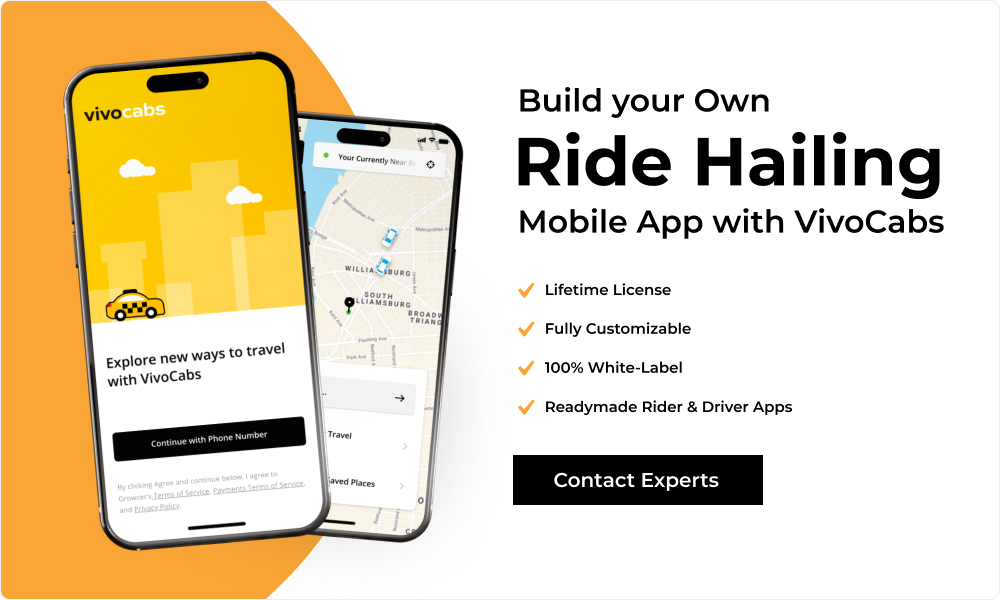
VivoCabs is a ready-made, white-label ride-hailing software built to help entrepreneurs launch a fully functional ride-hailing app in Malaysia with speed and cost efficiency. It comes equipped with all essential passenger, driver, and admin features required to operate a scalable ride-hailing business. With flexibility for customisation and localisation, VivoCabs enables businesses to adapt to local regulations, payment preferences, and market demands while significantly reducing development time, technical complexity, and upfront investment.
The following are some of the benefits that VivoCabs brings to business owners:
1. Fully White-Label Platform: Easily rebrand the entire platform to match your business identity and market positioning.
2. Self-Hosted Deployment: Choose your preferred hosting setup, whether on-premise or with a third-party cloud provider.
3. Customisable and Scalable Architecture: Adapt listings, user profiles, transactions, and workflows as your business grows.
4. One-Time Licensing Model: Lifetime licence with a single payment and no recurring monthly or annual fees.
5. Secure and High-Performance Infrastructure: Designed to deliver stable performance and uninterrupted service.
6. Quick Market Launch: A ready-to-launch solution that significantly shortens time to market.
7. Advanced Analytics and Reporting: Gain insights into ride activity, customer behaviour, and operational performance.
8. Dedicated Support: One year of free customer support available through multiple support channels.
Understand How VivoCabs Supports Real Ride-Hailing Platform
Conclusion
Launching a ride-hailing app in Malaysia presents a promising opportunity for entrepreneurs who understand the market dynamics, regulatory requirements, and technological considerations. However, success in this space depends not only on building a functional app but also on making informed decisions about features, business models, development approaches, and cost management. Evaluating these elements carefully and adopting a phased, scalable rollout helps reduce risk and supports sustainable growth.
With the right planning, compliance, and execution, a ride-hailing platform can grow steadily in Malaysia’s competitive on-demand economy. Prioritising user experience, operational efficiency, and long-term sustainability will help entrepreneurs build a reliable transportation solution that meets local needs and supports future expansion.
FAQs
Q 1. How long does it take to launch a ride-hailing app in Malaysia?
Ans. The timeline to launch a ride-hailing app in Malaysia depends on the development approach. A custom-built platform may take several months to complete due to the design, development, and testing processes. In comparison, ready-made or white-label solutions can be deployed much faster, often within weeks, making them suitable for entrepreneurs aiming for quick market entry.
Q 2. What are the biggest challenges of launching a ride-hailing app in Malaysia?
Ans. Some common challenges of launching a ride-hailing app in Malaysia include:
a. High competition
b. Driver acquisition and retention
c. Regulatory compliance
d. Pricing balance
e. Building user trust.
Addressing these challenges requires strong operational planning, localised strategies, and a reliable technology platform.
Q 3. How can a new ride-hailing app compete with established players in Malaysia?
Ans. New platforms can stand out by targeting niche markets, offering better driver incentives, focusing on service quality, and providing localized features. Differentiation through pricing models, customer support, and regional focus can help gain traction.
Q 4. Is scalability important when launching a ride-hailing app?
Ans. Yes, scalability is important when launching a ride-hailing app. As user demand grows, the app must handle increased bookings, drivers, and transactions without performance issues. Choosing scalable technology ensures smooth expansion into new cities or service categories.
Create a Custom Ride-Hailing App in Malaysia
Get StartedPopular Posts