Quick Overview:
The right technology partner can significantly reduce the time, cost, and complexity involved in launching a ride-hailing business. Comparing solutions such as VivoCabs, Onde, Jugnoo, TaxiMobility, and AllRide Apps, this blog evaluates them based on customization, ownership, scalability, deployment flexibility, and business features. The comparison helps entrepreneurs identify software that supports long-term growth without the limitations often associated with SaaS-only platforms.
The global ride-sharing industry continues to grow at an unprecedented pace in 2026. Urbanization, smartphone penetration, digital payments, and changing consumer behavior have accelerated demand for convenient, app-based mobility services. From metropolitan cities to emerging markets, entrepreneurs and fleet owners are launching app-based mobility services to address growing transportation demand and convenience-driven lifestyles.
However, launching a ride-sharing platform is no longer just about creating a basic taxi booking app. Riders expect real-time tracking, seamless payments, transparent pricing, safety features, and instant support. While drivers demand fair commissions, flexible working hours, and fast payouts. Delivering this balanced experience requires sophisticated, scalable technology that can support both sides of the marketplace efficiently.
As a result, many businesses are moving away from developing apps from scratch and turning to white-label ride-sharing software. It provides a ready-made, customizable solution that allows businesses to launch quickly with their own brand name. Moreover, they offer faster time-to-market, lower costs, and a proven framework that reduces business risks. Thus, entrepreneurs prefer ready-made taxi app solutions compared to custom development.
Table of Contents
What is White-Label Ride-Sharing Software?
White-label ride-sharing software is a pre-built taxi booking solution developed by a software company and rebranded by businesses under their own name. Instead of developing an app from scratch, companies use this pre-built solution while the technology provider handles development, infrastructure, updates, and maintenance. This allows operators to concentrate on running the business, marketing services, and scaling operations.
Typically, a complete white-label solution includes:
- Passenger apps (iOS & Android)
- Driver apps (iOS & Android)
- Admin panel
- Website booking panel
The business purchases or subscribes to the software, customizes branding such as logo, colors, domain, app name, configures commission and pricing, and launches the platform.
Key Features to Look for in 2026
When selecting white-label ride-sharing software in 2026, businesses must focus on advanced features that enhance both user experience and operational efficiency. The right feature set not only ensures smooth service delivery but also prepares your platform for future growth and market competition.
1. Passenger & Driver Apps (iOS & Android)
A robust solution must include native iOS and Android apps for both passengers and drivers. The apps must deliver intuitive navigation, smooth UI/UX, fast booking flow, ride history, earnings tracking, and reliable performance even during peak demand to ensure reliability on both sides of the marketplace.
2. Real-Time GPS Tracking
Live GPS tracking ensures transparency, safety, and coordination throughout the ride journey. Riders can monitor driver location in real time, while drivers benefit from optimized navigation routes and accurate pickup/drop coordination, reducing waiting time.
3. Multiple Payment Integrations
Modern ready-made solutions must support diverse payment methods, such as credit/debit cards, digital wallets, in-app wallet systems, and region-specific payment gateways. Features like secure processing, automated invoices, and seamless refunds enhance customer trust, operational efficiency, and reduce admin/s workload.
4. Dynamic Pricing & Surge Control
Smart pricing tools automatically adjust fares during peak hours based on demand, time, and availability. It helps balance supply and demand effectively. Operators should be able to configure surge rules and monitor pricing impact to maintain profitability without compromising user satisfaction.
5. Admin Dashboard & Analytics
A powerful admin panel is essential for controlling operations and making informed decisions. Key capabilities should include ride analytics, revenue reports, driver performance tracking, customer insights, and demand heat maps to identify growth opportunities and optimize resources.
6. Commission Management
Flexible commission structures allow operators to set percentage-based, fixed, or hybrid commission models. This ensures balanced driver incentives while maintaining healthy profit margins.
7. Multi-Country & Multi-Currency Support
For businesses planning regional or global expansion, the solution must support multiple currencies, languages, and regional tax configurations. This enables seamless operations across different cities and international markets without rebuilding the system.
8. EV & Corporate Ride Support
Sustainability and corporate mobility are shaping the future of transportation. Support for electric vehicle categories and corporate ride management modules allows businesses to tap into eco-conscious consumers and enterprise clients, expanding revenue streams beyond individual riders.
Discuss The Right Feature Set For Your Ride-Sharing Platform
How to Choose the Right Ride-Sharing Software in 2026
Selecting the right white-label ride-sharing software requires careful planning and a clear understanding of your business goals. The software you choose will directly impact your launch speed, operational efficiency, scalability, and long-term profitability, so it is essential to evaluate options strategically rather than focusing only on price.
1. Define Your Target Market
Start by identifying the specific audience and service model you want to serve. Your requirements will differ depending on whether you plan to offer local city rides, airport transfers, corporate transportation, intercity travel, or a combination of services. A solution aligned with your target market will help you deliver a more tailored customer experience.
2. Budget Considerations
Examine the pricing structure carefully to ensure it fits your financial plan. Providers may offer a one-time license fee, subscription-based pricing, or a revenue-sharing model. Understanding the total cost of ownership, including setup, customization, and maintenance, will help you avoid unexpected expenses later.
3. Customization Needs
Brand identity and operational flexibility are crucial in a competitive market. Some solutions allow full customization of features, workflows, and branding, while others offer limited changes. If you want a platform that reflects your unique business model, confirm the level of customization available before committing.
4. Ownership vs Subscription Model
Decide whether you prefer full ownership or a SaaS subscription. Some providers offer source code ownership, while others provide SaaS-based subscriptions. Ownership provides greater control but requires a higher upfront investment. Whereas subscription models reduce initial costs but may limit control over future modifications.
5. Technical Support & Updates
Reliable technical support is essential for uninterrupted service. Look for providers that offer 24/7 support, regular updates, and security patches to keep your platform stable and competitive.
6. Long-Term Scalability
Choose a solution that can grow with your business. The software should support expansion into multiple cities, onboarding of a larger driver network, and the ability to handle high ride volumes without performance issues. Scalability ensures your technology will not become a limitation as demand increases.
Top White-Label Ride-Sharing Software 2026
The ride-sharing market is more competitive than ever, which makes the choice of technology critical for success. Here is a curated list of the top white-label ride-sharing software solutions designed to help entrepreneurs launch scalable, branded mobility platforms quickly and efficiently. Let’s begin:
1. VivoCabs
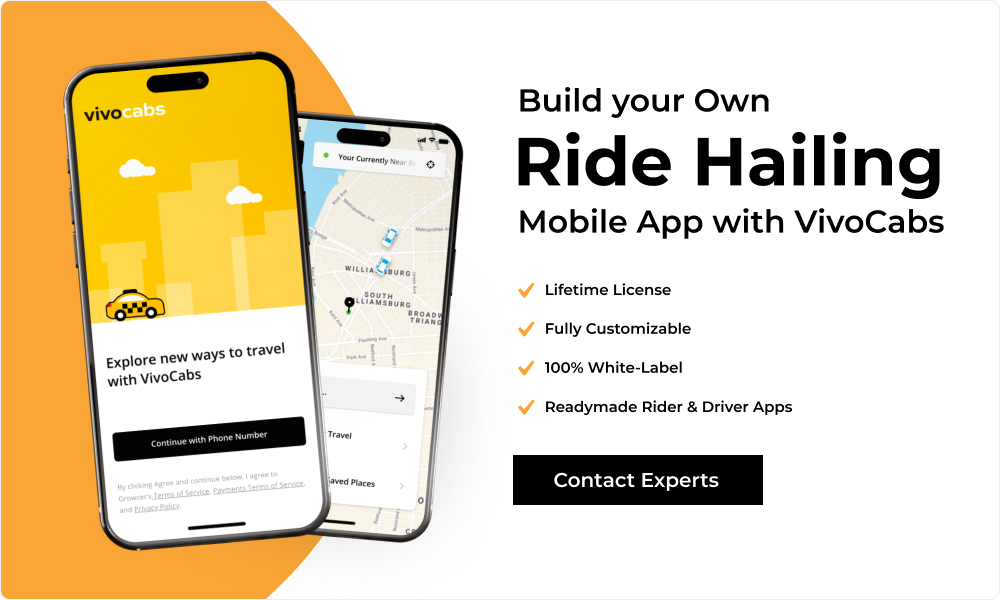
VivoCabs is a comprehensive and enterprise-grade white-label ride-sharing software built for startups, taxi companies, and transportation enterprises aiming to launch a fully branded ride-sharing platform. Built on a scalable architecture, it supports high ride volumes, multi-city expansion, and long-term business growth.
Begin white-label, VivoCabs allows businesses to customize branding, commission models, payment gateways, and service categories according to their target market. Thus, whether you are launching a local taxi app, expanding an existing fleet digitally, or building a multi-country ride-sharing marketplace, VivoCabs provides the technological foundation to scale confidently.
One of the key differentiators is its focus on ownership flexibility and enterprise-grade control. With options such as source code ownership, advanced admin analytics, and corporate ride modules, VivoCabs empowers operators with full operational transparency and customization capabilities.
Key Features
- 100% white-label solution
- Advanced admin dashboard with real-time analytics
- Corporate ride management module
- Multi-payment integrations
- Source code ownership option
- Multi-country & multi-currency support
- Scalable cloud architecture
- EV ride category support
Pros:
- High customization flexibility
- Scalable infrastructure for long-term growth
- Ownership option available
- Enterprise-grade analytics and control
- Suitable for both startups and large operators
Cons:
- You need to meet the minimum server requirements to host your platform.
Best For:
- Entrepreneurs launching Uber-like ride-sharing apps
- Taxi companies expanding digitally
- Enterprises building multi-city or multi-country platforms
Book a Personalized Demo of VivoCabs
2. TaxiCaller
TaxiCaller is a cloud-based taxi dispatch and ride-booking solution designed primarily for small to medium-sized taxi fleets. It provides a centralized system that helps operators manage bookings, drivers, and vehicles efficiently. Its SaaS model allows businesses to get started quickly with minimal upfront investment. The platform focuses on improving operational efficiency rather than deep customization or large-scale marketplace expansion.
Key Features
- Cloud-based dispatch system
- Driver & passenger mobile apps
- Fleet management tools
- Booking automation
Pros:
- Easy setup
- Subscription-based pricing model
- Suitable for non-technical operators
Cons:
- Limited deep customization
- Not designed for large-scale ride-sharing marketplaces
Best For:
- Traditional taxi fleets
- Small and local operators
3. Onde
Onde is a white-label ride-hailing software provider that caters to mobility startups and growing transportation businesses. It combines modern app interfaces, automation tools, and scalable backend architecture to support growing operations. Beyond standard taxi services, it enables multi-service offerings, allowing companies to diversify into other mobility services. Onde positions itself as a technology partner for companies aiming to build a branded, tech-driven transportation platform.
Key Features
- Multi-service ride support
- Surge pricing & smart dispatch
- Data analytics dashboard
- Customer & driver management tools
Pros:
- Scalable platform
- Modern and intuitive UI/UX
- Strong automation features
Cons:
- Premium pricing structure
- Customization options may depend on the pricing tier
Best For:
- Multi-service mobility businesses
- Tech-focused startups
4. Yelowsoft
Yelowsoft is a taxi dispatch and booking automation software that focuses on simplifying fleet operations. It helps taxi companies streamline ride assignments, manage drivers, and track bookings through an intuitive dashboard. By reducing manual coordination, the system improves efficiency and service reliability. Yelowsoft is commonly chosen by fleet operators looking to digitize traditional taxi businesses rather than build large marketplace platforms.
Key Features
- Automated dispatch system
- Booking & driver management
- Reports & analytics
- Real-time ride monitoring
Pros:
- Operational efficiency
- User-friendly admin panel
- Quick implementation
Cons:
- Less flexible for highly customized ride-sharing models
- Limited marketplace-style scalability
Best For:
- Fleet operators
- Traditional taxi companies that are going digital
5. Atom Mobility
Atom Mobility provides a white-label mobility software that supports not only ride-sharing but also micro mobility solutions like e-scooters and bike-sharing. Built for smart cities and modern transportation ecosystems, it enables operators to launch multi-vehicle, multi-service platforms under one system. This makes it a strong choice for startups and organizations aiming to create integrated urban mobility ecosystems rather than standalone taxi apps.
Key Features
- Multi-vehicle categories (cars, scooters, bikes)
- Subscription-based ride models
- API integrations
- Fleet tracking & automation
Pros:
- Flexible service modules
- Supports modern mobility trends
- Scalable infrastructure
Cons:
- More complex setup
- May require higher technical understanding
Best For:
- Smart city mobility startups
- Multi-mobility service operators
6. CabStartup
CabStartup offers ready-made Uber-like taxi app solutions with white-label branding capabilities. It includes pre-built passenger and driver apps along with an admin dashboard for managing rides and commissions. Designed for speed and simplicity, it helps new entrepreneurs launch a ride-hailing business quickly without deep technical involvement. Its streamlined onboarding makes it particularly appealing for startups entering local markets.
Key Features
- Android & iOS apps for passengers and drivers
- Real-time ride tracking
- Admin management panel
- Branding customization
Pros:
- Quick deployment
- Beginner-friendly setup
- Branding flexibility
Cons:
- Limited ownership flexibility
- May lack enterprise-level features
Best For:
- New entrepreneurs
- Startups launching in local or regional markets
7. TaxiMobility
TaxiMobility is a ride-booking and dispatch software tailored for taxi companies transitioning from traditional operations to digital platforms. It offers both cloud-based and customized deployment options depending on business needs. The system includes essential modules for booking management, dispatch control, and driver tracking. TaxiMobility focuses on helping medium-sized fleets improve service efficiency and customer experience.
Key Features
- Dispatch console
- Driver app
- Web booking module
- Reporting tools
Pros:
- Reliable and stable system
- Custom deployment options
- Established presence in the taxi industry
Cons:
- Subscription-focused pricing
- Customization depth may vary
Best For:
- Medium-sized taxi fleets
- Companies upgrading legacy systems
8. AllRide Apps
AllRide Apps offers a white-label mobility software that combines ride-sharing, delivery, and other transportation services into a single ecosystem. Designed for businesses aiming to operate across regions, it supports multi-country expansion and diverse business models. Its modular architecture allows companies to integrate multiple services under one brand, making it suitable for startups and enterprises building comprehensive mobility and logistics platforms.
Key Features
- Ride & delivery modules
- Multi-country & multi-currency support
- Scalable backend system
- Advanced admin tools
Pros:
- Multi-service capability
- Flexible modules
- Enterprise-ready features
Cons:
- Higher pricing tiers
- May require structured onboarding
Best For:
- Diversified mobility startups
- Businesses combining ride and delivery services
9. SpotnRides
SpotnRides offers Uber clone script solutions tailored for startups entering the ride-hailing industry. It provides customizable branding options and essential booking features required to operate a taxi app. Often chosen by entrepreneurs with limited budgets, the platform focuses on delivering core ride-booking functionality with moderate scalability for local or regional operations.
Key Features
- Custom branding
- Ride scheduling
- Wallet integration
- Driver & passenger apps
Pros:
- Affordable packages
- Easy market entry
- Quick deployment
Cons:
- Limited enterprise features
- Scalability constraints for large markets
Best For:
- Budget-conscious startups
- Local ride-hailing ventures
10. Cabsoluit
Cabsoluit provides white-label taxi booking software designed for small to mid-sized operators. It includes core features required for managing bookings, drivers, and fare calculations through an easy-to-use interface. It emphasizes simplicity and ease of use for businesses that need a straightforward ride-booking system. Cabsoluit is generally chosen by operators looking for basic digital transformation rather than advanced marketplace expansion.
Key Features
- Booking management system
- Driver tracking
- Fare management
- Admin dashboard
Pros:
- Simple interface
- Easy to manage
- Suitable for smaller fleets
Cons:
- Limited scalability
- Fewer advanced features compared to enterprise solutions
Best For:
- Small taxi businesses
- Local operators digitizing services
Build a Future-Ready Ride-Sharing Marketplace
Conclusion
The demand for white-label ride-sharing software is accelerating in 2026 as entrepreneurs and taxi operators seek faster, cost-effective ways to launch digital mobility platforms. Instead of spending months on development, businesses are choosing ready-made platforms that allow them to enter the market quickly and compete with established players.
While many providers offer ready-made solutions, choosing the right partner depends on scalability, customization flexibility, ownership options, and long-term support. These factors determine how well the platform can adapt as your business grows and market conditions evolve.
If you’re planning to launch a ride-sharing app, investing in a scalable and future-ready white-label ride-sharing software like VivoCabs can help you enter the market faster, reduce development risks, and build a profitable transportation business. With the right platform in place, you can focus on operations, customer acquisition, and expansion while building a sustainable and profitable transportation business.
FAQs
Q 1. Does VivoCabs support multiple ride types in a single platform?
Ans. Yes, VivoCabs supports multiple ride types on a single platform. It allows you to create multiple ride categories, such as economy, premium, SUV, EV, bike taxis, or even intercity rides. Hence, you can diversify your offerings without deploying separate applications.
Q 2. Is VivoCabs secure and compliant with data protection standards?
Ans. Yes, VivoCabs is built with secure architecture, encrypted payment integrations, and role-based admin access controls. It is designed to support compliance with regional data protection regulations, ensuring safe handling of user and payment information.
Q 3. Does VivoCabs support third-party APIs or external services?
Ans. Yes, VivoCabs supports API integrations for payment gateways, SMS providers, maps, analytics tools, and other third-party services. This ensures flexibility if you want to integrate local service providers or advanced tools.
Q 4. Does VivoCabs provide branding customization beyond logo and colors?
Ans. Yes, Vivocabs provides branding customization beyond logo and colors. It allows app name changes, domain setup, commission settings, ride category configuration, and operational rules customization to match your business model.
Q 5. Is VivoCabs scalable for high ride volumes?
Ans. Yes, VivoCabs is built on a scalable architecture capable of handling growing user bases and increasing ride demand. Whether you operate in one city or multiple countries, the system is designed to expand with your business.
Q 6. Can VivoCabs support future mobility expansions?
Ans. Yes, VivoCabs is designed with modular flexibility, allowing future upgrades such as EV categories, corporate transport solutions, subscription models, and additional mobility services as your business evolves.
Q 7. How do I get started with VivoCabs?
Ans. You can start by contacting the VivoCabs team for a consultation. After understanding your business requirements, the team will guide you through customization, deployment, app store publishing, and launch support.
Looking for a Proven Software to Enter the Ride-Hailing Market Faster?
Contact UsPopular Posts