

Every weekday, millions of parents face the challenge of getting their children safely to school, after-school activities, or therapy appointments when they can’t drive them themselves. While traditional school buses remain the backbone of student transportation, they often lack the flexibility needed for changing schedules, special-needs transportation, and individual ride requests. This gap has fueled the rise of technology-driven child transportation platforms like HopSkipDrive.
Founded in 2014, HopSkipDrive has revolutionized student transportation by connecting families, schools, and districts with thoroughly vetted caregiver-drivers through a safety-first marketplace. Today, the company supports thousands of schools and school districts, demonstrating the growing demand for reliable and flexible transportation solutions.
For entrepreneurs, this presents a valuable opportunity to launch an app like HopSkipDrive. However, success requires much more than building a ride-booking application. It involves implementing advanced safety features, rigorous driver verification, real-time GPS tracking, automated scheduling, route optimization, secure payments, and compliance with transportation regulations.
This guide will walk you through everything you need to know to launch an app like HopSkipDrive, including its business model, key features, development process, estimated costs, monetization strategies, and the best approach to building a scalable, trusted, and profitable child transportation platform.
Table of Contents
- Why It’s the Right Time to Launch an App Like HopSkipDrive
- What’s Driving the Demand for Student Transportation Apps?
- Emerging Technology Trends Shaping the Future of Student Transportation
- Regional Market Opportunities
- What Is HopSkipDrive?
- Why Build an App Like HopSkipDrive?
- Essential Features Needed to Launch An App Like HopSkipDrive
- Step-by-Step Process to Launch An App Like HopSkipDrive
- Why Choose VivoCabs to Launch an App Like HopSkipDrive?
- Frequently Asked Questions
Why Is It the Right Time to Launch an App Like HopSkipDrive?
The student transportation industry is experiencing rapid growth, driven by changing family lifestyles, digital innovation, and the increasing demand for safe, flexible mobility solutions. As schools, parents, and government agencies seek alternatives to traditional school buses, technology-powered platforms like HopSkipDrive are redefining how children travel to schools, extracurricular activities, appointments, and other destinations.
For entrepreneurs planning to launch an app like HopSkipDrive, understanding the market landscape is the first step toward building a scalable and profitable business. This industry presents significant opportunities for startups and transportation companies alike.
1. Student Transportation Market Size and Growth
The numbers behind student transportation are substantial, and they continue to grow year after year. Depending on how researchers define the market (traditional school buses alone versus the broader student transportation ecosystem), market valuations differ, but nearly every report points toward consistent long-term growth.
- According to Fortune Business Insights, the global school bus market was valued at approximately USD 14.83 billion in 2025 and is projected to reach nearly USD 24 billion by 2032, expanding at a compound annual growth rate (CAGR) of 7.1%. This steady growth reflects increasing investments in school transportation infrastructure and the modernization of student mobility services.
- Meanwhile, Mordor Intelligence estimates the broader school transportation market at USD 50.6 billion in 2025, with projections reaching USD 66.7 billion by 2030 at a 5.7% CAGR. While the methodologies vary, both reports confirm a strong and expanding market fueled by growing student populations, evolving transportation needs, and increased technology adoption.
- Building on this opportunity, HopSkipDrive identifies the broader U.S. student transportation industry, including supplemental transportation, special-needs rides, and school district partnerships, as a USD 30 billion market undergoing rapid digital transformation. The company’s growth demonstrates that schools and parents are increasingly willing to invest in trusted, technology-enabled transportation solutions.
- Beyond school transportation, the global ride-hailing market, which inspires many of the technologies and operational models used by platforms like HopSkipDrive,e is also expanding rapidly. Industry analysts estimate the ride-hailing sector to be worth between USD 140 billion and USD 285 billion in 2025, with projected growth rates ranging from 9% to 19% CAGR, depending on the region and market segment. Asia-Pacific continues to lead as the fastest-growing market, highlighting the global demand for app-based mobility solutions.
These market trends indicate that entrepreneurs looking to launch an app like HopSkipDrive are entering an industry with enormous growth potential, recurring demand, and opportunities to serve both business-to-business (B2B) and business-to-consumer (B2C) markets.
Capitalize on the Growing Student Transportation Market
What’s Driving the Demand for Student Transportation Apps?
Several powerful market trends are accelerating the adoption of modern student transportation platforms and creating new opportunities for businesses.
1. Growing Need for Flexible Transportation
Today’s families have more dynamic schedules than ever before. Dual-income households, single-parent families, and parents working flexible or shift-based jobs often struggle to coordinate school drop-offs and pickups. Traditional school bus schedules cannot accommodate these changing routines, creating demand for on-demand, technology-driven transportation services.
For entrepreneurs planning to launch an app like HopSkipDrive, flexibility is a key competitive advantage, offering scheduled, recurring, and on-demand rides that adapt to modern family lifestyles.
2. Urbanization and Increasing Traffic Congestion
Rapid urbanization has transformed how families travel within cities. Growing populations, heavy traffic congestion, and limited parking have made traditional transportation less convenient for parents. App-based student transportation services provide door-to-door convenience while reducing the burden on families navigating busy metropolitan areas.
As cities continue to expand, digital transportation platforms will play an increasingly important role in providing efficient and reliable mobility solutions for students.
3. Expansion of School Choice Programs
School transportation has become significantly more complex due to the growth of charter schools, magnet schools, private institutions, and inter-district enrollment programs. Students are no longer limited to neighborhood schools, resulting in longer travel distances and transportation routes that traditional school bus systems were not designed to manage efficiently.
This evolving educational landscape creates a strong market opportunity for businesses that launch an app like HopSkipDrive, offering customized transportation services that bridge the gaps left by conventional school bus networks.
4. Rising Focus on Child Safety
Safety remains the single most important factor influencing parents’ transportation decisions. Families want complete transparency regarding who is driving their children, where the vehicle is located, and how emergencies are handled throughout the journey.
This emphasis on trust is one of the primary reasons behind HopSkipDrive’s success. Its rigorous driver screening, caregiver-based driver network, GPS tracking, and real-time ride monitoring have set new standards for student transportation.
For any entrepreneur looking to launch an app like HopSkipDrive, prioritizing child safety through background verification, live ride tracking, emergency assistance, and secure communication features is essential for building customer trust and long-term brand loyalty.
5. Digital Transformation of Student Transportation
Parents now expect the same digital convenience they receive from consumer ride-hailing apps. Features such as mobile booking, live vehicle tracking, automated notifications, cashless payments, and instant communication have become standard expectations rather than premium offerings.
Schools and educational institutions are also embracing digital transportation management systems to improve operational efficiency, reduce administrative workload, and gain greater visibility into daily transportation activities.
Emerging Technology Trends Shaping the Future of Student Transportation
Technology continues to reshape the future of student transportation, creating new opportunities for startups and established transportation companies alike.
1. Real-Time GPS Tracking
Live GPS tracking has evolved from a premium feature into an industry standard. Parents expect to monitor every stage of their child’s journey in real time, while schools require greater operational visibility for transportation management.
When businesses launch an app like HopSkipDrive, investing in highly accurate, real-time GPS technology significantly improves customer confidence and operational transparency.
2. AI-Powered Route Optimization
Artificial Intelligence is becoming one of the most valuable technologies in student transportation. AI-powered routing enables businesses to reduce travel times, maximize driver utilization, minimize fuel consumption, and efficiently respond to changing traffic conditions.
HopSkipDrive’s own RouteWise AI platform demonstrates how intelligent route planning helps school districts overcome driver shortages while lowering transportation costs. Similar AI capabilities can provide a major competitive advantage for new platforms entering the market.
3. Electric Vehicle Integration
The shift toward electric vehicles (EVs) is gaining momentum across the transportation industry. Government sustainability initiatives, environmental regulations, and long-term fuel savings are encouraging transportation providers to incorporate EV fleets into their operations.
Entrepreneurs planning to launch an app like HopSkipDrive should consider designing platforms that support electric vehicle operations, charging schedules, and fleet management to remain competitive in the years ahead.
4. Flexible Digital Payment Systems
Modern transportation platforms increasingly serve multiple customer segments, including parents, schools, government agencies, and nonprofit organizations. As a result, payment infrastructure must support various billing models.
Features such as digital wallets, school district invoicing, recurring subscriptions, subsidized transportation programs, contactless payments, and automated billing are becoming essential components of successful student transportation platforms.
Power Your Platform with Modern Mobility Technology
Regional Market Opportunities
Although North America currently dominates the student transportation industry, significant growth opportunities exist worldwide.
The United States continues to lead the market due to its extensive school transportation infrastructure, increasing adoption of digital transportation platforms, and growing partnerships between schools and technology providers. Companies like HopSkipDrive have demonstrated the scalability of technology-enabled student transportation across thousands of schools and districts.
However, the Asia-Pacific region is projected to experience the fastest growth over the coming years. Rising school enrollments, rapid urbanization, expanding middle-class populations, and increasing demand for safer transportation options are driving significant investments in modern mobility solutions throughout countries such as India, China, and Southeast Asia.
Similarly, emerging markets across the Middle East, Latin America, and parts of Africa are witnessing growing demand for reliable student transportation services due to improving digital infrastructure and increasing smartphone adoption.
For entrepreneurs planning to launch an app like HopSkipDrive, these regions offer substantial opportunities to build localized, technology-driven student transportation platforms with relatively limited competition compared to more mature markets.
The combination of rising demand, digital transformation, safety-focused transportation models, and supportive technology trends makes the global student transportation industry one of the most promising mobility sectors for startups and transportation businesses in the coming years.
Suggested Read: How to Choose Reliable Ride-Hailing Software for a Startup?
What Is HopSkipDrive?
HopSkipDrive is a leading technology-driven student transportation platform that connects families, schools, school districts, and government agencies with highly vetted caregivers for safe and reliable rides. Founded in 2014 in Los Angeles, California, by three working mothers, Joanna McFarland, Carolyn Yashari Becher, and Janelle McGlothlin,n the company was created to solve the everyday transportation challenges faced by busy families. Over the years, HopSkipDrive has evolved into one of the pioneers of the child transportation industry, setting new standards for safety, transparency, and operational efficiency.
For entrepreneurs looking to launch an app like HopSkipDrive, understanding how the company operates and scales its business provides valuable insights into building a successful child transportation marketplace.
1. HopSkipDrive Business Model
Unlike traditional transportation companies that own and manage vehicle fleets, HopSkipDrive follows a two-sided marketplace model. Instead of employing drivers directly, the platform connects transportation demand with a trusted network of independent caregiver-drivers known as CareDrivers.
On one side of the marketplace are certified CareDrivers, many of whom are parents, grandparents, teachers, nurses, or childcare professionals with extensive caregiving experience. Every CareDriver undergoes a rigorous multi-step screening process that includes background checks, driving record verification, identity validation, and safety training before becoming eligible to accept rides.
On the other side are K-12 school districts, charter schools, government agencies, nonprofit organizations, healthcare providers, and parents who use the platform to schedule safe transportation for children.
This asset-light marketplace model allows HopSkipDrive to expand rapidly without investing in vehicle ownership while maintaining a strong focus on safety and service quality.
2. How Does HopSkipDrive Work?
The platform simplifies student transportation through an intelligent ride-matching system designed for both scheduled and on-demand trips.
Parents, school administrators, case managers, or transportation coordinators can request rides through the platform, whether for daily recurring school commutes, after-school programs, therapy appointments, or last-minute transportation needs.
Once a ride request is submitted, HopSkipDrive’s technology matches it with the nearest available certified CareDriver based on factors such as location, availability, and trip requirements.
Throughout the journey, parents and school administrators receive real-time GPS tracking, ride notifications, and trip status updates. Behind the scenes, a dedicated safety support team continuously monitors rides, providing an additional layer of protection and rapid response in case of emergencies.
This technology-driven workflow enables schools and families to manage transportation efficiently while maintaining complete visibility throughout every trip.
3. Services Offered by HopSkipDrive
HopSkipDrive has expanded far beyond standard point-to-point transportation by offering specialized mobility services tailored to the evolving needs of educational institutions and families.
Its services include:
- Daily transportation between home and school
- Recurring and scheduled rides
- Transportation for after-school activities and extracurricular programs
- Career and Technical Education (CTE) transportation
- Individualized Education Program (IEP) transportation
- Transportation for students in foster care
- Transportation for students experiencing homelessness under the McKinney-Vento Act
- Wheelchair Accessible Vehicle (WAV) transportation
- Rider Assistant services for children requiring additional support
- Supplemental transportation for school districts facing driver shortages
By addressing transportation gaps that traditional school buses often cannot accommodate, HopSkipDrive has become a trusted mobility partner for educational institutions across the United States.
4. Target Audience
One of the key reasons behind HopSkipDrive’s success is its ability to serve multiple customer segments through a single platform.
Its primary customers include:
- K-12 school districts seeking supplemental transportation services.
- Government agencies and nonprofit organizations are responsible for transporting vulnerable children, including foster youth and students with special transportation requirements.
- Parents and families looking for safe, flexible transportation for school, childcare, extracurricular activities, therapy appointments, and other recurring travel needs.
Serving both institutional and individual customers enables the company to maintain consistent demand throughout the academic year while diversifying its revenue streams.
5. Revenue Model
HopSkipDrive follows a diversified revenue model that reduces dependence on a single customer segment.
The majority of its revenue comes from Business-to-Business (B2B) partnerships with school districts and educational institutions and Business-to-Government (B2G) contracts with government agencies and public organizations.
In addition, the company generates revenue through:
- Direct bookings from parents and families
- Transportation partnerships with nonprofit organizations
- Enterprise transportation management solutions
This combination of recurring contracts and technology licensing creates a scalable and predictable business model with long-term growth potential.
6. Key Markets Served
Since launching in Los Angeles, HopSkipDrive has expanded into a nationwide student transportation platform serving schools and educational organizations across 17+ U.S. states.
The company partners with thousands of schools, school districts, government agencies, and nonprofit organizations while continuing to enter new regional markets each academic year. Its planned expansion into additional U.S. states demonstrates the increasing demand for safe, technology-enabled student transportation services.
This geographic expansion illustrates how a marketplace model can scale efficiently without requiring ownership of a large vehicle fleet.
7. HopSkipDrive’s Growth Trajectory
HopSkipDrive’s growth reflects the increasing demand for modern student transportation solutions and demonstrates the scalability of its marketplace model.
The company reported more than 3 million completed rides covering over 61 million miles by mid-2024. Within approximately a year, those numbers grew to over 5 million rides and more than 95 million miles, eventually surpassing 100 million safe miles driven by early 2026.
During the 2023–2024 school year, ride volume increased by more than 300%, while the number of active CareDrivers doubled, highlighting strong market adoption from schools, government agencies, and families alike.
For entrepreneurs planning to launch an app like HopSkipDrive, this rapid growth demonstrates that the student transportation industry remains in a high-growth phase. Rising demand for safe, flexible, and technology-enabled transportation continues to create significant opportunities for businesses capable of delivering trusted, scalable mobility solutions.
Ready to Build a Mobility Platform Inspired by HopSkipDrove
Why Build an App Like HopSkipDrive?
This isn’t a market opportunity that requires speculation — the underlying demand signals are well documented and growing.
1. Increasing demand for safe transportation. Parents consistently rank safety as their top concern when choosing alternatives to traditional buses, and HopSkipDrive’s own data backs up why trust matters so much: its 2025 Safety Report found 99.7% of rides were completed without any safety concern, alongside a 99.99% accident-free record. Building credible, verifiable safety infrastructure isn’t a “nice-to-have” feature — it’s the actual product.
2. Recurring rides create predictable revenue. Unlike one-off ride-hailing trips, school transportation is inherently routine: the same student needs a ride to the same school, five days a week, for an entire academic year. This predictability is a powerful advantage for forecasting revenue, planning driver capacity, and building long-term contracts rather than chasing one-time bookings.
3. Opportunity to partner with schools. B2B contracts with school districts represent large, multi-year revenue commitments that are far stickier than individual consumer subscriptions — and they come with built-in demand aggregation, since a single district contract can represent thousands of potential rides.
4. Corporate employee childcare transportation. As companies compete for talent, some are beginning to offer childcare logistics support, including transportation, as an employee benefit — an underexplored niche adjacent to the core school market.
5. Government transportation contracts. Agencies responsible for foster care placements, homeless youth services, and special education transportation increasingly look for vetted, accountable private partners rather than building their own fleets — exactly the niche HopSkipDrive has captured with its foster care and McKinney-Vento ride volume, which has reached nearly 3 million rides to date.
6. Growing investor interest in mobility startups. HopSkipDrive itself has raised more than $106 million across seven funding rounds from 27-plus investors, including FirstMark, Maveron, and Energy Impact Partners, validating that institutional capital sees real value in this niche of the broader mobility sector. The wider ride-hailing and mobility-as-a-service industry’s projected growth into the hundreds of billions of dollars globally only reinforces investor appetite for technology-enabled transportation platforms.
Essential Features Needed to Launch An App Like HopSkipDrive
A platform in this space is really three interconnected applications working together: one for parents/institutions, one for drivers, and one for the operators running the business behind the scenes.
Rider App
- Ride booking — simple, fast scheduling for both one-time and recurring rides
- Live GPS tracking — real-time visibility into exactly where the vehicle and child are at any moment
- Driver information — photo, name, vehicle details, and verification status- is displayed before the ride begins.
- Emergency SOS — a one-tap panic button connected to a live human support team, not just a help-desk ticket
- Push notifications — ride confirmations, driver arrival alerts, and pickup/drop-off confirmations
- Ride scheduling — the ability to set up recurring routes weeks or months in advance
- Multiple child profiles — managing more than one student’s rides from a single parent account
- Payment gateway — secure, flexible payment processing, including options for institutional billing
- Ride history — a complete log of past trips for transparency and recordkeeping
- Ratings & reviews — a two-way feedback loop that keeps driver quality consistently high
Driver App
- Registration & verification — a structured onboarding flow that captures background checks, driving history, and certification documents
- Ride requests — a clear interface for accepting, declining, or managing assigned rides
- Navigation — integrated turn-by-turn directions optimized for school zones and student pickup points
- Earnings dashboard — transparent, real-time visibility into pay per ride and cumulative earnings
- Availability management — flexible scheduling so drivers can set the hours that work for them
- Digital documents — secure, in-app storage for licenses, insurance, and certification renewals
- In-app communication — direct, monitored messaging with parents, dispatchers, or the safety team
Admin Panel
- Driver management — onboarding, certification tracking, performance monitoring, and offboarding
- Parent management — account oversight, billing history, and support case tracking
- Fleet management — vehicle assignment, maintenance tracking, and capacity planning
- Ride monitoring — a live operations dashboard showing every active ride across the platform
- Pricing controls — flexible rate-setting for different ride types, contracts, and regions
- Reports & analytics — performance dashboards covering ride volume, safety metrics, and revenue
- Incident management — a structured workflow for logging, escalating, and resolving safety concerns
- Customer support dashboard — a centralized tool for managing inquiries from parents, schools, and drivers alike
Suggested Read: Top Taxi App Development Companies in 2026
Step-by-Step Process to Launch An App Like HopSkipDrive
Building a child transportation platform requires much more than developing a ride-booking app. To successfully launch an app like HopSkipDrive, you need a well-defined strategy that combines market research, regulatory compliance, robust technology, and a strong focus on safety. Every stage from validating your business idea to deploying the platform and scaling operations plays a crucial role in creating a reliable transportation ecosystem for parents, schools, and government agencies. The following step-by-step process outlines the essential stages involved in planning, developing, launching, and growing a secure, scalable, and profitable student transportation platform that can compete in today’s rapidly expanding mobility market.
Step 1: Market Research and Choose Your Business Model
The first step to launch an app like HopSkipDrive is understanding your target market and selecting the right business model. Before investing in development, determine whether your platform will serve parents (B2C), schools and educational institutions (B2B), government agencies and nonprofits (B2G), or a combination of these. Each model has different customer needs, pricing strategies, sales cycles, and regulatory requirements.
Research existing competitors, including HopSkipDrive and local transportation providers, to identify market gaps and underserved regions. Analyze their services, pricing, safety features, and customer feedback to understand what sets successful platforms apart.
Beyond competitor analysis, validate your idea by speaking directly with parents, school administrators, and transportation coordinators. Conduct surveys, interviews, or attend school transportation meetings to learn about challenges such as driver shortages, flexible scheduling, and student safety. These real-world insights will help you build a platform that solves genuine transportation problems, strengthens customer trust, and creates a solid foundation to launch an app like HopSkipDrive successfully.
Step 2: Legal Compliance
Legal compliance is a critical step when you launch an app like HopSkipDrive, as student transportation is one of the most highly regulated sectors in the mobility industry. Before launching your platform, ensure you comply with child safety regulations, driver background verification requirements, transportation licensing laws, vehicle insurance standards, accessibility guidelines, and data privacy regulations. If you plan to partner with schools or government agencies, you’ll also need to follow education-specific data protection laws, such as FERPA in the United States, along with any regional transportation and privacy regulations.
It’s highly recommended to consult transportation and education law experts early in the planning stage. Compliance requirements should shape your platform’s development—not be treated as an afterthought. Features such as multi-level driver verification, identity checks, incident reporting systems, emergency response protocols, accessibility support for students with disabilities, and secure data management should be built into the platform from the start. Establishing a strong legal and compliance framework not only reduces operational risks but also builds credibility with parents, schools, and institutional partners, making it easier to scale your business successfully.
Step 3: Define Features and Revenue Streams
The next step to launch an app like HopSkipDrive is to define your platform’s core features and establish a clear revenue model. Start by identifying the essential features required for each user group, including parents, drivers, school administrators, and platform managers. Your Minimum Viable Product (MVP) should focus on high-impact functionalities such as ride booking, driver verification, real-time GPS tracking, route scheduling, secure payments, ride notifications, and an admin dashboard to manage users and operations efficiently.
At the same time, determine how your platform will generate revenue. Common monetization strategies include charging per-ride commissions, offering subscription plans for schools and organizations, licensing route optimization software, or adopting a hybrid model that combines multiple revenue streams. Defining both your feature roadmap and pricing strategy early helps prevent unnecessary development costs, reduces scope creep, and ensures your platform is designed to meet customer needs while building a scalable and profitable business.
Step 4: Choose Your Development Approach — Custom Build vs. Ready-Made Solution
Selecting the right development approach is a crucial decision when you launch an app like HopSkipDrive, as it determines your development timeline, budget, scalability, and time to market. Businesses typically choose between custom development and a ready-made white-label solution, each offering distinct advantages and limitations.
1. Custom Development
Custom development involves building your platform from scratch with an in-house team or a software development company. Every component from the rider app and driver app to the admin panel, backend infrastructure, and APIs—is designed and developed specifically for your business requirements.
Pros:
- Complete control over features, UI/UX, and platform architecture.
- Freedom to build unique functionalities tailored to your business model.
- No dependency on a third-party software vendor.
Cons:
- High development costs, often reaching six figures or more.
- Longer development timeline, typically 9–18 months before launch.
- Ongoing expenses for maintenance, security, infrastructure, and compliance.
- Higher risk of delays and costly changes if market requirements evolve during development.
2. Ready-Made Solution
A ready-made solution is software that has already been developed and tested, allowing you to launch your business much faster than building a platform from scratch. It can be customized to reflect your brand and business needs, helping you reduce development time, lower costs, and focus on growing your business instead of developing the technology.
Pros:
- Launch your platform in weeks instead of months.
- Significantly lower upfront investment compared to custom development.
- Comes with essential features such as rider and driver apps, admin panel, dispatch, GPS tracking, payments, and booking management already built.
- Proven and market-tested technology minimizes technical risks.
- Continuous product updates, technical support, and security maintenance from the software provider.
- Faster return on investment by allowing businesses to start acquiring customers sooner.
Cons:
- Limited flexibility for highly specialized or unconventional features.
- Advanced customizations may require additional development costs.
For most entrepreneurs and transportation businesses planning to launch an app like HopSkipDrive, a ready-made white-label solution is the smarter and more practical choice. The core functionalities of a child transportation marketplace—ride booking, driver verification, route management, GPS tracking, payments, and dispatch are already well-established. Rebuilding these features from scratch often increases costs and delays market entry without creating a meaningful competitive advantage.
Instead, launching with a reliable white-label solution allows you to validate your business idea quickly, generate revenue earlier, and focus your resources on what truly differentiates your platform: child safety, school partnerships, customer experience, regional expansion, and operational excellence. As your business grows, you can continue customizing and scaling the platform while benefiting from a faster, more cost-efficient route to market.
Leverage a Reliable, Readymade Solution to Enter the Mobility Market Faster
Step 5: Launch and Market
After development is complete, it’s time to launch an app like HopSkipDrive with a focused go-to-market strategy. Instead of targeting multiple regions at once, begin with a single city or a few school districts. This approach allows you to test your operations, gather user feedback, and refine your services before expanding.
Focus on building partnerships with schools, school districts, nonprofit organizations, and local parenting communities, as these can generate recurring customers and long-term contracts. At the same time, invest in SEO, social media marketing, paid advertising, and referral programs to reach parents looking for safe and reliable transportation for their children.
Since trust is the foundation of this industry, highlight your platform’s safety measures, such as driver verification, real-time GPS tracking, and emergency support. A strong local presence and safety-first marketing strategy will help you attract users, build credibility, and scale your business successfully.
Step 6: Gather User Feedback and Continuously Improve
Launching your platform is only the beginning. To successfully launch an app like HopSkipDrive and ensure long-term success, continuously collect feedback from parents, drivers, schools, and transportation coordinators. Encourage users to share their experience after every ride through surveys, ratings, and reviews. Monitor driver satisfaction, customer support requests, and ride performance to identify areas for improvement. Use these insights to enhance route planning, improve response times, introduce new features, and strengthen your safety protocols. A feedback-driven approach helps increase customer satisfaction, build trust, and create a better overall transportation experience.
Step 7: Expand and Scale Your Business Strategically
Once your platform has established a strong reputation, proven safety standards, and sustainable profitability in your initial market, you can begin expanding into new regions. Rather than launching nationwide at once, follow a phased expansion strategy by entering one city or school district at a time. This approach allows you to replicate successful operational processes, maintain service quality, and build strong local partnerships. As you scale, continue investing in driver onboarding, customer support, technology upgrades, and marketing while maintaining consistent safety standards. A strategic expansion plan enables you to launch an app like HopSkipDrive on a larger scale while ensuring sustainable growth and long-term success.
Building a child transportation platform from scratch can be expensive, time-consuming, and technically complex. That’s why many entrepreneurs and transportation businesses choose a ready-made solution that enables them to launch faster without compromising on quality or scalability. If you’re looking to build an app like HopSkipDrive, VivoCabs provides a proven technology foundation that significantly reduces development time, costs, and technical risks.
Why Choose VivoCabs to Launch an App Like HopSkipDrive?
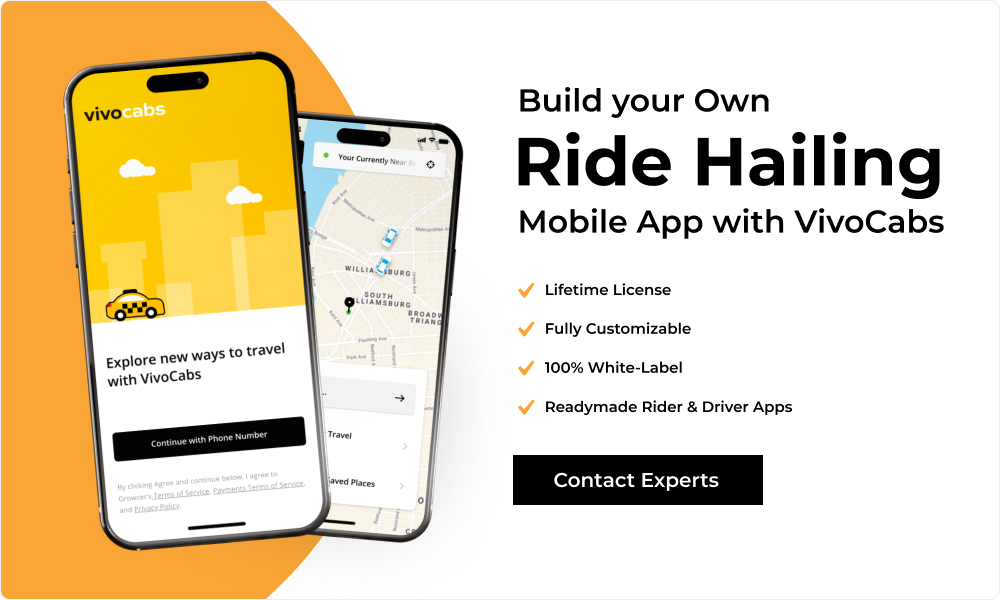
VivoCabs is a self-hosted, white-label ride-hailing software that can be customized to meet the unique requirements of student and child transportation businesses. With lifetime licensing, extensive customization capabilities, scalable architecture, and the option for source code ownership, it gives you complete control over your platform while allowing you to tailor the solution to your business model. Whether you plan to serve parents, schools, educational institutions, or government organizations, VivoCabs helps you launch a branded, scalable, and future-ready transportation platform with confidence.
1. Built for Faster Market Entry
Developing a transportation platform from scratch can take 9–18 months and require a significant investment before acquiring your first customer. VivoCabs dramatically reduces this timeline ( 2- 3 weeks) by providing ready-made rider and driver apps, an admin dashboard, and essential ride-hailing features that can be customized to meet your business needs. This enables you to enter the market faster and start generating revenue sooner.
2. Customize for Student Transportation
While VivoCabs is built on a robust ride-hailing framework, it can be tailored for child and student transportation businesses with features such as driver verification workflows, caregiver-focused ride management, scheduled bookings, safety protocols, and other transportation-specific customizations. This gives you the flexibility to build a platform similar to HopSkipDrive without developing everything from scratch.
3. Essential Features Already Included
VivoCabs comes equipped with the core features required to launch an app like HopSkipDrive, including:
- Native mobile apps for riders and drivers
- Real-time GPS tracking and live ride monitoring
- Secure online payment integration
- White-label branding with your own business identity
- Powerful admin dashboard for complete operational control
These built-in capabilities help reduce development time while providing a seamless experience for parents, drivers, schools, and administrators.
4. Designed to Scale with Your Business
Whether you’re launching in a single city or planning to expand across multiple regions, VivoCabs offers a scalable architecture that grows alongside your business. It also supports multiple languages and currencies, making it an ideal solution for businesses targeting international markets.
5. Free Technical Support for 12 Months
Launching a new platform comes with ongoing technical requirements. VivoCabs includes 12 months of free technical support and product updates, ensuring your platform remains secure, updated, and optimized while you focus on customer acquisition, partnerships, and business growth.
6. Complete Source Code Ownership
Unlike many SaaS-based platforms that operate on recurring subscription models, VivoCabs offers 100% source code ownership, giving you complete control over your business and technology. Once purchased, the source code belongs to you, allowing you to customize features, integrate third-party services, enhance functionality, and scale your platform without vendor lock-in or ongoing licensing restrictions. This ownership provides long-term flexibility, protects your investment, and enables you to grow your child transportation business on your own terms while maintaining full control over your platform’s future.
7. Cost-Effective Compared to Custom Development
Building a custom transportation platform requires a substantial investment in development, infrastructure, maintenance, and security. VivoCabs significantly reduces these costs by providing a market-ready solution at a fraction of the price. The money saved can be invested in areas that directly drive growth, such as marketing, driver onboarding, school partnerships, and customer acquisition.
8. Get Started with VivoCabs
If you’re ready to launch an app like HopSkipDrive, VivoCabs provides everything you need to accelerate your journey, from a proven technology platform and customizable features to ongoing technical support and scalable infrastructure. Instead of spending months reinventing standard ride-hailing functionality, you can focus on building a trusted brand, delivering exceptional customer experiences, and growing your business with confidence.
Book a free demo with the VivoCabs team today and discover how quickly you can transform your idea into a fully functional child transportation platform.
Explore VivoCabs with a Free Personalized Demo
Conclusion
Launching an app like HopSkipDrive presents a significant business opportunity as the demand for safe, technology-driven student transportation continues to grow worldwide. However, success in this industry requires more than just developing a ride-booking application. It demands a platform built around child safety, driver verification, real-time tracking, operational efficiency, and seamless communication between parents, schools, and drivers.
While building a custom platform offers complete flexibility, it also requires substantial investment, extended development timelines, and ongoing maintenance. For most entrepreneurs, startups, and transportation businesses, launching with a proven white-label solution is a faster, more cost-effective path to market.
VivoCabs provides a powerful foundation to launch an app like HopSkipDrive with ready-made rider and driver apps, an advanced admin panel, real-time GPS tracking, secure payment integration, and extensive customization capabilities. Its scalable architecture, multi-language and multi-currency support, full source code ownership, and 12 months of free technical support enable businesses to reduce development risks, accelerate market entry, and focus on acquiring customers instead of rebuilding standard ride-hailing features.
Frequently Asked Questions
1. How much does it cost to launch an app like HopSkipDrive?
The cost depends on your development approach, feature requirements, and customization needs. Building a platform from scratch can cost anywhere from tens of thousands to several hundred thousand dollars. Choosing a white-label solution like VivoCabs significantly reduces both development costs and time while providing a market-ready platform.
2. How long does it take to launch an app like HopSkipDrive?
Custom development typically takes 9–18 months. With VivoCabs, you can launch a fully functional and customized child transportation platform in as little as 2–3 weeks, depending on your requirements.
3. What are the must-have features for a child transportation app?
Essential features include rider and driver apps, driver verification, real-time GPS tracking, ride scheduling, emergency SOS, secure payments, push notifications, route optimization, live ride monitoring, and a powerful admin dashboard.
4. Can VivoCabs be customized for student transportation?
Yes. VivoCabs can be customized to support child and student transportation with features such as caregiver-focused workflows, scheduled rides, driver verification processes, safety protocols, school transportation management, and other business-specific requirements.
5. Is a white-label solution better than custom development?
For most startups and entrepreneurs, yes. A white-label solution allows you to launch faster, minimize development risks, reduce upfront investment, and start generating revenue sooner while still offering customization to meet your business goals.
6. Can I launch the platform in multiple countries?
Absolutely. VivoCabs supports multiple languages, currencies, and scalable business operations, making it suitable for businesses planning regional or global expansion.
7. How does VivoCabs help reduce development time?
VivoCabs comes with pre-built rider and driver applications, an admin panel, payment integration, GPS tracking, dispatch management, and other essential ride-hailing features. Instead of building these modules from scratch, you can customize them to match your business model and launch much faster.
8. Does VivoCabs include technical support after purchase?
Yes. VivoCabs includes 12 months of free technical support and product updates, ensuring your platform remains secure, up to date, and optimized while you focus on growing your business.
9. Can I monetize my app in multiple ways?
Yes. Your platform can generate revenue through ride commissions, subscription plans, school contracts, enterprise partnerships, transportation management services, and other pricing models depending on your business strategy.
10. Why should I choose VivoCabs to launch an app like HopSkipDrive?
VivoCabs combines proven ride-hailing technology with extensive customization, allowing you to launch a child transportation platform quickly without the high costs and long timelines of custom development. With scalable architecture, advanced features, source code ownership, white-label branding, and 12 months of free technical support, VivoCabs is an ideal solution for entrepreneurs looking to build a reliable and profitable transportation marketplace.
Want to Launch an App Like HopSkipDrive?
Reach OutPopular Posts