
Published Date 09th Oct, 2026
TL; DR
- Explore ride-hailing opportunities in South Africa across city transportation, airport transfers, corporate mobility, premium rides, and specialized services.
- Learn how to select an initial market, assess regulatory requirements, finalize essential features, and establish a suitable revenue model.
- Understand the passenger app, driver app, and admin dashboard capabilities needed to manage bookings, payments, tracking, and operations.
- Compare custom development with proven ride-hailing software to understand the trade-offs involving cost, customization, complexity, and time to market.
- Discover marketing strategies for attracting passengers and drivers, building partnerships, and expanding into new service areas.
- Explore how VivoCabs, a white-label, self-hosted ride-hailing solution, can help entrepreneurs establish their own branded mobility platform.
South Africa’s urban transportation market continues to evolve as people travel between cities, business districts, airports, residential areas, and other destinations. Ride-hailing has become an important part of this mobility ecosystem, creating opportunities for entrepreneurs and established transportation businesses to launch digital platforms tailored to specific cities, customer groups, and mobility needs.
According to IMARC Group, the country’s ride-hailing market is projected to reach USD 3 billion by 2034, growing at a compound annual growth rate (CAGR) of 10.72% from 2026 to 2034.
However, launching a ride-hailing app in South Africa involves more than connecting passengers with drivers. A successful platform needs a business model, a compliant operating structure, reliable payment infrastructure, location-based technology, driver management, safety mechanisms, and a scalable technology foundation.
Businesses entering this market also need to decide whether they want to develop an application from scratch or start with a proven ride-hailing platform that can be customized for their requirements.
This guide explores how to launch a ride-hailing app in South Africa, covering business models, essential features, technology requirements, regulatory considerations, development approaches, and strategies to establish and scale a successful ride-hailing business.
Table of Contents
Why Launch a Ride-Hailing App in South Africa?
South Africa offers opportunities for ride-hailing businesses to serve diverse transportation needs, including daily commutes, airport transfers, corporate travel, and premium rides. Entrepreneurs can focus on specific customer segments or underserved markets instead of competing directly with established platforms. Selecting the right niche also helps determine the platform’s features, pricing, driver acquisition, and marketing strategies.
Potential Ride-Hailing Business Opportunities
- Airport and Corporate Transportation
Serve tourists, business travelers, and organizations through airport transfers, employee commutes, and business travel. Features such as scheduled bookings, corporate accounts, and centralized billing can help manage recurring transportation needs.
- Premium and Local City Rides
Target customers seeking premium vehicles, professional drivers, or convenient everyday transportation. Entrepreneurs can differentiate their services through vehicle categories, service standards, transparent pricing, and a focused geographical coverage area.
- Long-Distance and Scheduled Rides
Offer intercity transportation and bookings for appointments, airport departures, and planned journeys. Features such as fare estimates, scheduled pickups, and booking reminders can improve trip coordination for passengers and drivers.
- Women-Focused Transportation
Develop a service that prioritizes passenger safety through driver verification, trip sharing, and emergency assistance. Clear safety procedures and features tailored to the target audience can help address specific transportation concerns.
- Fleet-Based Transportation
Help fleet operators manage drivers, vehicles, bookings, and trip performance through a dedicated platform. This model is suitable for transportation businesses looking to digitize their operations and improve fleet coordination.
- Multi-Service Mobility
Combine local rides, airport transfers, premium services, and scheduled journeys within one application. Businesses can introduce additional services as demand grows, provided their technology and operational infrastructure can support expansion.
Build a Ride-Hailing Platform Around Your Business Model
Roadmap to Launch a Ride-Hailing App in South Africa
Launching a ride-hailing app in South Africa requires a structured approach that aligns business goals with market demand, regulatory requirements, and technology needs. From selecting your target market and defining a revenue model to choosing the right development approach and planning customer acquisition, each step helps establish a reliable platform with room for growth.
Step 1: Choose the Initial Market
South Africa is a large country, so launching nationwide from day one may not be the most practical strategy. Instead, identify the city, region, or customer segment where your business can establish sufficient demand and driver supply.
Potential launch markets may include major metropolitan areas and locations with strong tourism, business, airport, or commuter demand.
Before selecting your launch market, evaluate the following factors:
- Target Audience: Identify your primary passengers and their transportation needs.
- Market Demand: Determine which mobility problems your platform will address.
- Competitor Analysis: Assess existing ride-hailing services, their offerings, and potential market gaps.
- Booking Preferences: Understand common trip types and how customers currently arrange rides.
- Driver Acquisition: Evaluate how you will attract and retain drivers or fleet operators.
- Payment Preferences: Identify the payment methods your target customers expect.
- Service Coverage: Define the initial operating area and potential expansion opportunities.
- Pricing Strategy: Establish a pricing model suited to your market and business objectives.
- Unique Value Proposition: Determine what will differentiate your platform from competing services.
Starting with a focused market helps you validate demand, refine operations, and establish a foundation for expansion into additional locations.
Step 2: Understand South African Regulatory Requirements
Regulatory compliance should be addressed before development begins. Requirements may vary depending on your business model, vehicle types, operating locations, and the transportation services offered.
Learn the applicable requirements for business registration, operating permits, driver licensing, vehicle compliance, insurance, and transportation regulations. Professional legal advice can help clarify the obligations relevant to your proposed service.
Ride-hailing platforms may collect personal information, including contact details, location data, payment information, and identification documents. Therefore, compliance with South Africa’s Protection of Personal Information Act (POPIA) should be considered when designing the platform.
Key privacy and security measures include:
- Consent Mechanisms: Obtain consent where required and explain how personal information is collected and used.
- Privacy Policies: Clearly communicate data collection, processing, storage, and sharing practices.
- Secure Data Storage: Protect sensitive information against unauthorized access.
- Access Controls: Restrict access to personal and operational data based on user roles.
- API Security: Secure integrations and data exchanges between platform components.
- Data Retention Policies: Establish appropriate rules for retaining and deleting information.
- Account Security: Implement suitable authentication and account protection measures.
- Location Data Protection: Limit access to location information and handle it responsibly.
- Payment Security: Use secure payment processing and protect transaction-related information.
Because regulatory and licensing obligations can change and depend on the operating model, obtain professional South African legal advice before launching your ride-hailing service.
Step 3: Finalize the Key Features of Your Ride-Hailing App
Once you have defined your business model and target market, identify the features required to support passenger bookings, driver operations, and platform administration. Prioritize essential functionality for launch, then introduce additional capabilities as your business grows. The feature set should reflect your service type, whether it focuses on city rides, airport transfers, corporate transportation, or premium mobility.
Passenger App Features
- Registration and Login: Allow passengers to create accounts using relevant credentials and securely access their profiles. Social login or other convenient authentication options can also be considered based on your target audience.
- Profile Management: Give users control over their personal information, contact details, preferences, and account settings. This keeps important passenger information organized and accessible.
- Pickup and Destination Selection: Passengers should be able to enter their pickup and destination locations through map-based selection or address search. Accurate location selection helps reduce pickup confusion and improves trip efficiency.
- Fare Estimation: Display an estimated fare before the passenger confirms the booking. This gives customers greater transparency and helps them make informed decisions about their ride.
- Immediate Ride Booking: Allow passengers to request a ride when transportation is needed. The system can identify suitable available drivers and facilitate the booking process.
- Scheduled Rides: Let customers book transportation for a future date and time. This can be particularly useful for airport transfers, business travel, appointments, and planned journeys.
- Ride Type Selection: If the business offers multiple categories, passengers should be able to select the appropriate ride type. Options may vary based on vehicle category, passenger requirements, or service model.
- Real-Time Driver Tracking: Once a driver accepts a booking, passengers should be able to see the driver’s location and estimated arrival time. This provides visibility throughout the pickup process.
- Driver and Vehicle Information: Display relevant driver and vehicle details after a booking is confirmed. This helps passengers identify the correct vehicle and provides greater confidence before starting the trip.
- In-App Notifications: Keep passengers informed about booking confirmations, driver assignments, arrival updates, trip status, and other important events through timely notifications.
- Digital Payments: Allow passengers to pay through the payment methods supported by the platform. The payment workflow should securely handle transactions and provide appropriate booking or payment records.
- Ride History and Receipts: Customers should be able to view previous rides and access relevant trip and payment information. Digital receipts can also make expense tracking easier for business and personal users.
- Ratings and Reviews: Enable passengers to rate their experience and provide feedback after completing a ride. This can help businesses monitor service quality and identify areas for improvement.
- Cancellation: Allow passengers to cancel bookings according to the business’s cancellation policy. The platform can apply relevant cancellation rules or charges where applicable.
- Customer Support: Provide passengers with a convenient way to report issues, ask questions, or request assistance. Support options can include in-app help, contact forms, or other communication channels.
Driver App Features
- Driver Registration and Onboarding: Drivers should be able to register and provide the information required to join the platform. The onboarding workflow can include relevant personal, vehicle, licensing, and verification information.
- Profile and Vehicle Management: Drivers can manage their profile and maintain their vehicle information through the application. This allows the platform to keep operational records updated.
- Document Submission: Provide a mechanism for drivers to submit required documents for verification. The business can establish its own document approval workflow based on applicable requirements.
- Availability Status: Drivers should be able to indicate when they are available to receive ride requests. This helps the platform determine which drivers can potentially accept new bookings.
- Ride Request Notifications: Drivers need timely notifications when a new ride request is available. The request can provide essential information required to decide whether to accept the trip.
- Trip Acceptance or Rejection: Allow drivers to respond to incoming ride requests through the application. The platform can then update the booking status and continue the matching workflow.
- Passenger and Pickup Information: Drivers should have access to the information required to locate and pick up the passenger. Relevant booking details can be presented without unnecessarily complicating the driver interface.
- Navigation: Integrate mapping and navigation functionality to help drivers reach pickup and destination locations. Route information can improve efficiency and reduce navigation-related delays.
- Trip Status Management: Drivers should be able to update trip stages such as arriving, passenger pickup, trip started, and trip completed. These updates keep passengers and administrators informed.
- Earnings Dashboard: Give drivers visibility into their earnings from completed trips. Depending on the business model, the dashboard can also show commissions, deductions, or other relevant financial information.
- Ride History: Drivers should be able to review previous bookings and completed trips. This provides a convenient record of their activity on the platform.
- Ratings: Drivers can view relevant ratings and feedback received from passengers. This can help them understand customer experience and maintain service quality.
- Notifications: Provide drivers with important booking, account, payment, and platform updates. Timely notifications are particularly important for ride requests and operational changes.
- Support: Drivers should have access to a support channel for reporting problems or seeking assistance. This can help resolve booking, payment, account, or passenger-related issues.
Admin Dashboard Features
- Passenger Management: Administrators should be able to view and manage passenger accounts from a centralized dashboard. This can include account status, booking history, and relevant customer information.
- Driver Management: The dashboard should allow administrators to manage drivers throughout their lifecycle on the platform. This may include onboarding, verification, activation, suspension, and performance-related information.
- Driver and Vehicle Verification: Administrators can review submitted driver and vehicle information before approving accounts. Verification workflows help the business maintain appropriate operational standards.
- Ride and Booking Management: Give administrators visibility into current and historical bookings. They should be able to monitor trip statuses and assist with operational issues when necessary.
- Pricing Configuration: Businesses should be able to configure pricing rules according to their operating model. Pricing may vary by ride category, distance, service area, time, or other business rules.
- Service-Area Management: Allow administrators to define and manage the geographical areas where the platform operates. This can help control where rides can be requested and fulfilled.
- Commission Management: If the business operates on a commission model, administrators should be able to configure and monitor platform commissions. The system can calculate the relevant share from completed transactions.
- Payment and Transaction Management: Provide centralized visibility into customer payments and other financial transactions. Administrators can use this information for reconciliation, refunds, and financial reporting.
- Cancellation Management: Allow the business to define and manage cancellation rules and monitor cancellation activity. This can help identify operational problems and recurring cancellation patterns.
- Promotions and Offers: Businesses can create promotional campaigns or discounts to attract and retain passengers. Promotional rules should be configured according to the platform’s commercial strategy.
- Reports and Analytics: Provide insights into bookings, revenue, drivers, passengers, cancellations, and other important metrics. These reports can support data-driven operational and marketing decisions.
- Notifications Management: Administrators can manage important platform communications and notifications. This can include customer updates, driver announcements, promotional messages, or operational alerts.
- Content and Platform Settings: Allow authorized administrators to manage configurable platform information and settings without requiring development changes for every minor update.
- Customer and Driver Support: Give administrators the tools needed to handle passenger and driver queries. A centralized support workflow can improve response times and help resolve operational issues efficiently.
Get the Right Features for Your Ride-Hailing Business
Step 4: Finalize The Revenue Model
Before developing the application, define how the business will generate revenue and operate in the market. The chosen model influences pricing, payment workflows, driver relationships, and platform administration.
A typical ride-hailing platform connects passengers with drivers while managing bookings, trip tracking, payments, and communication. However, the revenue structure can vary depending on your target market, operational setup, and business objectives.
- Commission-Based Model
The platform earns a percentage of each completed ride from drivers or fleet operators. For example, if a passenger pays R300 for a trip, the platform retains an agreed commission and transfers the remaining amount to the driver or fleet operator. Revenue can grow as completed bookings increase.
- Subscription Model
The platform charges drivers or fleet operators a recurring fee to access its services instead of collecting a commission on every ride. This model can appeal to professional drivers and transportation businesses that prefer predictable platform costs.
- Fleet Management Model
This model targets transportation companies that already operate their own vehicles and employ or manage drivers. The platform provides tools to coordinate bookings, manage vehicles and drivers, track trips, process payments, and oversee customer interactions. Revenue can come from software subscriptions or service fees, depending on the business structure.
- Hybrid Model
A hybrid model combines multiple revenue streams, such as ride commissions, driver subscriptions, corporate accounts, premium services, and booking fees. This approach allows businesses to diversify revenue sources according to their market and operational needs.
Defining the revenue model early helps establish the platform’s technical requirements, including payment processing, commission calculations, driver accounts, financial reporting, and administrative controls.
Step 5. Select the Right Technology Approach
Choosing the right technology approach is a critical decision when launching a ride-hailing app. Businesses can either build the platform from scratch or use a proven ride-hailing software solution and customize it to their requirements.
Custom development offers greater control over the technology stack and functionality, while established software can reduce foundational development effort and accelerate market entry. The right approach depends on your budget, business model, customization requirements, launch timeline, and long-term growth plans.
Option 1: Build the Ride-Hailing Platform From Scratch
Custom development involves building the entire ride-hailing ecosystem, including the applications, backend infrastructure, integrations, and administrative systems. This approach allows businesses to design the platform around their specific workflows and operational requirements.
A complete ride-hailing ecosystem may include a passenger app, driver app, admin dashboard, booking engine, real-time location tracking, payment integrations, notifications, mapping and routing, driver management, pricing, reporting, security, deployment, and ongoing maintenance.
Pros of Building From Scratch
- Complete Customization: You have greater control over the architecture, user experience, workflows, and functionality. This can be valuable when your business requires highly specialized processes.
- Greater Control Over Technology: Your development team can select the technology stack, architecture, APIs, databases, and infrastructure based on your requirements
Cons of Building From Scratch
- Higher Development Investment: Developing the complete ride-hailing ecosystem requires significant resources across design, development, QA, infrastructure, security, and integrations.
- Longer Time to Market: Building and testing multiple applications and backend systems can take considerably longer than configuring an existing platform.
- Greater Development Complexity: Real-time tracking, booking logic, driver allocation, payments, notifications, and other core functionality require extensive technical expertise.
- Ongoing Development Responsibility: Your business remains responsible for maintaining, securing, improving, and scaling the entire technology stack.
- Higher Risk During Initial Launch: Before the platform has been validated in the market, a significant amount of time and resources may already have been invested in development.
Custom development is suitable for businesses with highly specialized requirements, sufficient technical resources, and a clear need for greater control over the entire technology infrastructure.
Option 2: Use Proven Ride-Hailing Software
A proven ride-hailing software solution provides an established technology foundation that businesses can customize rather than developing every component from the beginning. This approach can reduce foundational development work while supporting business-specific branding, workflows, integrations, and additional features.
Pros of Using Ride-Hailing Software
- Faster Time to Market: Core ride-hailing functionality is already available, allowing businesses to focus more on customization, testing, operations, and market launch rather than building every component from zero.
- Lower Initial Development Complexity: Essential systems such as booking management, driver and passenger workflows, ride management, and administration can already be part of the technology foundation.
- Cost Efficiency: Businesses can avoid investing heavily in recreating standard ride-hailing functionality and allocate more resources toward customization, marketing, operations, and customer acquisition.
- Proven Core Functionality: Starting with an established platform can reduce the risks associated with developing fundamental ride-hailing workflows from scratch.
- Customization Potential: A suitable platform can still be adapted to different business models through custom workflows, integrations, branding, pricing logic, and additional functionality.
- Scalability: Businesses can establish their initial operation and progressively introduce advanced features, new ride categories, additional integrations, and new markets as they grow.
- Focus on the Business Instead of the Foundation: Rather than spending most of the initial development effort recreating standard ride-hailing infrastructure, the business can focus on its market positioning, customer acquisition, driver network, and operational model.
Cons of Using Ride-Hailing Software
- Platform Dependency: The quality of the final solution depends on the architecture, flexibility, documentation, and technical capabilities of the software provider.
- Dependence on Provider Support: Software updates, security improvements, technical assistance, and customization support can become important as your business expands.
VivoCabs: A Technology Foundation for Your Ride-Hailing Business
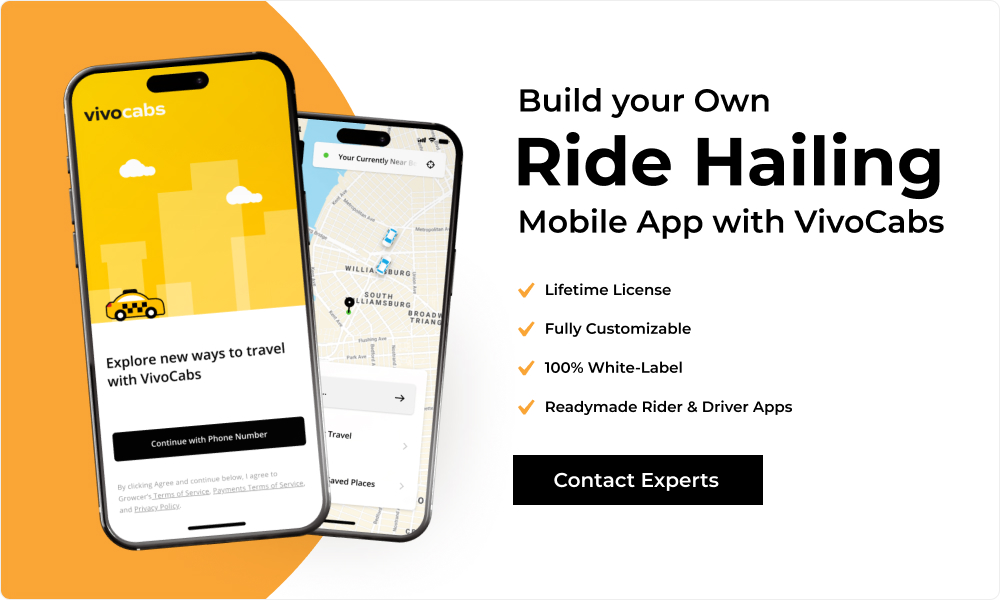
VivoCabs by FATbit Technologies is a white-label, self-hosted ride-hailing software solution that entrepreneurs and transportation businesses can customize to launch their own branded mobility platforms. It provides core functionality for passenger and driver applications, along with an admin dashboard to manage bookings and platform operations.
Rather than developing every component from scratch, businesses can use VivoCabs as a technology foundation and focus on differentiating their services. Depending on the requirements, the technology approach can extend beyond the base solution to include customization, third-party integrations, performance optimization, and ongoing technical support.
Key Highlights of VivoCabs:
- White-Label Solution: Launch a ride-hailing service under your own brand identity.
- Self-Hosted Solution: Maintain control over your hosting environment and deployment setup.
- Passenger and Driver Applications: Support essential booking and ride management workflows.
- Admin Dashboard: Manage platform operations through centralized administrative tools.
- Customization and Integrations: Adapt functionality to your business model and operational requirements.
- Technical Services: Extend implementation with deployment, QA, security, DevOps, and ongoing support as needed.
- Growth Flexibility: Adapt the platform to local market requirements and evolving business objectives.
For an entrepreneur or transportation business entering the South African market, this can provide a practical path to launch a branded ride-hailing service while retaining the flexibility needed to adapt the platform to local business requirements and future expansion.
See VivoCabs in Action
Step 6: Create a Marketing and Customer Acquisition Strategy
A successful launch requires strategies to attract passengers, onboard drivers, and generate bookings. Since ride-hailing is a two-sided marketplace, businesses must balance customer acquisition with driver recruitment.
Key Marketing Strategies
- SEO: Target location-specific searches to attract organic traffic.
- ASO: Optimize app listings with relevant keywords, descriptions, and screenshots.
- Paid Ads: Run targeted campaigns to generate bookings.
- Driver Acquisition: Use local campaigns to recruit drivers and fleet operators.
- Referral Programs: Reward passengers and drivers for referrals.
- Local Partnerships: Collaborate with hotels, businesses, and tourism operators.
- Social Media: Promote services, offers, and customer experiences.
- Corporate Outreach: Target businesses needing regular transportation.
- Launch Offers: Attract first-time users with sustainable introductory promotions.
Step 7: Launch and Scale Your Ride-Hailing Marketplace
Once development, testing, and marketing preparations are complete, launch your ride-hailing platform in the selected service area. Start by onboarding drivers, verifying their documents, testing booking and payment workflows, and ensuring customer support is ready to handle queries.
- Start With a Limited Service Area: Launch in your target city or region before expanding.
- Onboard Drivers: Ensure sufficient driver availability to meet expected passenger demand.
- Test Core Workflows: Verify bookings, payments, GPS tracking, notifications, and cancellations.
- Promote Your Launch: Use local campaigns, referral offers, and partnerships to attract initial users.
- Monitor Performance: Track completed rides, booking cancellations, customer feedback, and driver activity.
- Improve Continuously: Address operational issues and use user feedback to refine the platform.
A phased launch helps validate your business model, improve service reliability, and prepare your ride-hailing marketplace for expansion.
How To Scale a Ride-Hailing Business in South Africa
Once your initial market is established, focus on expanding gradually based on demand and operational capacity. A scalable platform can support new service areas, larger driver networks, additional ride categories, payment options, and corporate accounts.
Businesses can also explore adjacent services to diversify revenue and reach new customer segments:
- Corporate transportation: Serve businesses with recurring travel needs.
- Airport Transfers: Offer convenient, pre-booked airport rides.
- Scheduled Rides: Support advanced bookings for planned journeys.
- Premium Rides: Target customers seeking higher-end transportation.
- Fleet Management: Help operators manage drivers and vehicles.
- Delivery Services: Expand into parcel transportation where operationally viable.
- Multi-Stop Trips: Support journeys involving multiple destinations.
- Specialized Transportation: Address specific passenger or business requirements.
- Intercity Mobility: Connect passengers traveling between cities.
Choose technology that can accommodate these additions without requiring a complete platform rebuild. This allows your business to expand its services while adapting to changing customer needs.
Ready to Scale Your Ride-Hailing Business?
Final Thoughts
Launching a ride-hailing app in South Africa requires the combination of a viable mobility business model, a strong driver network, customer demand, regulatory compliance, secure payments, location technology, and a reliable digital platform.
The most effective approach is to start by identifying a specific market opportunity, define the operating model, understand regulatory obligations, and then select a technology approach that supports the business’s long-term goals.
For businesses that do not want to develop every component from scratch, a proven solution such as VivoCabs can provide the technology foundation for launching a white-label, self-hosted ride-hailing business. The platform can be adapted to different business workflows and requirements, while additional customization, integrations, deployment, security, QA, DevOps, and technical support can be planned according to the scale of the mobility operation.
Launch Your Own Ride-Hailing App in South Africa
Get StartedPopular Posts