In the last decade, France has experienced a transportation revolution. The convenience and flexibility of ride-hailing services have transformed urban mobility, creating a dynamic market where technology, sustainability, and consumer experience converge.
However, giants like Uber, Bolt, and Heetch have paved the way, but the French market remains open to innovative startups focusing on eco-friendly rides, affordability, and localized experiences.
Thus, if you’re an entrepreneur ready to enter this booming industry but wondering how to launch a ride-hailing mobile app in France, this blog is your blueprint. It covers every stage – from understanding market trends and legal requirements to developing a robust app and building a sustainable business model.
Table of Contents
- Understanding the French Ride-Hailing Market
- Top Players in the French Ride-Hailing Space
- Opportunities for New Entrepreneurs
- Monetization Strategy for Ride-Hailing Apps
- A Guide to Launch a Ride-Hailing App in France
- VivoCabs: The Best Ready-Made Software to Launch a Ride-Hailing App
- Final Thoughts
- FAQs
Understanding the French Ride-Hailing Market
The French ride-hailing industry has evolved into a vital component of urban mobility, reshaping how people commute across major cities. Furthermore, growing smartphone usage and the demand for quick, reliable, and cashless travel have driven users in cities like Paris, Lyon, and Marseille to choose app-based rides over traditional taxis.
1. Market Growth and Revenue Potential: As per a report by Statista, the French ride-hailing industry is projected to reach the market volume of $2.07 billion by 2030, growing at a CAGR of 3.30% from 2025 to 2030. This consistent growth highlights strong consumer trust and expanding adoption across the country.
2. Urban Demand and User Preferences: Cities like Paris, Lyon, Marseille, and Lille are leading the way in ride-hailing adoption. Busy professionals, students, and tourists prefer using mobile apps for fast, reliable, and transparent commuting experiences.
3. Regulatory Framework (VTC System): The industry operates under the VTC (Voiture de Transport avec Chauffeur) regulation, which mandates proper licensing, driver training, vehicle inspection, and insurance compliance. This framework ensures passenger safety, service quality, and fair competition among operators.
4. Focus on Sustainable Mobility: With the ongoing efforts of France toward achieving carbon neutrality by 2050, ride-hailing companies are integrating electric and hybrid vehicles into their fleets. Government incentives for eco-friendly transport are encouraging startups to adopt greener business models.
5. Opportunities for Innovation: Beyond Paris, smaller cities present new growth opportunities. Startups focusing on localized services, improved driver engagement, and environmentally friendly practices can gain a competitive edge in this evolving market.
Top Players in the French Ride-Hailing Space
The French ride-hailing market is a competitive space dominated by both global giants and strong local players. Understanding how each player operates can help new entrepreneurs identify the right gaps and opportunities for entry.
1. Uber: Uber remains the market leader in France, offering multiple ride options like UberX, Uber Green, and Uber Van. Its success stems from a wide driver network, reliable technology, and consistent user experience.
2. Bolt: Bolt is rapidly expanding across major French cities with a focus on affordability and sustainability. Known for its eco-friendly rides and low commission rates, it attracts both cost-conscious passengers and loyal drivers.
3. Free Now: Previously known as Chauffeur Privé, Free Now combines premium chauffeur-style service with flexible ride options. This platform is backed by automotive giants like BMW and Mercedes-Benz, and emphasizes quality, driver professionalism, and seamless digital experiences.
4. Heetch: Heetch is a French-founded platform popular among younger riders for its affordable late-night services. It emphasizes community-driven operations, fair driver commissions, and caters strongly to urban users seeking cost-effective mobility.
5. G7 Taxi: G7 Taxi is one of the oldestof oldest and most trusted taxi networksnetwork of France that successfully digitized its services through its app. It blends traditional taxi operations with modern booking technology and builds strong brand credibility.
6. LeCab: LeCab is a Paris-based private chauffeur service focused on offering premium, comfortable rides. It targets business travelers and corporate clients, distinguishing itself through luxury vehicles, punctuality, and professional service standards.
Build a Ride-Hailing App Like Uber and Bolt
Opportunities for New Entrepreneurs
Despite strong competition, the French ride-hailing industry still offers immense potential for innovation and market entry. Thus, entrepreneurs planning to launch a Ride-Hailing Mobile App in France can explore the following opportunities:
1. Regional Expansion: While Paris dominates the ride-hailing market, several smaller French cities such as Nice, Nantes, and Strasbourg remain underserved. Expanding ride-hailing services into these regions can help new startups build a strong local presence, face less competition, and capture early market share.
2. Niche Segments: Focusing on niche services such as women-only rides, airport transfers, corporate shuttles, or luxury chauffeur options can help new platforms stand out. By catering to specific customer needs, businesses can deliver unique value and gain long-term customer loyalty.
3. Green Mobility: French ongoing commitment to achieve carbon neutrality by 2050 creates a strong opportunity for eco-friendly ride-hailing solutions. Moreover, offering electric or hybrid vehicle fleets can attract environmentally conscious passengers and align your business with the country’s sustainability goals.
4. Fair Driver Policies: Drivers form the foundation of every successful ride-hailing platform. Hence, offering transparent commissions, timely payments, and flexible working terms can help attract skilled drivers and ensure reliable service quality for passengers.
5. Localized Branding: French users value cultural authenticity and local identity. Thus, incorporating French language support, region-specific design elements, and culturally relevant marketing strategies can enhance brand trust and improve customer engagement across the country.
Monetization Strategy for Ride-Hailing Apps
A successful ride-hailing app in France should balance customer affordability, driver profitability, and business revenue. Below are key monetization models to consider:
1. Commission per Ride: Platforms operating on this strategy charge a percentage (usually 10-25%) from each completed trip.
2. Surge Pricing: During peak demand or special events, fares increase automatically, generating higher margins while incentivizing drivers to be available.
3. Subscription or Membership Plans: Offer riders a monthly plan for discounted rides or exclusive benefits. Similarly, allow drivers to pay a flat weekly or monthly fee to eliminate per-ride commissions.
4. In-App Advertising: Collaborate with local businesses to promote services within your app, such as restaurants, events, or car washes.
5. Corporate Accounts: Offer ride packages for companies to provide transport for employees – an emerging trend in business mobility in France.
A Guide to Launch a Ride-Hailing App in France
To launch a Ride-Hailing Mobile App in France, entrepreneurs require a strategic approach that combines research, legal compliance, and the right technology. Below is a step-by-step guide to help entrepreneurs plan efficiently and execute effectively:
Step 1: Conduct Market Research
Before investing in development, analyze your target audience, competitors, and regional demand. Study the pricing strategies of leading apps, user expectations, and mobility trends in major French cities. Understand the gaps in service coverage and tailor your business model to meet specific local needs and rider preferences.
Step 2. Ensure Legal and Regulatory Compliance
The French ride-hailing industry operates under strict VTC (Voiture de Transport avec Chauffeur) regulations. To comply, ensure your company is registered, drivers possess valid VTC licenses, and vehicles meet government standards. Additionally, adhere to GDPR for data protection and maintain clear insurance coverage for both drivers and passengers.
Step 3. Select the Right Development Approach
Choosing the right approach determines your launch speed, scalability, and overall investment. Entrepreneurs generally have two primary options – custom development or a ready-made white-label solution.
- Custom Development: Custom development involves building your app from the ground up with a dedicated team of developers. It provides full control over design, architecture, and features. However, it requires a high budget, technical expertise, and more time for testing and deployment, making it suitable for long-term, large-scale ventures.
- Ready-Made Solution: A ready-made white-label solution allows you to launch your ride-hailing app quickly with pre-built and customizable software. It offers essential modules for riders, drivers, and admins with proven performance and scalability.
Software like VivoCabs is ideal for entrepreneurs aiming to enter the French market faster, ensuring GDPR compliance, multi-language support, and lower costs without compromising functionality.
Leverage a Reliable Readymade Software to Launch a Ride-Hailing Mobile App in France
Step 4: Launch and Market Your App
Once the platform is ready, focus on a strong go-to-market strategy. Promote your app in targeted cities through digital marketing and offer referral bonuses or discounts to attract users and drivers. Furthermore, collaborate with local influencers and use social media to build visibility, trust, and brand recognition.
VivoCabs: The Best Ready-Made Software to Launch a Ride-Hailing App
When it comes to building and launching a Ride-Hailing Mobile App in France, choosing the right technology is crucial. Developing everything from scratch can take months and demand heavy investment, which is why many entrepreneurs today prefer ready-made white-label software. Among the available options, VivoCabs stands out as a complete, market-tested solution designed for fast deployment and long-term scalability.
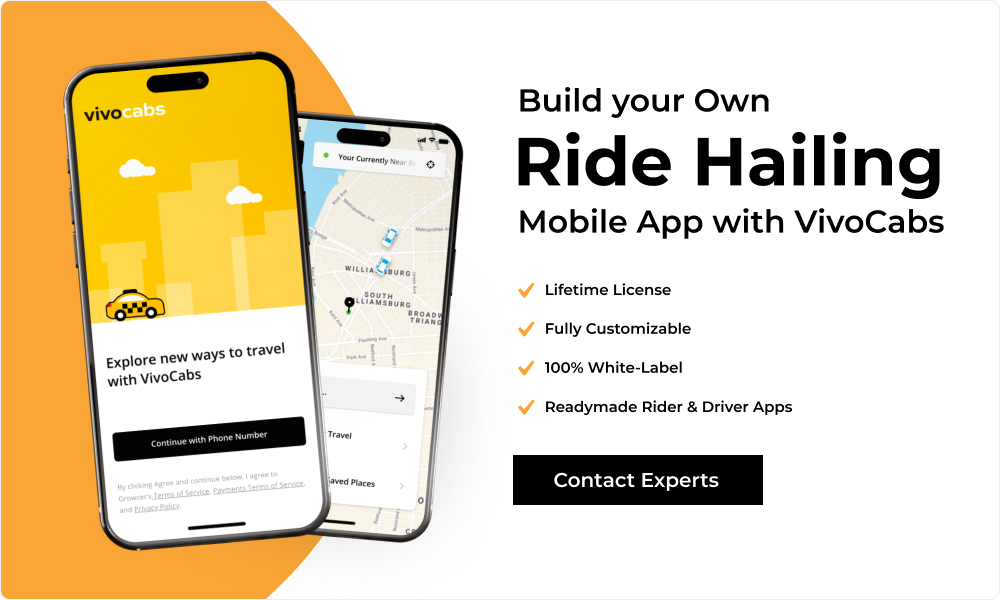
VivoCabs is a ready-made, white-label taxi app with over a decade of experience in mobility and on-demand app solutions. The platform allows entrepreneurs to create their own branded apps – similar to Uber or Bolt-without extensive coding or long development timelines.
Tailored for speed and scalability, it offers pre-integrated modules such as real-time GPS tracking, multiple payment gateways, ride-bidding, subscription models, and rental packages—so you can deploy quickly, operate efficiently, and focus on growth.
VivoCabs for the French Market?
Launching a ride-hailing business in France involves handling regulatory compliance, real-time tracking, and high user expectations. VivoCabs simplifies all of that by offering:
- Quick Deployment: Go live within weeks instead of months, reducing time-to-market and early operational costs.
- Multi-Language & Multi-Currency Support: Easily cater to French-speaking users and handle transactions in euros.
- GDPR-Compliant Architecture: Built with strong data protection and privacy standards to align with European regulations.
- Driver & Fleet Management: Simplifies onboarding, tracking, and managing drivers and vehicles from a central dashboard.
- Real-Time GPS Tracking: Ensures precise navigation and improved route optimization for drivers and riders.
- Advanced Analytics: Provides insights into revenue, driver performance, and user activity to support data-driven decisions.
- Multiple Payment Options: Seamless integration with popular international payment gateways like Stripe, PayPal, and local banking systems.
- Custom Branding: Easily add your logo, brand colors, and interface preferences for a completely personalized experience.
Other key benefits of opting for VivoCabs:
- 100% White Label
- Self-hosted Solution
- Lifetime Ownership for One-Time Payment
- Highly Scalable and Customizable
- Built with Future-Ready Technology
- Free Technical Support
- No hidden or recurring costs
Schedule a Free Personalized Demo to Know More About VivoCabs
Final Thoughts
Launching a Ride-Hailing Mobile App in France is a promising opportunity for entrepreneurs who are ready to innovate and adapt to the evolving market demands. The increasing need for convenience, safe, and sustainable mobility solutions makes now the perfect time to invest in advanced and technology-driven transport software.
Success, however, depends on more than just having an app. Understanding French regulations, focusing on user experience, and ensuring reliable operations are key to standing out in a competitive market. Entrepreneurs who balance innovation, compliance, and customer satisfaction will be well-positioned to build a strong and trusted ride-hailing brand in France.
FAQs
Q 1. How much does it cost to launch a ride-hailing mobile app in France?
Ans. The cost to launch a ride-hailing mobile app in France varies depending on the app’s features, design, and development method. A custom-built app usually costs between $30,000 and $150,000, based on complexity. In comparison, a ready-made white-label solution is a far more budget-friendly choice – often up to 5x cheaper, while still providing robust features and a faster time to market.
Furthermore, solutions like VivoCabs offer packages starting from just $1499.
Q 2. How long does it take to build and launch a ride-hailing app in France?
Ans. The development timeline depends on the approach chosen. Custom development may take 6-12 months due to design, coding, and testing. In contrast, using a ready-made white-label solution can help you launch within 2-4 weeks, as the core features are pre-built.
Q 3. Is it possible to start small and scale later?
Ans. Yes, it is possible to start small and scale later. You can launch your ride-hailing app in one city first and gradually expand to other areas. Scalable ride-hailing solutions are built to handle growth efficiently, offering features like multi-city control, localization, compliance management, diverse payment options, and easy integration with regional tax systems.
Q 4. Can I customize the ride-hailing app built with VivoCabs to match my unique branding?
Ans. Yes, you can customize the ride-hailing app built with VivoCabs to match your unique branding. VivoCabs allows you to modify elements like the logo, color palette, interface design, and even add or adjust specific features and workflows. Moreover, the solution’s flexibility ensures it aligns with your business goals and branding strategy. However, advanced or highly specialized customizations come at an additional cost.
Ready to Launch Your Ride-Hailing Mobile App Tailored to the Needs of French Riders
Get In TouchPopular Posts