Last Updated Date 23th July, 2025
Quick Overview:
Building a platform similar to Lyft requires balancing seamless rider experiences with efficient driver operations behind the scenes. This blog breaks down the essential features, business model, development process, and technology stack needed to create a competitive ride-hailing application. Entrepreneurs can also discover how VivoCabs reduces development complexity by offering ready-made functionality inspired by leading mobility platforms.
Driven by technological advances and consumer demand for seamless transportation solutions, urban mobility has undergone a remarkable transformation. At the forefront of this innovation stand popular ride-hailing apps like Lyft, Uber, or Bolt. These ride-hailing apps have redefined on-demand transportation with their efficient business model, innovative features, and commitment to user experience.
Likewise, Lyft has grown to become a household name, capturing a significant share of the market. The app’s estimated revenue in 2025 (TTM) reached approximately $5.959 billion, with a 27.32% increase from the previous year. For businesses aiming to build an app like Lyft, the platform offers both inspiration and a proven blueprint for success.
This guide is tailored for entrepreneurs and enterprises seeking to understand what it takes to build a ride-hailing app like Lyft that not only competes but thrives in this competitive industry.
Thus, if your business is ready to capitalize on the growing demand for on-demand transportation, this guide offers actionable insights on how to build a ride-hailing app like Lyft that stands out in the industry.
Table of Contents
About Lyft
Lyft is a leading ride-hailing app that connects drivers with passengers looking for rides through a mobile application. Founded in 2012 by Logan Green and John Zimmer, Lyft is headquartered in San Francisco, California, and has emerged as one of the primary competitors to Uber in the North American market. The company initially began as Zimride, a long-distance carpooling service, before evolving into Lyft.
Lyft’s mission is to improve transportation accessibility and convenience while reducing the environmental impact of traditional commuting methods. By leveraging advanced technology, the app offers users a seamless experience for booking rides, making payments, and tracking them in real time.
The company has expanded its offerings beyond ride-hailing, introducing shared rides, luxury ride options, and even bike and scooter rentals.
As of the recent market data, Lyft holds a significant market share in the U.S. ride-hailing market, grasping approximately 24% of the market.
- Estimated Annual Revenue: $5.959 billion
- Active Riders: 24.4 million
- Gross Bookings: $4.11 billion
- Average Monthly Customer Spend: $95

Planning to Launch a Ride-Hailing App like Lyft that Scales?
How does a Ride-Hailing App Like Lyft Work?
To understand how to build a ride-hailing app like Lyft, it’s essential to first understand how such apps operate. Ride-hailing apps like Lyft connect passengers with available drivers through a centralized mobile application. Such apps typically include three core interfaces: Passenger App, Driver App, and an Admin Panel, all working together to create a seamless transportation experience.
Here’s how a ride-hailing app like Lyft functions at a fundamental level:
- Users register themselves on the app via any preferred mode.
- They, then request a ride by entering the pick-up/drop-off locations, preferred vehicle, and payment method.
- The ride request is broadcasted to the nearby available drivers, who have permission to accept or reject the request based on their availability.
- Once the request is accepted by a driver, both the stakeholders receive each other’s information.
- Upon reaching the pick-up location, the passenger shares a One Time Password (OTP) to commence the ride.
- The driver drives the passenger to the drop-off location and marks the ride as ‘Completed’.
- The passenger then makes the payment via the chosen method and rates the ride experience.
- The payment made by the passenger is split into two as the commission of the admin and the driver’s earnings, which are transferred to the associated wallets.
How does a Ride-Hailing App like Lyft Generate Revenue?
Ride-hailing apps like Lyft offer multiple revenue channels to ensure a steady flow of income. Here are some common revenue channels to name a few:
- Commission Per Ride: A fixed percentage of fare is deducted per transaction as a platform commission.
- Surge Pricing: Implement dynamic fares during high-demand periods, boosting earnings and encouraging more drivers to operate.
- Subscription Offers: Offer multiple membership plans for drivers or passengers, offering exclusive benefits.
- Third-Party Advertising: Display in-app ad placements for third-party businesses, generating revenue from impressions, clicks, or conversions.
- Partnerships with Local Businesses: Collaborate with local businesses for mutual benefits, often including referral fees or exclusive deals.
- Late Ride Cancellations: Charge last-minute cancellation charges to compensate drivers for lost opportunities.
- Extended Wait Time Charges: Charge passengers an additional fee when drivers wait beyond a predefined time at pickup locations.
Essential Features to Build an App like Lyft
It is essential to integrate a robust suite of features that enhance user experience, streamline operations, and ensure scalability if you’re planning to build a ride-hailing app like Lyft. Here are the must-have features for each user interface of a ride-hailing app like Lyft:
Passenger App Features:
1. User Login: Offer passengers multiple login options such as OTP, email, phone number, or social media accounts to login to the app.
2. Ride Booking: Provide an intuitive user interface for passengers to seamlessly book rides via the app.
3. Fare Estimation: Include an in-app fare estimator to provide passengers with an estimated fare amount for the ride.
4. Real-Time Tracking: Leverage advanced GPS tracking to let passengers track their approaching driver’s real-time location and get an estimation of their time of arrival.
5. SOS Alerts: Integrate an SOS toggle to enhance passenger safety by allowing passengers to share their ride details with their pre-designated emergency contacts.
Driver App Features:
1. Driver Registration and Verification: Simplify driver registration & verification by providing straightforward guidelines to upload documents and verify to meet safety concerns.
2. Ride Requests: Allow drivers to view ride requests and accept/decline them based on their operational availability.
3. Availability Toggle: Drivers receive ride requests only when they mark their availability to operate with this simple button.
4. Navigation & Route Optimization: Integrate built-in maps and GPS navigation tools to ensure efficient routes and timely pickups/drop-offs.
5. Initiate Payout: Provide drivers with the option to manage their earnings and initiate payout anytime they need.
Admin Panel Features:
1. User Management: Admins can overlook user profiles, including passengers and drivers, track their activities on their app, verify documents, and more.
2. Geofencing: Define operational areas of service within the app.
3. Vehicle Management: Add and manage vehicle categories in your ride-hailing app to ensure a diverse fleet size.
4. Commission Management: Manage commissions for various vehicle types and services to provide transparency.
5. Reports & Analytics: Utilize diverse reports on user activities, user behavior, earnings, payments, and more to refine marketing strategies and grow.
Launch a Lyft-like App Equipped with Unparalleled Features
Development Approaches to Build a Ride-Hailing App like Lyft
If you’re planning to build a ride-hailing app like Lyft, there are primarily two key approaches to consider: Custom Development and Readymade Software. Each approach offers distinct advantages to build an app like Lyft depending on your business objectives, timeline, and budget.
1. Custom Development:
Choosing custom development allows you to build an app like Lyft completely from scratch, offering complete control over features, functionalities, design, and overall development process. While this approach offers the highest level of flexibility, there are several key factors to weigh as well:
- Requires a significant investment, anywhere from $50,000 – $500,000
- Longer development timelines to build an app like Lyft, slowing market entry
- Includes ongoing maintenance and upgrades
- Need to hire a skilled team of developers, designers, and testers
2. Readymade Software:
To build a ride-hailing app like Lyft quickly and cost-effectively, utilizing a readymade software solution offers an optimal choice. These are pre-built solutions that integrate all essential features and functionalities from the beginning to build an app like Lyft in no time.
Here’s why utilizing a readymade software is the perfect choice to build an app like Lyft:
- Can be launched in just a few weeks, allowing rapid market entry.
- Cost-effective solution, typically eliminating costs by up to 5x compared to custom development.
- Already tried and tested software, reducing the risk of encountering any bugs or downtime errors.
- Built-in scalability features to grow with your business.
- Offers high customization capabilities to suit your unique brand identity.
- Often include dedicated technical support after purchase.
While both development approaches are viable and extend several key benefits, we recommend you to opt for a readymade software solution to build a ride-hailing app like Lyft, especially if speed and cost-efficiency are priorities. Among various options available, VivoCabs stands out as a turnkey, reliable software solution to build a ride-hailing app like Lyft with confidence and ease.
How Does VivoCabs Help to Build an App like Lyft?
VivoCabs is a robust ride-hailing software designed to help businesses and entrepreneurs bring their vision of launching scalable ride-hailing apps to life. It serves as an ideal foundation for those looking to build a ride-hailing app like Lyft without the time, cost, or complexity of custom development.
As a pre-built software, VivoCabs enables you to build an app like Lyft in just a few weeks, offering a streamlined path to market entry. The software comes fully equipped with essential features, advanced APIs, and customizable interfaces, allowing you to start strong right from the beginning. With a one-time payment and self-hosted setup, VivoCabs offers a cost-effective alternative for launching and scaling your ride-hailing app.
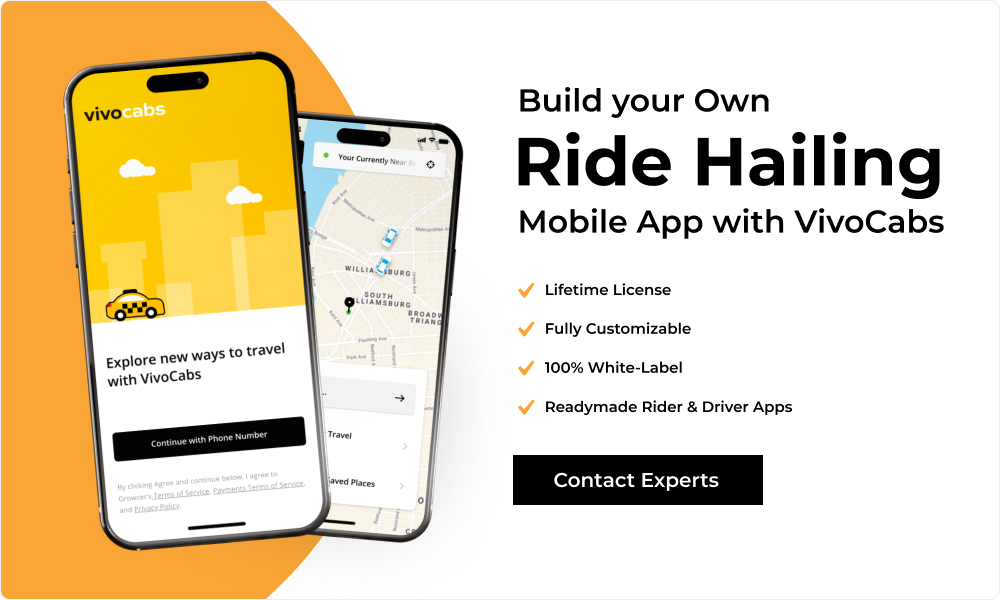
VivoCabs’s intuitive UI, multi-lingual and multi-currency support, 100% white-labeling, and lifetime license make it especially attractive for businesses aiming to replicate the success of Lyft-like ride-hailing apps. Whether you’re a startup or an established business aiming to build a ride-hailing app like Lyft, VivoCabs empowers you to enter the market faster, with extensive flexibility and full brand control.
Here are some of the ride-hailing apps built with VivoCabs:
1. TripLi – Trusted Mobility Solution in Africa
TripLi is a dependable ride-hailing app that addresses transportation challenges across Africa efficiently. Built with VivoCabs, TripLi is well-equipped with an intuitive user interface, robust suite of features, and seamless ride scheduling, offering a convenient mobility solution tailored for diverse travel needs.
2. RUNR – On-Demand Courier Service App in the US
RUNR is a smart, on-demand courier service app built for the construction industry. Whether it’s delivering materials, tools, equipment, or concrete, RUNR ensures fast, reliable service that meets the time-sensitive demands of the industry and streamlines logistics.
Kindly refer to our client portfolio for additional information.
Schedule a Free Personalized Demo to Know More About VivoCabs
Wrapping Up
The on-demand transportation industry’s tremendous growth potential, coupled with the demand for tech-driven, seamless, and reliable transportation solutions, makes it an opportune time to build a ride-hailing app like Lyft. With consumers seeking fast, reliable, and user-friendly services, businesses have a rewarding chance to carve out a niche in this competitive space. However, success hinges on having a clear vision, scalable infrastructure, robust feature set, and a user-centric approach. By partnering with proven solutions like VivoCabs, you gain access to proven ride-hailing software that eliminates unnecessary hurdles and accelerates your journey to build an app like Lyft.
With VivoCabs, you’re not just launching an app; you’re creating an ecosystem that redefines customer convenience and loyalty in the ride-hailing services.
FAQs
Q 1. How much does it cost to build a ride-hailing app like Lyft?
Ans. The cost to build an app like Lyft primarily depends on the chosen development approach. Typically, building a custom ride-hailing app from scratch costs anywhere between $50,00 – $500,000. Whereas, building a ride-hailing app utilizing readymade software costs significantly five times less than compared to custom development.
Kindly check our pricing plans for more information.
Q 2. How long does it take to build a ride-hailing app like Lyft?
Ans. The development time to build a ride-hailing app like Lyft depends on the development approach, features, and customizations. While custom development may take up to a year or so, readymade software can build your ride-hailing app in a few weeks.
Q 3. What makes VivoCabs different from other readymade software solutions?
Ans. VivoCabs stands out because of its robust feature set, intuitive interface, affordable & transparent pricing plans, customization options, scalability, and end-to-end support. Unlike other solutions, VivoCabs ensures a tailored experience, enabling businesses to reflect their brand identity and meet specific operational needs.
Q4. Does VivoCabs support small businesses aiming to build a ride-hailing app like Lyft?
Ans. Yes, VivoCabs is a highly adaptable and scalable solution and supports businesses of all sizes—whether small, medium, or large—without any minimum fleet requirements. The software offers affordable prices and a scalable solution to grow and scale in the future.
Q 5. Does VivoCabs provide source code ownership of mobile apps?
Ans. Yes, VivoCabs offers source code ownership of mobile apps for both platforms apart from the web admin panel. However, this source code comes at an additional price.
For more information regarding this, kindly refer to our source code page.
Q 6. Is VivoCabs capable to launch a Lyft-like app in international markets?
Ans. VivoCabs is a highly adaptable and advanced ride-hailing software that equips several advanced functionalities to scale the ride-hailing app and grow. The multi-lingual & multi-currency functionality, geofencing capabilities, a large pool of third-party integrations as well as payment gateways, and compliance with local security standards make it a highly capable software to launch a ride-hailing app like Lyft in international markets as well.
Launch a Ride-Hailing App like Lyft with VivoCabs
Contact UsPopular Posts