
Published Date 03rd July, 2026
TL; DR:
- Poland’s growing digital economy and increasing demand for app-based transportation make it an attractive market for launching taxi marketplaces.
- Choose the right business model, understand local regulations, and implement multiple revenue streams to build a sustainable taxi business.
- A successful taxi marketplace requires feature-rich driver, rider, and admin applications that deliver seamless booking and operational management.
- White-label taxi software offers a faster, more affordable route to market than custom development while supporting branding, customization, and scalability.
- VivoCabs helps entrepreneurs launch and scale taxi marketplaces with ready-to-use features, customizable source code, and multi-city capabilities.
Poland’s ride-hailing industry has witnessed steady growth in recent years, fueled by rising smartphone adoption, widespread use of digital payments, and evolving urban commuting preferences. Major cities such as Warsaw, Krakow, Wroclaw, Poznan, Gdansk, and Lodz have witnessed a significant rise in demand for convenient, affordable, and technology-driven mobility services.
Although leading ride-hailing platforms have established a strong foothold, opportunities remain for entrepreneurs targeting niche segments such as corporate transportation providers, airport transfer services, electric taxi fleets, and regional ride-hailing startups.
If you’re planning to launch a taxi app in Poland, this guide covers everything you need to know, from evaluating market opportunities and understanding local regulations to selecting the right business model, choosing the ideal development approach, and launching a successful ride-hailing platform.
Table of Contents
- Why is Poland an Attractive Market for Taxi Apps?
- Understanding the Polish Ride-Hailing Market
- Step 1: Define Your Business Model
- Step 2: Understand Taxi Regulations in Poland
- Step 3: Finalize The Revenue Channels
- Step 4: Build Feature-Rich Taxi Applications
- Step 5: Select Development Approach: Custom Built or White-Label Solution
- Step 6: Launch and Scale Your Taxi App
- Final Thoughts
- FAQs
Why is Poland an Attractive Market for Taxi Apps?
Poland has emerged as one of Central Europe’s fastest-growing digital economies, driven by rapid urbanization, strong smartphone penetration, and widespread adoption of digital payment solutions. As consumers increasingly prefer booking rides through mobile applications instead of traditional taxi dispatch services, the demand for convenient, technology-enabled transportation continues to rise.
Several factors are fueling the growth of the country’s ride-hailing market:
- High smartphone adoption
- Reliable internet infrastructure
- Increasing cashless payments
- Growing tourism industry
- Rising demand for corporate mobility
- Expansion of electric vehicle adoption
- Digital-first consumer behavior
With millions of taxi rides taking place across major cities every month, Poland presents a promising opportunity for entrepreneurs to launch innovative ride-hailing businesses. By focusing on competitive pricing, localized services, or niche transportation offerings, new entrants can effectively differentiate themselves in this growing market.
Understanding the Polish Ride-Hailing Market
Before launching your taxi app in Poland, it’s essential to understand the evolving transportation needs of its users and the opportunities within the local ride-hailing ecosystem. While daily commuting remains the primary use case, customers increasingly rely on taxi apps for a variety of travel requirements, creating opportunities for businesses to serve different market segments.
Some of the most common use cases include:
- Daily city commuting
- Airport transfers
- Business and corporate travel
- Weekend and leisure outings
- Tourist transportation
- Intercity travel
- Scheduled rides
- Premium chauffeur services
Beyond conventional taxi services, entrepreneurs can also differentiate their offerings by targeting specialized mobility segments based on local demand and customer preferences. Some promising opportunities include:
- Electric taxi services
- Corporate employee transportation
- Medical transportation
- Luxury limousine services
- School transportation
- Carpooling or shared rides
- Women-focused transportation services
- Delivery and courier integration
Identifying the right niche early allows you to tailor your services, marketing strategy, and technology to meet specific customer needs. Rather than competing solely on price, focusing on a well-defined market segment can help you build a stronger brand and achieve sustainable growth.
Build a Ride-Hailing Platform That Matches Local Demand
Once you’ve identified your target market and niche, the next step is turning your idea into a fully functional taxi platform. Let us dive into a step-by-step guide to launching a successful taxi app in Poland.
Step 1: Define Your Business Model
The foundation of a successful taxi business begins with selecting a business model that aligns with your budget, operational capabilities, and long-term growth strategy. Each model has its own advantages, and the right choice depends on your target market and expansion plans.
Given below are some of the popular business models:
1. Aggregator Model
In the aggregator model, your platform acts as a marketplace that connects independent drivers with passengers. Since you don’t own or manage the vehicles, you can focus on acquiring users, onboarding drivers, and growing your marketplace.
Advantages:
- Lower operational costs
- Easy scalability
- Access to a larger driver network
- Faster expansion into new cities
2. Fleet-Owned Model
With a fleet-owned model, your business owns and manages the vehicles while employing or contracting drivers directly. Although this model requires a higher initial investment, it gives you greater control over service quality and day-to-day operations.
Advantages:
- Better control over service quality
- Complete operational oversight
- Stronger brand consistency
- More reliable customer experience
3. Hybrid Model
The hybrid model combines owned vehicles with independent third-party drivers, allowing businesses to balance operational control with scalability. It offers the flexibility to meet fluctuating demand while supporting long-term expansion.
Advantages:
- Greater operational flexibility
- Improved scalability
- Better vehicle availability during peak hours
- Balanced control and business growth
Many successful ride-hailing companies across Europe operate using the hybrid model, as it offers the flexibility to maintain service quality while expanding into new markets with relatively lower operational risk.
Step 2: Understand Taxi Regulations in Poland
Regulatory compliance is a critical step when launching a taxi app in Poland. Before launching your taxi app, ensure your business complies with Poland’s transportation and business regulations. The specific requirements may vary depending on whether you operate as an aggregator, fleet owner, or hybrid service, so it’s important to understand the legal obligations before entering the market.
Depending on your business model, you may need:
- Business registration
- Taxi operator license or permits
- Driver verification and onboarding compliance
- Commercial vehicle insurance
- Vehicle inspections and roadworthiness certification
- Tax registration
- GDPR compliance for handling customer data
- Compliance with electronic payment regulations
In addition to business requirements, drivers are generally expected to meet certain eligibility criteria, including:
- A valid driver’s license
- Background verification
- Medical examination (where applicable)
- Valid vehicle registration and documentation
- Appropriate vehicle insurance
- Required local permits or licenses
Since transportation regulations may evolve and can differ across municipalities, it’s advisable to consult legal and regulatory professionals before launching your taxi business. Doing so will help ensure compliance with the latest national and local requirements, minimize legal risks, and establish a strong foundation for long-term operations.
Step 3: Finalize The Revenue Channels
Building a successful taxi app isn’t just about acquiring riders and drivers. It also needs a sustainable monetization strategy that supports long-term growth. Rather than relying on a single income source, successful ride-hailing businesses combine multiple monetization strategies to maximize profitability while offering flexibility to different customer and driver segments.
Here are some of the most effective revenue channels for a taxi app business:
- Ride Commission
Charging a commission on every completed ride is the most widely used monetization model. A fixed percentage of the fare is deducted before the remaining amount is transferred to the driver. This model directly aligns your revenue with the number of rides completed on the platform.
- Surge Pricing
Dynamic or surge pricing allows fares to increase automatically during periods of high demand, such as rush hours, weekends, holidays, or large public events. In addition to boosting revenue, it encourages more drivers to become available when rider demand exceeds supply.
- Driver Subscription Plans
Instead of charging a commission on every ride, you can offer drivers a monthly or annual subscription plan that provides unlimited access to the platform. This approach generates predictable recurring revenue while appealing to high-frequency drivers seeking fixed operating costs.
- Cancellation Charges
Applying cancellation fees when riders cancel after a defined period or once a driver has arrived at the pickup location helps compensate drivers for lost time and discourages unnecessary cancellations, resulting in a better experience for both parties.
- Premium Transportation Services
Expand your service portfolio by offering premium ride categories, such as executive vehicles, luxury cars, airport transfers, chauffeur services, or larger vehicles for group travel. These services typically command higher fares and improve profit margins.
- In-App Advertising and Partnerships
As your user base grows, you can partner with local businesses, hotels, restaurants, shopping centers, and event organizers to display targeted advertisements or promotional offers within your app, creating an additional revenue stream beyond ride bookings.
- Corporate Accounts
Many organizations require reliable transportation for employees, clients, and business travelers. Offering corporate accounts with centralized billing, ride scheduling, and expense management can generate recurring business and establish long-term partnerships with companies.
- Value-Added Services
Introduce optional paid services such as priority bookings, scheduled rides, extended waiting time, delivery services, or vehicle upgrades. These value-added offerings enhance the customer experience while unlocking additional monetization opportunities.
By diversifying your revenue streams, you can reduce dependence on ride commissions alone and build a more resilient business. A well-balanced revenue model enables you to improve profitability, invest in platform enhancements, and scale your taxi business more effectively as your customer base grows.
Launch Your Taxi App With Multiple Revenue Streams
Step 4: Build Feature-Rich Taxi Applications
A successful ride-hailing platform consists of three core components: a Rider App, a Driver App, and an Admin Panel. Each component serves a distinct purpose in the ecosystem, providing a seamless booking experience for passengers, enabling drivers to efficiently manage rides, and giving administrators complete control over daily operations. These applications ensure smooth coordination between riders, drivers, and the business.
Rider App Features
The rider app is the primary touchpoint between your taxi business and plays a crucial role in customer acquisition and retention. It should deliver a fast, intuitive, and secure booking experience while providing complete transparency throughout the journey.
- User Registration
Allow users to create an account using their email address or mobile number. A quick and secure registration process simplifies onboarding and reduces user drop-offs.
- Social Login
Enable sign-in using Google, Apple, or Facebook accounts for faster access. Social login minimizes friction and makes the registration process more convenient.
- Ride Booking
Allow passengers to instantly book rides by selecting their pickup and drop-off locations. A smooth booking flow significantly enhances the overall user experience.
- Live GPS Tracking
Provide real-time tracking so passengers can monitor the driver’s location and estimated arrival time. This improves transparency and reduces uncertainty during the waiting period.
- Fare Estimation
Display an estimated fare before confirming the booking based on distance, travel time, and pricing rules. Transparent pricing helps build customer trust and minimizes fare-related disputes.
- Multiple Payment Methods
Support various payment options such as credit/debit cards, digital wallets, cash, Apple Pay, Google Pay, and local payment methods. Offering flexible payment choices improves convenience and customer satisfaction.
- Ride Scheduling
Enable users to schedule rides in advance for airport transfers, business meetings, or planned travel, providing greater flexibility and convenience.
- Favorite Locations
Enable riders to save frequently visited destinations such as home, office, or the airport. This reduces booking time and improves the overall user experience.
- Ride History
Maintain a detailed record of completed trips, including routes, fares, payment details, and receipts. Users can easily review previous rides or download trip information when required.
- Driver Ratings
Allow passengers to rate drivers and leave feedback after every trip. Ratings encourage service quality while helping administrators monitor driver performance.
- Promo Codes
Offer promotional discounts and coupon codes to attract new customers and encourage repeat bookings. This feature is also valuable for running seasonal marketing campaigns.
- SOS Button
Provide an emergency assistance feature that allows riders to quickly contact emergency services or trusted contacts. It enhances passenger safety and increases confidence in using the platform.
- Push Notifications
Send real-time notifications for ride confirmations, driver arrivals, trip status updates, payment confirmations, and promotional campaigns. Timely communication keeps users informed throughout their journey.
- In-App Chat
Enable secure communication between riders and drivers without exposing personal phone numbers. This simplifies coordination while maintaining user privacy.
- Digital Receipts
Automatically generate digital invoices after each completed ride. Digital receipts help users track travel expenses and simplify reimbursement for business trips.
- Multi-Language Support
Support multiple languages to make the application accessible to a wider audience. A localized user experience can significantly improve customer engagement in diverse markets.
Power Your Taxi App with a Comprehensive Suite of Features
Driver App Features
The driver app should simplify day-to-day operations by helping drivers manage rides efficiently, monitor earnings, and stay connected with passengers. An intuitive driver experience contributes to better service quality, higher productivity, and improved driver retention.
- Driver Onboarding
Allow drivers to register, upload required documents, and complete identity verification digitally. A streamlined onboarding process helps expand your driver network more quickly.
- Online/Offline Availability
Enable drivers to switch between online and offline modes based on their availability. This gives drivers complete flexibility over their working hours.
- Trip Requests
Instantly notify drivers about nearby ride requests along with passenger information and pickup details. Quick notifications help reduce passenger waiting times.
- Navigation Integration
Integrate GPS navigation to guide drivers along the most efficient routes. Real-time navigation helps reduce travel time, fuel consumption, and missed turns.
- Earnings Dashboard
Provide a comprehensive dashboard displaying daily, weekly, and monthly earnings, completed trips, commissions, bonuses, and incentives. Clear financial insights help drivers monitor their performance.
- Route Optimization
Recommend the fastest routes based on real-time traffic conditions and road updates. Efficient routing improves trip completion times and increases driver productivity.
- Trip History
Maintain detailed records of completed rides, earnings, routes, and passenger information. Drivers can easily review previous trips whenever needed.
- Wallet Management
Allow drivers to monitor wallet balances, payouts, commissions, incentives, and transaction history from within the application. This improves transparency in financial management.
- Incentive Tracking
Display real-time bonus schemes, reward programs, and performance targets in real time. Incentive tracking motivates drivers to complete more rides and maintain service quality.
- Passenger Communication
Enable secure voice calling or in-app messaging between drivers and passengers while protecting personal contact information. This simplifies ride coordination and pickup management.
- Ratings Management
Allow drivers to view customer ratings and feedback after each trip. Constructive feedback helps drivers improve service quality and maintain higher ratings.
- Emergency Assistance
Provide emergency support features that enable drivers to quickly request assistance during accidents, emergencies, or safety-related incidents.
Admin Panel Features
The admin panel serves as the operational backbone of your taxi platform. It enables administrators to manage users, monitor rides, configure business settings, and make data-driven decisions for continuous growth.
- Driver Management
Manage driver registrations, document verification, approvals, suspensions, and performance from a centralized dashboard. This helps maintain a reliable and compliant driver network.
- Customer Management
Access customer profiles, booking history, payment records, and support interactions. Effective customer management enables quicker issue resolution and improved user satisfaction.
- Vehicle Management
Maintain detailed vehicle records, including categories, insurance documents, inspection status, and ownership details. Proper vehicle management ensures regulatory compliance.
- Ride Monitoring
Track ongoing, completed, canceled, and scheduled rides in real time. Administrators can quickly identify operational issues and ensure smooth platform performance.
- Commission Settings
Configure commission structures, driver payouts, service charges, and platform fees according to your business strategy. Flexible commission management supports different revenue models.
- Dynamic Pricing
Automatically adjust fares based on demand, traffic conditions, weather, peak hours, or special events. Dynamic pricing helps balance supply and demand while maximizing revenue.
- Reports and Analytics
Generate detailed business reports covering revenue, ride volume, customer growth, driver performance, cancellations, and operational trends. These insights support informed business decisions and future planning.
- Promo Campaign Management
Create and manage promotional campaigns, referral programs, discount coupons, and special offers to attract new customers and improve rider retention.
- Payment Management
Monitor all financial transactions, process refunds, manage driver payouts, and reconcile payments across multiple payment gateways. Efficient payment management ensures smooth financial operations.
- Support Ticket Management
Handle customer and driver inquiries through a centralized support system. Efficient ticket management improves response times and enhances overall customer experience.
- Content Management System (CMS)
Update website content, landing pages, FAQs, blogs, promotional banners, and announcements without requiring technical expertise. A built-in CMS makes content management quick and efficient.
- Multi-City Operations
Manage multiple cities, service zones, pricing rules, and operational settings from a single dashboard. This feature simplifies expansion as your business grows into new regions.
- Role-Based Access
Assign customized permissions to administrators, dispatchers, finance teams, customer support executives, and managers. Role-based access enhances operational security and workflow efficiency.
- Tax Management
Configure tax rules, generate tax reports, and ensure accurate tax calculations based on regional regulations. This simplifies financial compliance and accounting processes as your business scales.
Step 5: Select Development Approach: Custom Built or White-Label Solution
One of the most important decisions you’ll make when launching a taxi app is choosing the right development approach. Your choice will directly impact your budget, time-to-market, scalability, and long-term business growth. Broadly, entrepreneurs have two options: building a custom platform from scratch or launching with a white-label taxi software solution.
Option 1: Custom Taxi App Development
Custom development involves building your taxi platform from the ground up, giving you complete control over its design, functionality, and user experience. This approach offers complete flexibility, allowing you to create a solution tailored to your unique business requirements and customer experience.
Advantages
- Complete Customization: Design every feature, workflow, and interface according to your specific business needs.
- Unique Branding: Build a distinctive platform that reflects your brand identity and stands out in the market.
- Tailored Business Logic: Develop custom workflows, pricing models, and operational processes that align with your business strategy.
- Full Product Ownership: Retain complete control over your product roadmap, future enhancements, and technology decisions.
Challenges
- High Development Costs: Building a feature-rich taxi platform requires a significant investment in design, development, testing, and infrastructure.
- Longer Time-to-Market: Developing separate rider, driver, and admin applications can take several months or even longer before the platform is ready for launch.
- Larger Technical Team: Custom development requires a dedicated team of developers, UI/UX designers, QA engineers, DevOps specialists, and project managers to build and maintain the platform.
- Continuous Maintenance: Regular software updates, security patches, bug fixes, and feature enhancements remain your responsibility after launch.
While custom development offers unmatched flexibility, it may not be the most practical choice for startups looking to validate their business idea or enter the market quickly.
Option 2: White-Label Taxi Software
White-label taxi software is a ready-made solution that includes all the essential features required to launch a ride-hailing app. It can be customized with your branding, business rules, pricing structure, and preferred third-party integrations, allowing you to go live much faster than building a platform from scratch.
Advantages
- Faster Time-to-Market: Launch your taxi business in a fraction of the time compared to custom development.
- Lower Initial Investment: Eliminate the high upfront costs associated with building an application from the ground up.
- Proven Feature Set: Leverage a platform that has already been tested, refined, and validated through real-world business use.
- Regular Software Updates: Benefit from ongoing feature enhancements, performance improvements, and security updates provided by the software vendor.
- Reduced Technical Risks: Minimize development uncertainties by adopting a stable and market-ready solution.
- Easy Scalability: Expand your operations across multiple cities or regions without rebuilding the core platform.
- Faster Return on Investment: Start acquiring customers and generating revenue sooner while continuing to scale your operations.
Considerations
- Customization Limits: Most business requirements can be accommodated. However, highly specialized features or workflows may require additional customization.
- Choosing the Right Vendor: Select a software provider that offers customizable source code, reliable technical support, regular updates, and the flexibility to scale as your business grows.
For most startups, taxi operators, and mobility entrepreneurs, a white-label solution offers the ideal balance of affordability, speed, and functionality. It enables businesses to focus on customer acquisition, driver onboarding, and operational growth instead of spending months or years on software development.
Why VivoCabs is a Smart Choice for Launching a Taxi Business in Poland?
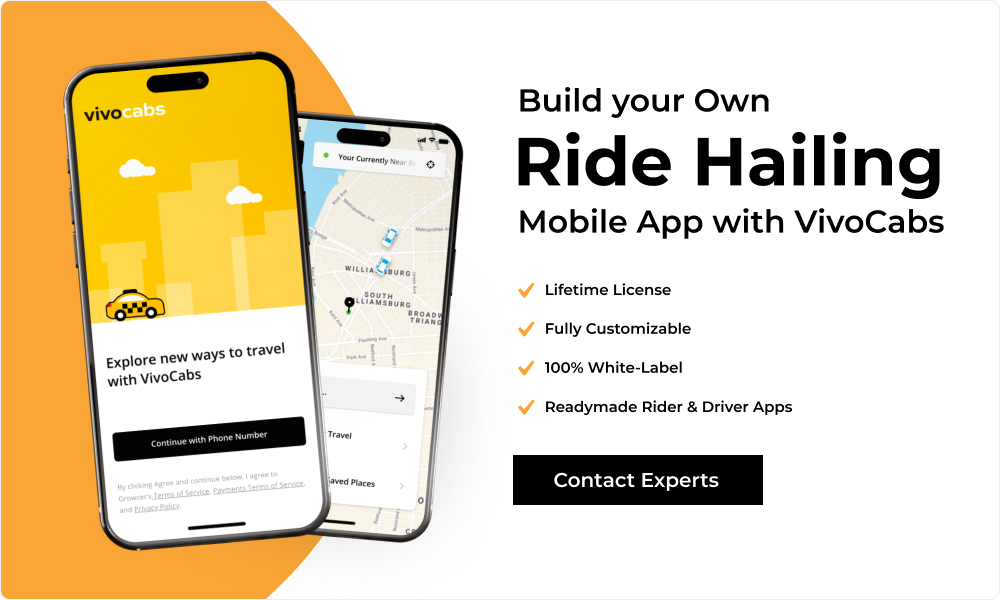
For entrepreneurs looking to enter Poland’s growing ride-hailing market without investing months in custom software development, VivoCabs offers a comprehensive white-label taxi software solution built for modern mobility businesses. Equipped with all the essential features needed to launch, manage, and scale a ride-hailing platform, it helps significantly reduce development time while accelerating your path to market.
The solution comes equipped with a robust set of features, including:
- Rider App
- Driver App
- Admin Dashboard
- Real-time GPS Tracking
- Ride Scheduling
- Multiple Payment Integrations
- Dynamic Pricing
- Promo Codes and Discounts
- Driver & Passenger Ratings
- Digital Wallet System
- Multi-language Support
- Multi-currency Support
- Corporate Ride Management
- Lifetime License
- White-label Branding
- Customizable Source Code Access
As a self-hosted solution, VivoCabs gives businesses complete ownership and control over their platform, customer data, and source code. This allows you to customize the software according to your operational requirements, integrate third-party services, and adapt the software to your unique business requirements while maintaining full control over future enhancements.
Whether you’re launching a startup, expanding an existing taxi company, or building a niche mobility service, VivoCabs provides the flexibility to support your long-term growth. Instead of spending a year or more developing a platform from scratch, you can launch your branded taxi platform quickly and focus on acquiring customers, onboarding drivers, expanding into new cities, and growing your business.
Schedule a One-on-One Personalized Demo to See VivoCabs in Action
Step 6: Launch and Scale Your Taxi App
After developing your taxi app, the next priority is launching it successfully and building a sustainable customer base. A well-planned launch strategy helps you attract riders, onboard drivers, and lays the foundation for long-term growth. Instead of expanding too quickly, focus on validating your business model, refining the user experience, and scaling operations based on market demand.
Here are the key steps to successfully launch your taxi app:
- Launch in a Target City: Begin with a single city or region to validate your business model, gather user feedback, and streamline operations before scaling.
- Build a Strong Driver Network: Recruit and onboard reliable drivers through a simple registration process, competitive incentives, and continuous engagement to ensure consistent service availability.
- Execute Local Marketing Campaigns: Drive app downloads and bookings through digital advertising, referral programs, social media marketing, local partnerships, and promotional offers.
- Deliver an Exceptional Customer Experience: Offer transparent pricing, quick ride matching, secure payments, responsive customer support, and consistent service quality to encourage repeat bookings.
- Monitor Business Performance: Track key metrics such as ride volume, booking conversion, customer acquisition cost, driver utilization, cancellation rate, and customer retention to optimize business performance.
- Expand into New Markets: Once your operations are stable, gradually expand into additional cities or regions while maintaining service quality and operational efficiency.
By continuously improving your platform, responding to customer feedback, and leveraging data-driven insights, you can build a scalable taxi marketplace that supports long-term growth and profitability.
Final Thoughts
Poland’s ride-hailing market offers significant opportunities for entrepreneurs looking to capitalize on the country’s growing demand for app-based transportation. By choosing the right business model, complying with local regulations, implementing essential platform features, and executing a well-planned launch strategy, you can establish a competitive taxi business that serves both residents and visitors.
Whether you’re starting in a single city like Warsaw or planning to expand across Poland, long-term success will depend on delivering a reliable, secure, and seamless user experience while continuously adapting to changing market needs. For many startups, leveraging a proven white-label solution such as VivoCabs can dramatically reduce time-to-market and development costs, allowing them to focus on scaling operations and building a trusted mobility brand in Poland.
FAQs
Q 1. How much does it cost to launch a taxi app in Poland?
Ans. The cost depends on your development approach, feature requirements, marketing budget, and operational setup. Custom-built apps typically require a larger investment, while white-label taxi software offers a more affordable and faster way to launch without compromising on essential functionality.
Q 2. How long does it take to launch a taxi app?
Ans. Development timelines vary based on your chosen approach. Building a taxi app from scratch can take several months, whereas a white-label solution allows you to launch much sooner since the core features are already developed, tested, and ready for customization.
Q 3. Can I launch a taxi app in multiple Polish cities?
Ans. Yes, many modern taxi software solutions support multi-city operations, allowing you to manage different service areas, pricing rules, and driver networks from a single admin dashboard. This makes it easier to expand from one city to others as your business grows.
Q 4. What payment methods should a taxi app support in Poland?
Ans. Your taxi app should support credit and debit cards, digital wallets, cash payments, and popular local payment options. Offering multiple payment methods improves customer convenience, builds trust, and helps increase completed bookings.
Q 5. Is it better to build a taxi app from scratch or use a white-label solution?
Ans. The right choice depends on your budget, timeline, and business objectives. Custom development offers maximum flexibility but requires more time and investment, whereas a white-label solution provides a faster and more cost-effective way to launch while still allowing branding and customization.
Q 6. Can I customize a white-label taxi app according to my business requirements?
Ans. Yes, most enterprise-grade white-label taxi software allows you to customize branding, business rules, pricing models, user interfaces, and third-party integrations. Some providers also offer customizable source code for businesses with more advanced customization requirements.
Q 7. Can a taxi app support services beyond traditional ride-hailing?
Ans. Yes, modern taxi platforms can be adapted to support airport transfers, corporate transportation, limousine services, medical transportation, school transport, carpooling, and other mobility services, allowing you to diversify your offerings and reach a wider audience.
Turn Your Taxi Business Idea into a Scalable Marketplace
Get In TouchPopular Posts