Quick Overview:
Australia’s mobility ecosystem has become increasingly competitive as digital ride-booking services continue expanding across major cities. Featuring platforms such as Uber, Ola, DiDi, Shebah, and 13cabs, this blog explores the unique value propositions, market presence, and customer experiences that distinguish each app. It also explains how VivoCabs enables entrepreneurs to build a customizable ride-hailing platform designed to meet the needs of Australia’s evolving transportation sector.
Australia’s ride-hailing ecosystem has evolved rapidly over the past decade, becoming an integral part of modern urban transportation. What initially emerged as a convenient alternative to traditional taxi services has evolved into a mainstream transportation solution relied upon by millions of Australians every day. The shift has been driven by changing consumer expectations, greater comfort with digital platforms, and the need for faster, more flexible travel options.
From daily commuting to airport transfers and business travel, ride-hailing apps offer convenience, reliability, and flexibility. With increasing smartphone adoption and digital payment usage, Australia continues to see strong demand for on-demand mobility solutions across major metropolitan cities and steadily expanding regional markets.
Table of Contents
Overview of the Ride-Hailing Market in Australia
Australia’s ride-hailing market has become a key part of the country’s urban transport ecosystem. Changing commuting habits, increasing digital adoption, and demand for flexible mobility solutions have accelerated the shift toward app-based transportation across metro and regional cities.
Key Market Insights:
- Strong Market Growth: According to a report by iMARC, Australia’s ride-hailing segment is projected to grow strongly by 2033, resulting in $18.7 billion, representing robust demand for app-based mobility.
- Expanding Industry Value: Recent stats highlight sustained expansion in the Asia-Pacific ride-hailing sector, with Australia contributing significantly due to high urbanization and tech readiness.
- High Smartphone Penetration: Australia has one of the highest smartphone penetration rates globally, exceeding 85%, supporting seamless access to ride-booking platforms.
- Urban Congestion Impact: Growing congestion in cities like Sydney and Melbourne has increased reliance on shared mobility services as a complement to public transport systems.
These indicators show that ride-hailing in Australia is no longer an emerging trend but a well-established and growing mobility solution shaping the future of urban transportation.
Top 10 Ride-Hailing Mobile Apps in Australia
Australia’s ride-hailing landscape blends global mobility leaders, local innovators, established taxi aggregators, and niche service providers. Each platform brings a distinct value proposition depending on pricing, target audience, and service specialization.
Below is a detailed look at the top ride-hailing mobile apps operating across Australia.
1. Uber
Uber has fundamentally transformed how Australians book and experience transport. Beyond standard ride bookings, the platform operates as a large-scale mobility network powered by data intelligence and real-time optimization. Its operational consistency and technology maturity have positioned it as a default option for many urban travelers.
Key features and services:
- Multiple ride categories, including economy and premium
- Upfront fare estimates before booking
- Real-time GPS ride tracking
- In-app navigation and trip sharing
- Cashless and digital payments
- Scheduled and airport ride options
Coverage across Australian cities:
- Sydney
- Melbourne
- Brisbane
- Perth
- Adelaide
- Canberra
- Hobart
- Regional areas
Why the app stands out: Uber’s scale, advanced routing algorithms, and consistently high driver availability make it one of the most dependable ride options nationwide.
Build an Uber-inspired Ride-Hailing Mobile App
2. Ola
Ola has positioned itself as a cost-effective alternative within Australia’s competitive ride-hailing market. It has focused on pricing agility and customer acquisition strategies to build market share. For riders who compare fares before booking, Ola often appears as a competitive alternative in major metro markets.
Key features and services:
- Transparent fare display
- Economy and premium ride options
- In-app digital payments
- Promotional discounts
- Ride history and fare breakdown
Coverage across Australian cities:
- Sydney
- Melbourne
- Brisbane
- Perth
Why the app stands out: Its pricing flexibility and frequent rider incentives make it attractive for cost-conscious commuters.
3. DiDi
DiDi has gained popularity in Australia by focusing on lower fares and driver incentives. Its operational model emphasizes maintaining supply while appealing to everyday users seeking reliable alternatives to dominant platforms.
Key features and services:
- Upfront pricing confirmation
- Live ride tracking
- Rider discount campaigns
- In-app safety tools
- Driver incentive programs
Coverage across Australian cities:
- Sydney
- Melbourne
- Brisbane
- Adelaide
- Perth
Why the app stands out: Its dual focus on affordability and driver retention helps maintain consistent availability across high-demand zones.
4. Shebah
Shebah is a purpose-driven ride-hailing platform designed specifically for women and children, addressing safety concerns through a women-only driver model. The platform has built a strong reputation among families and women seeking secure, community-oriented travel experiences.
Key features and services:
- Female drivers only
- Pre-scheduled ride bookings
- Child-friendly transport
- Identity-verified drivers
- Safety-centered ride policies
Coverage across Australian cities:
- Shebah operates in selected metropolitan areas and continues to expand.
Why the app stands out: Its women-for-women operating model fills a critical gap in the ride-hailing ecosystem by prioritizing safety and trust.
5. GoCatch
GoCatch is an Australian-built ride-hailing platform that combines traditional taxi services with modern app-based booking, offering a familiar yet digital-first experience. It appeals to riders who value regulation, licensing standards, and structured pricing while still wanting app convenience.
Key features and services:
- Licensed taxi booking
- Private hire vehicle options
- Digital fare estimates
- In-app payments
- Regional taxi access
Coverage across Australian cities:
- GoCatch supports taxi bookings across major cities and regional areas.
Why the app stands out: Its hybrid approach appeals to users who prefer regulated taxi services with digital convenience.
6. Bolt
Bolt is an international ride-hailing platform known for its competitive pricing through learner commission structures. Its entry into Australian cities has centered around providing simple, affordable ride solutions for everyday mobility.
Key features and services:
- Standard ride categories
- Digital payment options
- Streamlined booking process
- Fare transparency
- Driver-focused commission model
Coverage across Australian cities:
- Bolt operates in selected metropolitan areas and continues to expand its presence.
Why the app stands out: Lower commission structures attract drivers, helping maintain competitive fares for riders.
7. 13cabs
13cabs represents one of Australia’s longest-standing taxi networks, now supported by digital booking infrastructure. It combines industry experience with regulated driver standards, making it a trusted option for structured transport needs.
Key features and services:
- Advance ride bookings
- Airport transfers
- Licensed professional drivers
- Cashless payment options
- Wide vehicle availability
Coverage across Australian cities:
- 13cabs has nationwide coverage, including metro and regional locations.
Why the app stands out: Its strong brand reputation and wide coverage make it a trusted mobility solution.
8. Rydo
Rydo focuses on corporate and business transportation, offering structured mobility solutions for businesses that require accountability and centralized billing. Its focus is on enterprise-grade reliability rather than casual consumer bookings.
Key features and services:
- Corporate billing systems
- Expense tracking
- Professional driver services
- Business account management
- Centralized reporting
Coverage across Australian cities:
- Rydo operates in major business hubs across Australia.
Why the app stands out: Its specialization in corporate travel distinguishes it from consumer-focused ride-hailing apps.
9. Blacklane
Blacklane is a premium chauffeur-driven ride service catering to high-end executives and international travelers. The platform emphasizes comfort, punctuality, and professional service standards.
Key features and services:
- Luxury vehicle fleet
- Professional chauffeurs
- Fixed pricing structure
- Airport meet-and-greet
- Scheduled bookings
Coverage across Australian cities:
- Blacklane is available in major cities and key international airports.
Why the app stands out: Its focus on comfort, reliability, and premium service appeals to executive travelers.
10. Ingogo
Ingogo is a taxi-booking app that integrates licensed taxi services into a digital booking environment designed for reliability and simplicity. It supports structured fare calculation while offering modern app functionality.
Key features and services:
- Licensed taxi dispatch
- Fare estimates
- Digital payment options
- Professional drivers
- App-based ride management
Coverage across Australian cities:
- Ingogo operates in multiple metropolitan areas.
Why the app stands out: It offers a regulated taxi experience combined with app-based convenience.
Launch Your Own Ride-Hailing Platform in Australia
How to Choose the Best Ride-Hailing App in Australia
With multiple ride-hailing platforms operating across Australia, selecting the right app depends on your specific needs, travel frequency, and location. While most apps offer similar core functionality, the differences in pricing, coverage, safety features, and vehicle options can significantly impact your overall experience.
1. Pricing and Fare Transparency
For many users, cost is often the primary deciding factor. Reliable ride-hailing apps provide upfront pricing before you confirm your booking, along with a clear breakdown of base fares, service charges, surge pricing, and cancellation fees. Transparent pricing helps you avoid unexpected costs, especially during peak hours, holidays, or major events.
2. Availability in Your City
Not every ride-hailing app operates nationwide. Some focus primarily on large metropolitan areas such as Sydney or Melbourne, while others extend services to regional areas. Before relying on an app, checking coverage in your suburb is essential. High driver availability typically means shorter wait times and more consistent service.
3. Safety and Reliability
Safety features play a critical role in user trust. Look for platforms that conduct driver background checks, verified profiles, offer live ride tracking, emergency assistance buttons, and ride-sharing features, it allows users to share trip details with family or friends. Consistent driver ratings and responsive in-app customer support also contribute to a safer experience.
4. Vehicle Options and Comfort
Different travel needs require different vehicle types. Whether you need a budget-friendly car for short trips, a larger vehicle for group travel, or a premium option for business meetings, the availability of multiple vehicle categories enhances flexibility. Some platforms also offer wheelchair-accessible vehicles or eco-friendly ride options, increasing flexibility.
5. Purpose of Travel
The best ride-hailing app may vary depending on the situation. Daily commuters may prioritize affordability and availability, while business travelers may focus on reliability and premium services. For airport transfers, corporate bookings, and scheduled rides, choosing a platform that sspecializesin bookings or chauffeur services can make a noticeable difference.
By evaluating these factors carefully, you can choose a ride-hailing platform that aligns with your expectations for price, safety, comfort, and convenience across Australia.
Launch Your Own Ride-Hailing App in Australia with VivoCabs
Australia’s ride-hailing market continues to expand, creating strong opportunities for entrepreneurs, taxi operators, and fleet owners who want to build their own mobility platforms. With rising demand for app-based transportation in metropolitan and regional cities, launching a localized or niche ride-hailing service can be a profitable venture.
However, building a ride-hailing app from the ground up is a complex and resource-intensive process. It requires significant investment in technology, infrastructure, and ongoing operational management.
Why Building from Scratch is Challenging?
- High Development Costs
Custom app development involves building separate rider and driver applications, backend systems, admin panels, and integrations. This typically requires a dedicated technical team and substantial upfront investment.
- Long Time-to-Market
From planning and UI designing, developing, testing, and deploying a ride-hailing platform, the process can take months or even years. Delays can result in missed market opportunities.
- Ongoing Maintenance and Upgrades
Ride-hailing platforms require continuous updates, performance optimization, security monitoring, and feature improvements to remain competitive.
- Complex Integrations
A fully functional ride-hailing app requires integration of GPS tracking, payment gateways, dispatch algorithms, driver management systems, and real-time notifications, making development technically demanding.
VivoCabs: One-Stop Ride-Hailing Software
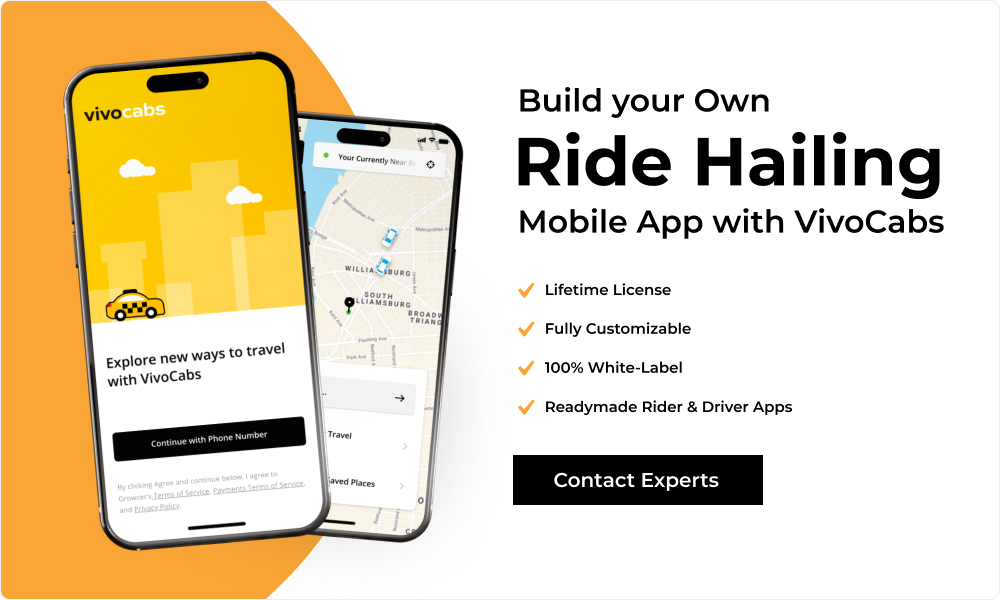
VivoCabs is a robust ride-hailing software solution designed to simplify and accelerate market entry for mobility startups and transport operators. Instead of investing time and resources into custom development, businesses can leverage a proven, scalable platform tailored for mobility startups and taxi operators.
With VivoCabs, you get a comprehensive technology ecosystem that supports launch, operations, and long-term growth.
Key Highlights of VivoCabs Ride-Hailing Solution
1. Rider Mobile App (Android & iOS): Enables users to book rides, track drivers in real time, make secure payments, and view trip history within an intuitive interface.
2. Driver Mobile App (Android & iOS): Allows drivers to accept ride requests, access navigation support, manage earnings, and track performance efficiently.
3. Powerful Admin Dashboard: A centralized control panel enables admin/s to manage users, drivers, commissions, fares, reports, and overall platform performance.
4. Advanced Ride Management:
- Real-Time GPS Tracking: Live location monitoring for both riders and drivers ensures transparency, safety, and operational efficiency.
- Smart Dispatch System: Automated ride allocation based on driver availability, proximity, and route optimization improves efficiency and reduces wait times.
- Live Analytics & Reporting: Access to data insights for monitoring bookings, revenue, driver performance, and customer activity.
5. Customization & Scalability
- Branding Customization: Allows you to launch your own brand with your business logo, brand colors, and identity.
- Scalable Architecture: Built to handle growing user bases, expanding fleets, and increasing booking volumes.
- Adaptable to Australian Market Needs: Flexible configuration allows businesses to align with local regulations, pricing structures, and operational models.
6. Flexible Business Controls
- Custom Fare Management: You can configure pricing models based on distance, time, location zones, or demand fluctuations.
- Commission & Payout Management: Define commission structures and automate driver payouts with ease.
- Multi-City Operations: Manage operations across multiple cities or regions from a single admin panel.
Schedule a Personalized Walkthrough of VivoCabs
Conclusion
Australia’s ride-hailing market offers a diverse range of platforms catering to everyday commuters, businesses, families, and premium travelers. This diversity reflects how deeply on-demand transport has become embedded in everyday life. As technology advances and urban mobility needs grow, ride-hailing apps are set to play an even larger role in shaping how people move within cities and regional areas.
For entrepreneurs and transport operators, entering this space no longer requires building complex systems from scratch. Using a ready-made solution like VivoCabs provides a practical and efficient pathway to launch, reduce risk, and compete effectively in an increasingly dynamic and competitive mobility market.
FAQs
Q 1. How profitable is starting a ride-hailing business in Australia?
Ans. The profitability of a ride-hailing business in Australia depends on various factors, including city demand, fleet size, commission structure, and operational efficiency. With high urban population density and growing preference for app-based transport, there is strong potential in both metropolitan and regional markets.
Q 2. What revenue models can I implement with VivoCabs?
Ans. VivoCabs supports multiple revenue models, allowing you to choose what works best for your business strategy. It includes:
- A commission-based model, such as a percentage per ride
- Fixed driver subscription plans
- Hybrid model (subscription and commission)
- Corporate ride contracts
- Surge or demand-based pricing
- Cancellation fees
This flexibility enables you to optimize revenue streams according to market conditions in Australia.
Q 3. Can I launch a niche ride-hailing platform using VivoCabs?
Ans. Yes, you can launch a niche ride-hailing platform using VivoCabs. It can be customized to support various models, such as:
- Women-only ride services
- Corporate-only transportation
- Airport transfer platforms
- EV-only fleets
- Local city taxi aggregators
- Premium chauffeur services
This makes it ideal for entrepreneurs targeting underserved segments in Australia.
Q 4. Does VivoCabs support fleet management?
Ans. Yes, VivoCabs includes powerful fleet management capabilities that allow operators to:
- Monitor driver performance
- Track active vehicles in real time
- Manage driver documents and approvals
- Control commission settings
- Generate performance and revenue reports
Fleet owners can efficiently manage operations from a centralized admin dashboard.
Q 5. How does VivoCabs help in scaling a ride-hailing business?
Ans. Scalability is critical in the ride-hailing industry. VivoCabs is built with a scalable architecture that supports a growing user base, increasing ride volumes, multi-city expansion, and adding new service categories. Hence, businesses can start small in one city and gradually expand across Australia without changing the core system.
Q 6. What kind of technical support does VivoCabs provide?
Ans. Unlike custom-built solutions that require in-house technical teams, VivoCabs provides:
- Deployment assistance
- Technical guidance
- Ongoing support
- System updates and improvements
This reduces operational burden and allows businesses to focus on growth and marketing.
Q 7. How can I compete with established ride-hailing brands in Australia?
Ans. Competing with established brands like Uber or DiDi requires strategic positioning rather than direct replication. With VivoCabs, businesses can:
- Focus on underserved suburbs or regional cities
- Offer lower commission to attract drivers
- Provide better incentives or loyalty programs
- Target niche customer segments
- Customize pricing models for local demand
A localized approach often gives smaller platforms a competitive advantage.
Q 8. Can VivoCabs integrate with third-party services?
Ans. Yes, VivoCabs supports integration with:
- Payment gateways
- SMS and notification systems
- Mapping and GPS services
- Analytics tools and more
These integrations ensure smooth platform functionality and operational efficiency.
Q 9. How long does it take to launch a ride-hailing platform with VivoCabs?
Ans. Since VivoCabs is a ready-made solution, the launch timeline is significantly shorter than custom development. Businesses can go live much faster after branding customization, configuration, and setup, accelerating time-to-market in competitive cities.
Q 10. Why is a ready-made ride-hailing solution better for startups?
Ans. By choosing a ready-made ride-hailing solution over custom development, startups benefit from:
- Lower upfront investment
- Reduced development risk
- Faster deployment
- Proven and tested technology
- Focus on marketing and driver acquisition
One such robust solution, VivoCabs, eliminates technical uncertainties and provides a stable foundation for launching a ride-hailing business in Australia.
Launch Your Own Ride-Hailing App With VivoCabs
Get In TouchPopular Posts