
AI Overview:
Building a student transportation business app helps schools and transport operators improve student safety, streamline fleet management, and provide parents with real-time visibility through GPS tracking, route optimization, and instant notifications. This guide explains how to build a scalable student transportation app, covering essential features, development steps, monetization models, compliance requirements, and the benefits of ready-made software over custom development. It also highlights how VivoCabs enables businesses to launch a fully branded, white-label student transportation solution more quickly and at a lower cost. Whether you’re a startup, school, or transport company, this guide provides a roadmap to building a successful student transportation platform.
Introduction
Every morning, thousands of parents wait anxiously for a simple update: Has the school bus arrived safely? Schools, meanwhile, spend valuable time handling transportation queries, while operators manually juggle routes, drivers, and schedules. As expectations for safety and real-time visibility continue to grow, traditional transportation systems are no longer enough.
That’s why more schools and transport businesses are investing in a student transportation business app. With live bus tracking, instant notifications, route management, and seamless communication, these platforms improve safety, streamline operations, and deliver greater peace of mind for everyone involved.
In this guide, you’ll learn how to build a student transportation business app in 2026, the must-have features to include, and the most efficient approach to launching a scalable solution.
Table of Contents
- Why This Shift Is Happening Now?
- What Is a Student Transportation Business App?
- Why Invest in a Student Transportation Business App?
- Essential Features to Build a Student Transportation Business App
- Step-by-Step Process to Build a Student Transportation Business App
- Why Choose a Ready-Made Solution to Build a Student Transportation Business App?
- Build Your Student Transportation Business App Faster with VivoCabs
- Conclusion
- FAQ
Why This Shift Is Happening Now?
The demand for digital student transportation is growing rapidly as schools, parents, and transport providers prioritize safety, operational efficiency, and real-time visibility. The broader intelligent transportation and school mobility market is also expanding, driven by increased smartphone adoption, GPS-enabled vehicles, cloud technology, and rising parental expectations for transparency.
1. Rising Demand for Digital Student Transportation
Schools that once relied on printed routes, phone calls, and static bus schedules are under increasing pressure to modernize. Parents are accustomed to tracking food deliveries, ride-hailing services, and eCommerce shipments in real time, and they now expect the same level of visibility for their children’s daily commute.
According to the National Highway Traffic Safety Administration (NHTSA), school buses remain one of the safest modes of transportation for students. However, improving communication and real-time monitoring further enhances student safety while reducing uncertainty for parents. GPS-enabled transportation apps bridge this gap by providing live bus tracking, estimated arrival times, and instant notifications.
2. Why Schools and Parents Are Adopting Transportation Apps
Student safety has become a top priority for educational institutions worldwide. Missed pickups, route delays, traffic congestion, and limited visibility into a child’s journey create unnecessary stress for parents and administrative staff alike.
A student transportation app transforms this experience by offering:
- Live GPS tracking of school buses
- Instant notifications for delays and arrivals
- Digital attendance during boarding and drop-off
- Secure communication between parents, drivers, and school administrators
- Emergency alerts and route updates
Instead of wondering where the bus is, parents receive accurate, real-time information, increasing trust in the school’s transportation system.
3. Benefits for School Administrators and Transport Operators
The value extends well beyond parent satisfaction. Digital transportation management helps schools optimize daily operations while reducing costs.
Key operational benefits include:
- Optimized route planning to reduce fuel consumption and travel time
- Automated attendance and trip records
- Lower administrative workload through automated notifications
- Improved fleet utilization and driver accountability
- Digital audit trails for safety, compliance, and incident reporting
- Better resource allocation using transportation analytics
With fuel costs and operational expenses continuing to rise, route optimization and fleet visibility can significantly improve transportation efficiency while delivering measurable cost savings.
Power Your Student Transportation Business App with Smart Technology
What Is a Student Transportation Business App?
A student transportation business app is a comprehensive platform that digitizes and manages the entire student transportation ecosystem. Typically consisting of a parent/student app, driver app, and admin dashboard, it enables schools and transportation businesses to streamline route planning, monitor vehicles in real time, automate communication, and maintain digital records.
Instead of relying on manual attendance, paper schedules, and phone calls, the platform centralizes transportation operations into a single system. This improves student safety, enhances operational efficiency, and provides parents with real-time visibility into their child’s journey.
As schools increasingly adopt digital-first operations, student transportation apps have become an essential part of modern education infrastructure, helping organizations deliver safer, more transparent, and cost-effective transportation services.
How Does a Student Transportation Business App Work?
A student transportation app connects all stakeholders through a cloud-based platform powered by GPS, mobile applications, and real-time data synchronization.
The workflow typically includes:
1. Driver App
Drivers log into the app before starting their route. Once the trip begins, the app continuously shares the vehicle’s GPS location with the central server while providing route navigation, student attendance tools, and trip updates.
2. Parent/Student App
Parents can monitor the school bus on a live map, receive estimated arrival times, and get instant notifications for:
- Bus departure
- Pickup confirmation
- Drop-off confirmation
- Route changes
- Delays caused by traffic or weather
- Emergency announcements
For older students, the app may also support digital boarding, attendance confirmation, and trip history.
3. Admin Dashboard
School administrators or transportation operators manage the entire fleet from a centralized dashboard. They can:
- Assign buses and drivers
- Create and optimize routes
- Monitor vehicle locations in real time
- Track attendance
- Communicate with parents
- Manage billing and subscriptions
- Generate operational reports and analytics
When a bus starts its route, GPS data is transmitted continuously to the cloud. Parents receive automated alerts as the bus approaches their designated stop, while administrators monitor the fleet through a live dashboard, enabling them to proactively address delays, emergencies, or operational issues before they impact students and families.
Key Stakeholders
A successful student transportation business app is designed to meet the needs of multiple user groups, ensuring a seamless experience for everyone involved in the transportation process.
1. Parents
Parents are the primary beneficiaries of real-time transportation visibility. They use the app to:
- Track the school bus live
- Receive pickup and drop-off notifications
- View estimated arrival times
- Communicate with school transportation staff
- Access trip history and safety updates
This transparency reduces uncertainty and builds greater trust in the transportation service.
2. Students
Depending on their age, students may use the app to:
- Check in and check out digitally
- Receive transportation schedules
- View assigned routes
- Get notifications about route or timing changes
Digital attendance also improves accountability and enhances student safety.
3. Drivers
The driver app simplifies daily transportation operations by providing:
- Turn-by-turn route navigation
- Student attendance management
- Real-time trip updates
- Incident reporting
- Communication with dispatch or school administrators
An intuitive interface minimizes distractions and allows drivers to focus on safe transportation.
4. School Administrators
Schools gain complete operational visibility through the admin dashboard. Administrators can:
- Monitor buses in real time
- Track student attendance
- Manage routes and schedules
- Communicate with parents instantly
- Ensure compliance with transportation policies
- Generate reports for audits and performance reviews
Automation significantly reduces administrative workload while improving service quality.
5. Transportation Business Owners
For transportation companies, the platform serves as a business management solution that supports growth and operational efficiency. Business owners can:
- Optimize fleet utilization
- Monitor driver performance
- Reduce fuel costs through route optimization
- Track vehicle usage and maintenance
- Manage customer accounts and billing
- Analyze operational KPIs through reporting dashboards
These capabilities help transportation providers improve profitability while delivering a safer and more reliable service to schools and families.
Suggested Read: The Hidden Reason Why Your Taxi Business is Not Scaling
Why Invest in a Student Transportation Business App?
The student transportation industry is rapidly embracing digital solutions as schools, transportation companies, and parents prioritize safety, transparency, and operational efficiency. Investing in a student transportation business app is no longer just about keeping up with technology, it’s about meeting evolving customer expectations while improving day-to-day operations and creating new business opportunities.
1. Growing Demand for Safe School Transportation
Student safety is the primary driver behind the adoption of transportation apps. While school buses remain one of the safest modes of transportation according to the National Highway Traffic Safety Administration (NHTSA), parents increasingly expect real-time visibility into their child’s journey.
A transportation app provides live GPS tracking, automated pickup and drop-off notifications, and emergency communication features that give parents greater confidence and help schools respond more quickly to unexpected situations.
2. Rising Parental Expectations
Parents are accustomed to tracking taxis, food deliveries, and online orders in real time, and they now expect the same level of transparency from school transportation. Schools and transport providers that offer live tracking and timely notifications deliver a better customer experience and strengthen trust with families.
3. Smarter Fleet Management
Beyond improving the parent experience, a student transportation app helps operators manage their fleet more effectively. With a centralized dashboard, businesses can monitor vehicle locations, optimize routes, track driver performance, and maintain digital trip records instead of relying on manual processes. This results in better resource utilization and lower operating costs.
4. Improved Operational Efficiency
Digitizing transportation operations reduces administrative effort and minimizes human error. Tasks such as route planning, attendance tracking, and parent communication become automated, allowing schools and transport providers to manage larger fleets more efficiently while saving time and fuel.
5. New Revenue Opportunities
A student transportation app can also support business growth. Transportation providers can offer premium tracking services, subscription-based transportation plans, after-school or event transportation, and even license the platform to other schools through a white-label model, creating additional revenue streams beyond transportation services.
6. Strong Market Growth
Industry reports from leading market research firms such as Fortune Business Insights, MarketsandMarkets, and Grand View Research indicate continued growth in the global fleet management and mobility technology market. Increasing smartphone adoption, stricter student safety standards, and the widespread use of GPS and cloud technologies are accelerating the demand for digital transportation solutions.
As schools continue investing in smarter and safer transportation systems, businesses that adopt student transportation apps are better positioned to improve service quality, reduce operational costs, and gain a competitive advantage in a growing market.
Essential Features to Build a Student Transportation Business App
A successful student transportation business app is more than just a GPS tracking solution—it is a complete ecosystem that connects parents, drivers, and administrators on a single platform. Each module serves a unique purpose while working together to ensure safe, efficient, and transparent school transportation.
Below are the must-have features for each component of a modern student transportation app.
Parent/Student App Features
The parent and student app focuses on providing real-time visibility, safety, and convenience throughout the transportation journey.
| Feature | Description |
| Live Bus Tracking | Track the school bus in real time with GPS-enabled maps and estimated arrival times. |
| Pickup & Drop-off Alerts | Receive automatic notifications when the bus is approaching, the student boards, and the student is safely dropped off. |
| Route Updates | Get instant alerts about delays, route changes, traffic disruptions, or weather-related adjustments. |
| Emergency Notifications | Receive immediate alerts during emergencies, breakdowns, or unexpected incidents. |
| Driver Information | View verified driver details, including name, photo, and contact information for added transparency. |
| Digital Payments | Pay transportation fees, renew subscriptions, and access payment history securely within the app. |
| Attendance Status | View daily boarding and drop-off confirmations, ensuring students complete every trip safely. |
Driver App Features
The driver app simplifies daily operations while improving communication, attendance management, and trip safety.
| Feature | Description |
| Smart Route Navigation | Access optimized routes with turn-by-turn navigation and live traffic updates. |
| Student Check-in & Check-out | Mark attendance digitally using QR codes, NFC, or one-tap verification during boarding and drop-off. |
| Trip Management | Start, pause, complete, and monitor trips with automatic trip logging. |
| SOS Emergency Button | Instantly notify administrators and dispatch teams during emergencies. |
| Real-Time Sync | Automatically synchronize trip status and attendance with the admin dashboard and parent app. |
Admin Panel Features
The admin dashboard acts as the command center for managing transportation operations efficiently.
| Feature | Description |
| Fleet Management | Monitor vehicles, drivers, and trip status from a centralized dashboard. |
| Route Planning & Optimization | Create efficient routes based on student locations, traffic conditions, and vehicle capacity. |
| Driver Management | Handle onboarding, document verification, scheduling, and performance monitoring. |
| Student Management | Maintain student records, guardian information, assigned routes, and special transportation requirements. |
| Attendance & Reports | Generate attendance reports, trip summaries, and compliance records automatically. |
| Analytics Dashboard | Analyze fleet utilization, route efficiency, delays, fuel consumption, and operational performance. |
| Notification Management | Configure and automate alerts for parents, drivers, and school administrators. |
A student transportation business app succeeds when all three modules, Parent App, Driver App, and Admin Dashboard, work seamlessly together. While live tracking and notifications enhance the parent experience, features like route optimization, attendance automation, and fleet analytics improve operational efficiency behind the scenes. These capabilities help transportation businesses reduce costs, improve safety, streamline fleet management, and deliver a reliable transportation experience that schools and parents can trust.
Launch a Feature-Rich Student Transportation App
Step-by-Step Process to Build a Student Transportation Business App
Building a student transportation business app requires more than developing a mobile application. It involves understanding your target users, ensuring regulatory compliance, choosing the right development approach, and continuously improving the platform after launch.
Follow these seven steps to build a scalable and reliable solution:
Step 1: Research Your Target Market
The foundation of a successful student transportation business app begins with understanding your target audience and their unique challenges. Before defining features or choosing a development approach, identify who will use your platform,m whether it’s individual schools, school districts, private transportation companies, or independent fleet operators. Each customer segment has different operational workflows, budgets, procurement processes, and technology requirements.
Conduct market research by speaking with school administrators, transport coordinators, drivers, and parents to understand their daily pain points. Common challenges include limited visibility into bus locations, manual attendance tracking, inefficient route planning, delayed communication, and high administrative workload. Complement these insights with competitor analysis to identify market gaps and opportunities for differentiation.
By validating customer needs early, you can prioritize features that solve real-world problems, reduce development risks, and build a solution that delivers value to both transportation providers and educational institutions from day one.
Step 2: Define Revenue Model
Student transportation apps typically use a few proven monetization strategies depending on whether the focus is on schools, transport operators, or a broader mobility platform. Choosing the right model early is important because it directly shapes your pricing structure, onboarding flow, and even feature design.
Here are the popular revenue models used in student transportation platforms:
- Per-Student Subscription Model
Schools or parents pay a recurring fee (monthly, quarterly, or per term) for each student using the transportation service. This model is widely used in SaaS-based school transport solutions because it scales easily with student count.
- Pre-School or District Licensing
Schools or entire districts pay a fixed fee to access the platform for managing all routes, vehicles, and students. In many cases, this cost is bundled into transportation fees collected from parents, simplifying billing for institutions.
- Commission-Based Marketplace Model
The platform acts as an intermediary connecting schools with transport providers and earns a commission on each booking or contract. This works well when multiple independent transport operators are part of the ecosystem.
- Hybrid Model (Subscription + Add-ons)
A flexible approach combining a base subscription for core functionality with additional charges for premium services such as advanced reporting, emergency alert systems, automated billing, or enhanced communication tools.
Choosing the right model early is essential because it influences your product architecture, pricing logic, and how you design both the admin panel and customer experience.
Step 3: Essential Regulatory and Legal Compliance
Student transportation apps handle sensitive data involving children, real-time location tracking, and safety operations, making compliance a core requirement rather than an optional layer. Schools and districts will only adopt platforms that meet clear legal and safety standards.
Your system should account for key areas such as data privacy laws, ensuring secure handling of children’s personal and location data through encryption, consent management, and restricted access. It should also support driver background verification, including identity checks, license validation, and document tracking, to ensure only approved drivers operate school routes.
In addition, the platform must manage vehicle compliance, such as insurance, fitness certificates, and safety inspections,s with automated reminders for renewals. It should also maintain digital trip records and attendance logs with proper audit trails for school reporting and safety reviews.
Compliance is critical because even a feature-rich app can be rejected by schools if it fails to meet regulatory expectations or demonstrate strong safety controls.
Step 4: Select Features
At this stage, the goal is not to build everything, but to build what matters most for your target market. Feature selection should be guided by whether you’re serving large school districts, individual schools, or transport operators.
A district-focused solution usually prioritizes compliance, reporting, audit trails, and multi-school management. In contrast, a parent-driven or smaller school setup focuses more on live tracking, notifications, and a smooth user experience.
Instead of trying to include every possible feature from day one, start with a focused MVP that delivers the core promise of the product: safety, visibility, and communication. Features like real-time bus tracking, pickup/drop alerts, basic route management, and emergency notifications are often enough to validate the product in the market.
Overbuilding early often leads to complexity, higher costs, and slower adoption. A simpler, well-executed system that reliably solves the core problems will outperform a feature-heavy platform that lacks polish or stability.
Step 5: Decide Development Approach
Choosing how to build your student transportation app is a critical decision that affects speed, cost, and long-term scalability. While both approaches have merit, ready-made solutions are often the smarter choice for most businesses, especially those focused on launching quickly and validating demand.
- Custom Development Approach
Custom development involves building the entire system from scratch, including all apps, backend systems, and dashboards.
Pros:
- Full control over design, features, and user experience
- Highly flexible for unique or complex business models
- No dependency on third-party platform providers
Cons:
- Very high development cost
- Long development timeline (6-12+ months)
- Requires hiring and managing a technical team
- Ongoing maintenance and infrastructure burden
- Higher risk of delays, bugs, and scalability issues
- Slower time to market (misses early business opportunities)
- Ready-Made Solution
Ready-made solutions are pre-built systems that already include core modules like parent apps, driver apps, admin dashboards, GPS tracking, notifications, and route management. They can be customized and launched in a short time without building everything from scratch.
Pros:
- Faster launch (weeks, not months): Get your product live quickly and start onboarding schools immediately.
- Lower upfront cost: No need to hire large development teams or invest heavily in infrastructure.
- Pre-tested and stable system: Core features like tracking, alerts, and routing are already tested in real-world environments.
- Built-in essential features: Include tracking, notifications, attendance, fleet management, and admin tools.
- Easy scalability: Can handle multiple schools, routes, and users without rebuilding the system.
- Lower technical risk: Avoids bugs, architecture issues, and long debugging cycles common in new builds.
Cons:
- Limited deep customization compared to fully custom systems
- Dependency on the platform provider for updates and core architecture
- May require adaptation to existing workflows instead of fully unique logic
For most student transportation business apps, schools, and fleet operators, a ready-made solution provides the best balance of speed, cost-efficiency, and reliability. It allows you to launch quickly, generate revenue earlier, and refine your business model in real-world conditions before investing in heavy custom development.
Custom development only makes sense when your requirements are highly specialized, and you already have strong technical resources and long-term product investment capacity.
Build Your Transportation Platform Without Starting from Scratch
Step 6: Launch and Market
Once your student transportation platform is ready, launch it in phases instead of rolling it out across all schools at once. Start with a pilot program involving a single school or a limited number of routes to test real-world performance, collect user feedback, and resolve operational issues before scaling.
After validating the platform, focus your marketing efforts on building trust with schools and transportation providers. Unlike consumer apps, success in this industry is driven more by credibility and relationships than by paid advertising.
Effective go-to-market strategies include:
- Launch a pilot program and use its success as a case study.
- Highlight key benefits such as student safety, real-time GPS tracking, and operational efficiency.
- Build partnerships with schools, districts, and transportation companies.
- Collect testimonials and referrals from satisfied customers.
- Strengthen your online presence through SEO, educational blogs, webinars, and LinkedIn marketing.
A successful launch isn’t about acquiring hundreds of customers immediately—it’s about proving your solution delivers safer, smarter, and more efficient student transportation, then using those results to scale confidently.
Step 7: Gather Feedback and Scale
Launching your app is just the beginning. To stay competitive, continuously gather feedback from parents, drivers, school administrators, and transport operators to understand what’s working and where improvements are needed. Their insights will help you identify usability issues, optimize workflows, and prioritize new features.
Regularly analyze platform data such as route performance, attendance records, user engagement, and customer satisfaction to make informed product decisions. As demand grows, expand your platform by onboarding more schools, adding vehicles and routes, introducing advanced features and strengthening your infrastructure to support a larger user base.
Continuous improvement and scalable growth ensure your student transportation business app remains reliable, competitive, and capable of meeting the evolving needs of schools and families.
Suggested Read: Top Taxi App Development Companies in 2026
Why Choose a Ready-Made Solution to Build a Student Transportation Business App?
For most startups, schools, and transportation companies, a ready-made student transportation software solution is the fastest and most cost-effective way to enter the market. Instead of spending months building an application from scratch, businesses can launch a proven platform, start acquiring customers sooner, and focus on growing their operations.
Here are the key advantages of choosing a ready-made solution:
- Faster Time to Market
Ready-made platforms come with pre-built parent apps, driver apps, and admin dashboards, allowing businesses to launch in weeks rather than 6-12 months. A faster launch helps you onboard schools earlier and gain a competitive advantage.
- Lower Development Costs
Building a transportation platform from scratch requires significant investment in developers, designers, testers, and ongoing infrastructure. A ready-made solution eliminates most of these costs, making it an affordable option for startups and growing businesses.
- Proven and Reliable Technology
Established ready-made platforms are already tested in real-world environments and include essential features such as GPS tracking, route management, notifications, attendance management, and payment integration. This reduces technical risks and ensures greater platform stability.
- Easy Customization and Branding
Modern ready-made solutions are highly customizable. You can personalize your app with your own branding, logo, colors, language, payment gateways, and selected workflows without rebuilding the core system.
- Faster Return on Investment (ROI)
Because development time and costs are significantly lower, businesses can launch sooner, onboard customers faster, and begin generating revenue much earlier compared to custom development.
- Ongoing Updates and Technical Support
With a ready-made platform, you benefit from continuous software updates, security enhancements, bug fixes, and new feature releases from the software provider. This reduces the need to maintain a large in-house engineering team.
Ready-Made Solution vs. Custom Development
| Ready-Made Solution | Custom Development |
| Faster deployment (weeks) | Longer development (6-12+ months) |
| Lower upfront investment | High development and maintenance costs |
| Pre-tested and reliable features | Requires extensive testing and debugging |
| Easy customization and branding | Complete flexibility but higher complexity |
| Faster ROI | Longer time before revenue generation |
| Vendor support and regular updates | Ongoing responsibility for maintenance and upgrades |
Unless your business has highly specialized requirements that cannot be addressed through customization, a ready-made student transportation software solution is the preferred approach. It enables you to launch faster, minimize development risks, reduce costs, and focus on acquiring schools and transport operators instead of managing lengthy software development cycles.
Build Your Student Transportation Business App Faster with VivoCabs
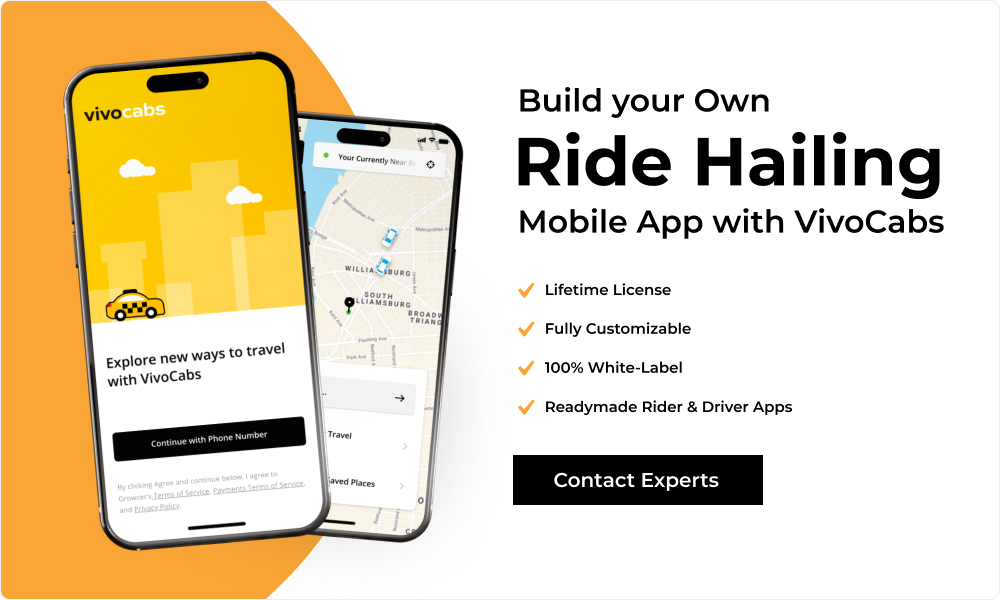
If you’re looking to launch a student transportation business app quickly, VivoCabs provides a ready-made, white-label transportation solution that eliminates the time, cost, and complexity of building an app from scratch. Designed for transportation businesses, startups, and enterprises, the platform includes everything you need to launch a branded student transportation service with minimal development effort.
Why Choose VivoCabs?
VivoCabs comes with a comprehensive set of features that help you accelerate your launch while delivering a reliable and scalable transportation experience.
- White-Label Platform: Launch under your own brand with a custom logo, colors, domain, and business identity.
- Native Android & iOS Apps: Deliver a seamless experience with high-performance apps for parents and drivers.
- Real-Time GPS Tracking: Enable live vehicle tracking, estimated arrival times, and instant location updates for parents and administrators.
- Comprehensive Admin Dashboard: Manage students, drivers, vehicles, routes, payments, and reports from a centralized control panel.
- Dedicated Rider & Driver Apps: Provide features such as trip management, attendance tracking, notifications, and communication for every stakeholder.
- Secure Payment Integration: Support digital fee collection through multiple payment gateways with secure transaction processing.
- Source Code Ownership: Gain long-term flexibility and control with source code ownership (available with eligible licenses), allowing future enhancements and integrations.
- Ongoing Technical Support: Receive regular updates, maintenance, security patches, and technical assistance to keep your platform running smoothly.
- Launch Faster with Lower Risk: Instead of spending months developing software from scratch, VivoCabs enables you to launch in a matter of weeks. This significantly reduces development costs and technical risks.
Whether you’re a startup entering the student transportation market or an established transportation company looking to digitize your operations, VivoCabs provides the technology foundation to launch a scalable, secure, and fully branded student transportation business app with confidence.
Book a Personalized VivoCabs Demo
Conclusion
The demand for a student transportation business app is growing as schools and transport operators move toward safer, smarter, and more transparent systems. Parents now expect real-time updates, GPS tracking, and better communication, making digital transportation solutions essential.
Building such a platform from scratch can be time-consuming and expensive. It requires development effort, technical expertise, and ongoing maintenance. A faster and more practical approach is using a ready-made white-label solution like VivoCabs. It helps businesses launch quickly with core features already in place, allowing them to focus on growth instead of development.
Overall, VivoCabs provides a simple way to build and scale a student transportation business app with lower risk and faster time to market.
FAQ
1. Why should I choose VivoCabs instead of building a student transportation app from scratch?
VivoCabs eliminates 6-12 months of development time by offering a fully ready-made platform with built-in apps, GPS tracking, an admin dashboard, and payment systems, so you can launch faster and at a much lower cost.
2. Is VivoCabs suitable for startups and small transport businesses?
Yes. VivoCabs is designed for startups, schools, and fleet operators of all sizes. It allows small businesses to enter the market quickly without heavy technical investment.
3. Can I fully brand the VivoCabs platform as my own?
Yes. VivoCabs is a white-label solution, meaning you can customize the app with your logo, colors, domain, and business identity.
4. How fast can I launch a student transportation business app using VivoCabs?
Most businesses can launch a transportation app within a few weeks, depending on customization and onboarding requirements, significantly faster than with custom development.
5. Does VivoCabs support real-time tracking and safety features?
Yes. It includes live GPS tracking, route updates, emergency alerts, attendance tracking, and notifications, ensuring strong safety and transparency for parents and schools.
6. What makes VivoCabs better than hiring a development team?
VivoCabs reduces risk, cost, and time-to-market by providing a tested, scalable system. Instead of managing developers and infrastructure, you can focus directly on acquiring schools and growing revenue.
Ready to Launch A Student Transportation Platform?
Get In TouchPopular Posts