

Published Date 08th Sept, 2026
TL; DR:
- Mobility businesses can go beyond traditional taxi booking with models such as ride-hailing, ride-sharing, scheduled transportation, and specialized services.
- Different transportation models require different workflows, from on-demand bookings and driver matching to advance scheduling and fleet allocation.
- A customizable mobility technology foundation like VivoCabs can help businesses adapt a mobility platform to their target audience, service area, fleet, and operating model.
- Choosing the right model starts with understanding the target customers, transportation needs, vehicle ownership, payment methods, and driver assignment process.
The mobility industry has evolved significantly beyond traditional taxi services. Changing customer expectations, smartphone adoption, on-demand transportation, and the growing demand for convenient travel options have created opportunities for businesses to launch different types of mobility services.
However, building a mobility platform from scratch can require significant time, technical resources, and investment. Businesses need dedicated applications for passengers and drivers, booking management, dispatching, payments, notifications, tracking, administration, and other supporting systems.
A ready-made solution such as VivoCabs can help businesses launch a branded mobility platform with a pre-developed technology infrastructure and customize it according to their business model.
Table of Contents
Different Mobility Business Models Supported by VivoCabs
VivoCabs is a white-label taxi and ride-hailing software solution designed to support diverse mobility business models. Its core features can be configured and extended to align with different transportation services, operational requirements, and target markets.
Here are major mobility business models that are supported by VivoCabs:
1. Traditional Taxi Booking
Traditional taxi booking remains one of the most established mobility business models. While customers can still book taxis through phone calls or physical taxi stands, digital booking has become an increasingly important part of the customer experience. With VivoCabs, taxi businesses can move beyond phone-based bookings and physical taxi stands by offering customers a convenient way to book rides through a website or mobile application.
Key features for traditional taxi booking
- Online taxi booking through web and mobile
- Taxi and vehicle category management
- Driver assignment and dispatching
- Fare and pricing management
- Real-time ride tracking
- Digital and cash payment options
- Booking history and notifications
- Driver and passenger ratings
Why do businesses choose this model?
Businesses can choose the traditional taxi booking model to modernize existing taxi operations without completely changing their underlying business structure. Moreover, digital bookings can reduce manual coordination, simplify fleet management, and provide customers with greater convenience.
2. Ride-Hailing App
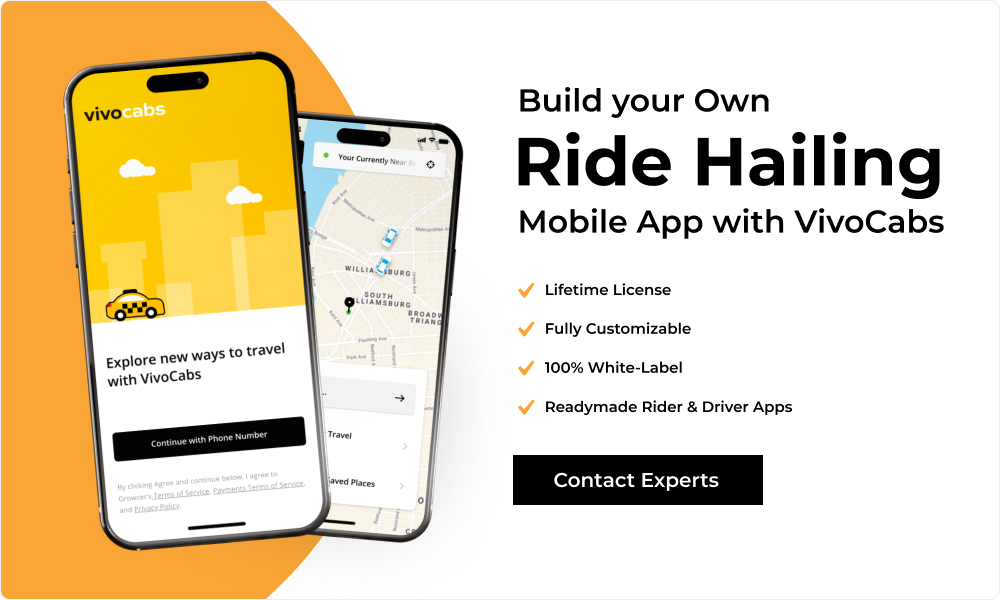
Ride-hailing is one of the most prominent technology-driven mobility models. Unlike traditional taxi services, ride-hailing platforms can automatically identify nearby available drivers and facilitate the matching process, making ride booking faster and more convenient. VivoCabs helps businesses launch a branded ride-hailing app with features and workflows aligned with their target market and operational requirements.
Key features for ride-hailing
- On-demand ride booking
- Automatic driver matching
- Real-time driver tracking
- Estimated fare calculation
- Multiple vehicle categories
- Driver availability management
- In-app payments
- Ride history and ratings
Why do businesses choose this model?
Businesses can choose the ride-hailing model to offer on-demand transportation through a dedicated digital platform while building their own brand and customer base. VivoCabs supports different operational requirements, which allows businesses to create a ride-hailing service that fits their specific market and business model.
Launch Your Branded Ride-Hailing Platform With VivoCabs
3. Ride-Sharing App
Ride-sharing is a mobility model in which multiple passengers can share a vehicle, journey, or transportation cost, offering a more economical alternative to booking an entire vehicle for a single passenger. Leveraging VivoCabs, businesses can create shared mobility services designed around common routes, multiple passengers, and optimized vehicle utilization.
Key features for ride-sharing
- Shared ride booking
- Passenger and route matching
- Multiple passengers per trip
- Multiple pickup and drop-off points
- Shared fare calculation
- Seat or vehicle availability
- Real-time trip tracking
- Driver trip management
Why do businesses choose this model?
Businesses can choose the ride-sharing model to offer cost-effective transportation while improving vehicle utilization and serving multiple passengers through a single trip. For businesses looking to build specialized shared mobility services beyond conventional point-to-point taxi booking, this model is the preferred choice.
4. Bike Taxi App
Bike taxis provide an alternative to conventional car-based transportation, particularly for short-distance journeys and busy urban areas. This model can offer customers a convenient and economical way to travel while helping businesses serve locations where two-wheelers can navigate traffic more efficiently. With VivoCabs, businesses can launch branded bike taxi app that offer bike taxi services.
Key features for bike taxi services
- Bike taxi booking
- Two-wheeler category management
- Driver matching and assignment
- Real-time ride tracking
- Fare calculation
- Driver availability management
- Digital payment options
- Ratings and ride history
Why do businesses choose this model?
Businesses can choose the bike taxi model to provide customers with an affordable and convenient transportation option, particularly for short-distance urban travel. Moreover, it allows mobility businesses to expand their vehicle categories and serve customers through a broader range of transportation options.
5. Package Delivery App
Package delivery is a mobility model that allows businesses to use their transportation network for delivering packages in addition to transporting passengers. Customers can request a driver to collect a package from one location and deliver it to another, making the model suitable for local deliveries, documents, eCommerce orders, and other items. VivoCabs supports businesses in managing package delivery services through a digital platform.
Key features for package delivery
- Package pickup and delivery booking
- Pickup and drop-off location management
- Package information capture
- Delivery fare calculation
- Driver assignment
- Real-time delivery tracking
- Delivery status updates
- Payment and booking management
Why do businesses choose this model?
Businesses looking to expand their mobility services beyond passenger transportation and generate additional revenue through deliveries can choose the package delivery model. Moreover, leveraging the existing driver network and transportation infrastructure, businesses can serve customers looking for convenient local delivery services.
6. Luxury Ride-Hailing App
Luxury ride-hailing caters to customers who prefer premium vehicles and a more exclusive transportation experience. Unlike conventional ride-hailing, this model focuses on providing higher-end vehicle options and services for customers such as corporate professionals, tourists, and other passengers seeking premium transportation. VivoCabs helps businesses offer luxury ride-hailing services through their own branded platform.
Key features for luxury ride-hailing
- Premium vehicle categories
- Luxury ride booking
- Driver assignment
- Advance ride bookings
- Premium fare management
- Real-time ride tracking
- Digital payment options
- Ratings and ride history
Why do businesses choose this model?
Businesses can choose the luxury ride-hailing model to target customers looking for premium transportation and create a differentiated mobility service. Moreover, businesses can offer multiple vehicle categories and pricing options to serve different customer segments while managing bookings, drivers, payments, and rides through the same platform.
7. Women-Only or Specialized Ride Services
Not every mobility business needs to target the general population. Businesses can build specialized transportation services around specific customer groups, use cases, or service requirements, such as women-focused, senior citizen, student, medical, or tourism transportation. VivoCabs provides the core transportation infrastructure while allowing businesses to customize the booking workflows, driver requirements, and operational rules around their selected audience and applicable regulations.
Key features for specialized ride services
- Dedicated service categories
- Customer eligibility settings
- Driver verification
- Vehicle category management
- Service-area controls
- Safety and emergency features
- Customized booking options
- Driver and passenger management
Why do businesses choose this model?
Businesses can choose this model when they want to serve the specific transportation needs of a defined customer segment rather than compete solely in the general ride-hailing market.
8. Scheduled Transportation
On-demand transportation is not appropriate for every use case. Some customers need transportation at a specific date and time. Scheduled transportation allows customers to book a ride in advance rather than requesting it immediately. This model can be useful for airport transfers, corporate transportation, events, medical appointments, long-distance journeys, and other situations where planning is important.
Key features for scheduled transportation
- Advance ride booking
- Date and time selection
- Scheduled driver assignment
- Vehicle availability management
- Booking confirmations and reminders
- Upcoming trip management
- Automated notifications
- Scheduled ride tracking
Why do businesses choose this model?
Businesses can choose scheduled transportation to serve customers who value reliability, planning, and guaranteed availability. By combining booking with driver and fleet management capabilities, businesses can create a more predictable transportation service while better planning their operations.
9. Airport Transfer Services
Airport transfer services focus on providing transportation to and from airports. Unlike regular taxi bookings, this model often involves reservations and additional travel-related information. Customers may need to provide details such as pickup or drop-off time, flight information, terminal details, luggage requirements, and preferred vehicle type.
Key features for airport transfers
- Airport pickup and drop-off booking
- Flight information capture
- Terminal and pickup details
- Reservations
- Fixed or configured airport fares
- Vehicle category selection
- Driver assignment
- Booking notifications and tracking
Why do businesses choose this model?
Businesses can choose the airport transfer model to serve customers who need reliable, pre-arranged transportation before or after a flight. Additionally, businesses can also configure offerings such as fixed airport fares, private transfers, shared airport rides, or premium transportation based on their target market.
Want to Take Your Airport Transfer Service Online?
10. Intercity and Outstation Transportation
Intercity and outstation transportation enables customers to travel between cities or locations outside the operating area of conventional local taxi services. These journeys are generally longer and may require reservations, route-based pricing, different vehicle categories, and specific driver assignment processes. Businesses may offer one-way trips, round trips, airport-to-city transportation, or predefined routes connecting different cities and regions.
Key features for intercity transportation
- One-way and round-trip bookings
- City-to-city ride booking
- Advance reservations
- Route-based pricing
- Distance-based fare calculation
- Vehicle category management
- Driver assignment
- Long-distance trip tracking
Why do businesses choose this model?
Businesses can choose intercity and outstation transportation to expand beyond local ride services and serve customers traveling longer distances. Moreover, they can also define their service areas, cancellation policies, pricing structures, and driver assignment rules to match their specific operating requirements.
11. Corporate Transportation
Corporate transportation can be configured around the needs of companies managing rides for employees, executives, or clients. Businesses can set up employee accounts, scheduled bookings, company-level billing, centralized ride management, and reporting. These configurations can support employee commutes, business travel, and corporate events.
Key features for corporate transportation
- Advance and scheduled ride bookings
- Corporate account management
- Employee and guest ride booking
- Book rides for others
- Multiple vehicle categories
- Driver assignment and ride management
- Centralized booking management
- Ride tracking and notifications
- Payment and fare management
Why do businesses choose this model?
Businesses can choose the corporate transportation model to serve organizations that require structured and dependable transportation for their employees, executives, or clients. It can also help transportation providers build recurring B2B relationships and manage corporate bookings alongside their regular ride operations.
12. Car Rental With Driver
For duration-based transportation, VivoCabs can be configured to support hourly, daily, and multi-day bookings instead of only individual rides. Businesses can set up vehicle categories, driver assignment, and duration-based pricing to offer rental services for tourism, business travel, events, and personal transportation.
Key features for car rental with driver
- Vehicle and driver booking
- Multiple vehicle categories
- Advance reservations
- Pickup and drop-off management
- Driver assignment
- Fare and pricing management
- Real-time trip tracking
- Booking history and notifications
- Digital payment options
Why do businesses choose this model?
Businesses can choose the car rental with driver model to serve customers looking for the convenience of a private vehicle without having to drive themselves. It also enables transportation companies to serve different use cases, including hourly bookings, business travel, airport transfers, sightseeing, and other pre-planned transportation requirements.
13. Fleet-Based Transportation
Fleet operators can configure VivoCabs around their existing vehicles, drivers, and operational processes. Vehicle availability, driver management, booking assignment, and centralized administration help businesses organize fleet operations from one platform. This setup can work for taxi operators, employee transportation providers, and other businesses managing dedicated fleets.
Key features for fleet-based transportation
- Fleet and vehicle management
- Driver management
- Vehicle category management
- Driver assignment
- Vehicle availability management
- Ride booking and scheduling
- Real-time vehicle and ride tracking
- Fare and payment management
- Booking and ride history
Why do businesses choose this model?
Businesses can choose the fleet-based transportation model when they want greater operational control over their vehicles, drivers, and service standards. It can be particularly suitable for established taxi companies, transportation operators, and businesses that already own or manage a fleet and want to digitize their operations.
14. Tourism Transportation
Tourism businesses can configure the platform around different traveler transportation requirements. Predefined routes, vehicle categories, bookings, duration-based pricing, and driver assignment can support airport transfers, sightseeing trips, city tours, and private transportation. This gives travel and transportation businesses the flexibility to offer multiple tourist mobility services through VivoCabs.
Key features for tourism transportation
- Advance transportation booking
- Multiple pickup and drop-off points
- Multiple vehicle categories
- Scheduled ride management
- Driver assignment
- Distance and route-based fare management
- Real-time trip tracking
- Booking confirmations and notifications
- Digital payment options
Why do businesses choose this model?
Businesses can choose the tourism transportation model to serve travelers who require convenient and organized transportation during their trips. The model can enable operators to offer transportation for airport transfers, sightseeing, hotel transfers, intercity journeys, and other tourism-related travel while managing different vehicles, drivers, bookings, and routes through a centralized platform.
Customize VivoCabs as Per Your Mobility Business Model
Every mobility business operates differently. A traditional taxi company may require a different booking workflow than an airport transfer provider, corporate transportation company, ride-sharing business, or fleet-based operator.
VivoCabs provides a flexible, white-label foundation that businesses can customize according to their specific mobility business model and operational requirements. Instead of building an entire transportation platform from scratch, businesses can start with an established ride-booking infrastructure and tailor different aspects of the platform to align with their business.
Whether you are launching a new mobility venture or digitizing an existing transportation business, VivoCabs can be adapted to support your branding, workflows, features, integrations, and market-specific requirements.
- Business Model Customization: Adapt the solution for ride-hailing, traditional taxi booking, corporate transportation, airport transfers, car rental with driver, tourism transportation, fleet-based operations, and other mobility models.
- Custom Branding: Launch the platform under your own business identity with customized branding, logo, color scheme, domain, and branded rider and driver applications.
- Feature Customization: Modify existing functionality or incorporate additional features based on your business requirements and operational workflows.
- Booking Workflow Customization: Configure booking experiences around on-demand rides, scheduled transportation, advance reservations, or other business-specific booking requirements.
- Vehicle & Service Categories: Create and manage different vehicle or service categories based on your fleet, target customers, and transportation offerings.
- Pricing & Fare Configuration: Configure pricing structures according to your business requirements, vehicle categories, routes, distances, service types, and target markets.
- Third-Party Integrations: Integrate relevant payment gateways, APIs, analytics solutions, communication tools, and other third-party services required for your mobility ecosystem.
- Market-Specific Adaptability: Customize the solution according to regional business requirements, currencies, payment preferences, languages, and operating practices.
- Scalable Mobility Infrastructure: Start with your current business model and expand into additional locations, vehicle categories, or transportation services as your operations grow.
VivoCabs serve as the technological foundation for building a transportation solution around the way your business actually operates.
Experience VivoCabs Firsthand
Choosing the Right Mobility Business Model
Before launching a mobility platform, businesses should first define the transportation needs they want to address and the type of service they want to offer. The right business model will depend on the target audience, transportation requirements, vehicle ownership, payment preferences, and operational approach.
Consider questions such as:
- Who are the target customers? Determine whether you want to serve general passengers, corporate users, tourists, students, women, senior citizens, or another specific audience.
- What type of transportation is required? Decide whether customers need on-demand rides, scheduled transportation, shared rides, airport transfers, bike taxis, or long-distance journeys.
- Who provides the vehicles? Determine whether you will operate your own fleet, work with independent drivers, partner with transportation companies, or follow a hybrid model.
- How will customers pay? Consider payment options such as cash, cards, digital wallets, corporate billing, subscriptions, or other preferred methods.
- How will drivers be assigned? Depending on the business model, drivers may be assigned through automatic matching, manual dispatching, scheduled allocation, or fleet-based assignment.
Answering these questions can help businesses identify the mobility model that best fits their target market and operational requirements while determining the platform features and configurations they need.
Conclusion
The mobility industry extends far beyond traditional taxi booking, offering a wide range of business opportunities and models. These include ride-hailing, ride-sharing, specialized transportation, scheduled rides, airport transfers, corporate transportation, chauffeur services, and fleet-based operations.
VivoCabs provides a ready-made technology foundation for businesses looking to launch their own branded transportation platform. Its core functionality can be configured and customized according to the selected business model, target audience, operational requirements, and market.
For businesses whose needs extend beyond a conventional taxi platform, customization enables VivoCabs to be adapted into a more specialized and purpose-built mobility solution.
Turn Your Mobility Business Idea into a Branded Platform
Contact UsPopular Posts