

The dynamics of the mobility industry have shifted permanently. What was once a business you could run with a dispatch radio, a handful of reliable drivers, and years of hard-earned local reputation has become a technology-driven industry where the app on a customer’s phone often matters more than the quality of the ride itself.
Yet the most interesting story unfolding right now isn’t about Uber or Ola. It’s about local taxi operators, the guys who know every shortcut in town, who’ve built relationships with hotels, hospitals, and corporate clients over decades, quietly adopting white-label taxi apps and scaling their businesses faster than anyone expected.
This blog explores exactly how that’s happening, why it works, and what local operators need to understand before they take the plunge.
Table of Contents
- The Problem: Great Service, Invisible Brand
- What is a White-Label Taxi App?
- Why Local Operators Are Winning With This Model
- How the Scaling Actually Works: A Realistic Roadmap
- What to Look for in a White-Label Taxi App Provider
- Common Mistakes Operators Make When Going Digital
- The Competitive Reality: Act Now or Fall Behind
- VivoCabs: Built Specifically for Operators Like You
- Conclusion
The Problem: Great Service, Invisible Brand
Most established local taxi operators share a common frustration. They’ve been in business for years, sometimes decades. They have reliable drivers, competitive pricing, and a loyal customer base. But when a new customer pulls out their phone to book a cab, they open Uber or Ola, not because those services are better, but because they are digital present and available in a few clicks.
This is the silent killer of local taxi businesses. It’s not price competition or service quality, but discoverability and convenience.
Passengers today expect three things that were once considered luxury features:
- The ability to book a ride from their phone in under 60 seconds
- Real-time GPS tracking of their driver
- Cashless, frictionless payment
If a taxi company cannot offer these, it effectively becomes invisible to an entire generation of customers, even if its fleet is larger, its drivers are more experienced, and its pricing is more reasonable than any app-based competitor.
The solution isn’t to build a custom app from scratch (that can cost you a fortune and requires 12 to 18 months). The solution is a white-label taxi app.
What is a White-Label Taxi App?
A white-label taxi app is a ready-built, fully functional ride-hailing platform, complete with a passenger app, a driver app, and a business dashboard, that a taxi company can brand as its own and deploy under its business name.
- Think of it this way: instead of hiring architects, buying land, and constructing a building from the ground up, you’re moving into a fully furnished, structurally sound property and redecorating it with your own colours, name, and signage.
- The core technology: GPS tracking, booking logic, payment gateway integration, driver dispatch algorithms, surge pricing modules, and rating systems, which are already built, tested, and proven.
This distinction matters enormously for local operators because it reduces the timeline from idea to operational app from 12-18 months to as little as 2-4 weeks, and the cost from crores to a fraction of that.
Skip Development Delays With A White-Label Taxi App
Why Local Operators Are Winning With This Model?
1. They Already Have the Hard Part
The hardest part of launching a ride-hailing business isn’t the app. It’s the supply side: reliable, vetted drivers who show up on time, and the operational knowledge. Additionally, local trust, relationships with corporate clients, travel agents, hospitals, and regular commuters play a significant role.
Large aggregators spend billions building these assets. Local operators already have them.
A white-label app simply transforms these existing assets into a scalable, technology-enabled business. The operator’s competitive advantage, local knowledge, driver relationships, and community trust, get amplified, not replaced.
2. Full Brand Ownership
When a local operator’s drivers complete rides through Ola or Uber, they’re building Ola’s and Uber’s brand equity. Every satisfied customer becomes a loyal user of a multinational platform, not of the local business.
White-label apps flip this entirely. Every booking, every completed ride, every positive rating builds the local operator’s brand. Over time, this compounds into genuine brand equity, repeat customers, and word-of-mouth growth that the operator fully owns.
3. No Commission Drain
The commission structures on aggregator platforms range from 20% to 30% per ride. For a mid-sized fleet completing 500 rides a day at an average fare of ₹200, that’s ₹20,000 to ₹30,000 leaving the business daily, or ₹60 to ₹90 lakh per year, paid to a platform that the operator has zero ownership of.
With a white-label app, operators pay a licensing or subscription fee (typically a fixed monthly cost regardless of ride volume), and keep the rest. For operators at scale, the financial math becomes compelling very quickly.
4. Data Ownership and Business Intelligence
Every ride on a third-party aggregator generates data, but that data belongs to the aggregator, not the driver or fleet operator. Peak hour patterns, customer location clusters, high-demand routes, seasonal trends: all of this business intelligence is invisible to the local operator.
A white-label platform gives the operator full access to their own operational data. They can identify which zones generate the most rides, highest ratings, and completion rates, and where fleet gaps exist. This turns a taxi business into a data-informed operation capable of making smarter decisions.
5. Direct Customer Relationships
Customer data, including phone numbers, booking history, preferences, payment methods, is the lifeblood of any repeat-purchase business. On aggregator platforms, this data is locked behind the platform’s walls. Operators cannot run targeted promotions, loyalty programmes, or re-engagement campaigns.
With their own app, operators can send push notifications for off-peak discounts, build loyalty tiers for frequent riders, offer pre-scheduled corporate booking options, and directly communicate with their customer base.
How the Scaling Actually Works: A Realistic Roadmap
Understanding that white-label apps enable scaling is one thing. Understanding how that scaling unfolds in practice is what operators actually need. Given below is the framework, explaining how scaling actually works:
Phase 1: Foundation (Weeks 1-4)
The operator selects a white-label provider, completes branding, including logo, colour scheme, app name, integrates their preferred payment gateway, and onboards their existing driver fleet. In this phase, the goal is simply to go live with a functioning app that serves existing loyal customers.
The first weeks are about stability, ensuring rides are completed without errors, drivers are comfortable with the driver app, and the admin dashboard is properly configured.
Phase 2: Customer Migration (Months 1-3)
With the app live, the focus shifts to migrating existing customers from phone calls and WhatsApp bookings to app bookings. This involves communicating the new app to the existing customer base, offering first-ride discounts or incentives, and training customer-facing staff to consistently promote the app.
During this phase, operators typically see bookings split between traditional and app channels before gradually consolidating into the app.
Accelerate Customer Migration With A White-Label Taxi App
Phase 3: Fleet Expansion (Months 3-6)
Once the operational layer is stable, the app becomes a tool for controlled fleet growth. New drivers can be onboarded through a structured digital process. The operator’s dashboard gives visibility into which hours and zones have unmet demand, and they can recruit drivers specifically to fill those gaps, rather than expanding blindly.
This is where many operators experience their first significant revenue inflection point. Fleet expansion that previously required proportional increases in dispatch staff can now happen without equivalent overhead increases.
Phase 4: Market Expansion and New Revenue Streams (Month 6 Onward)
With a stable fleet and a growing user base, operators can begin exploring adjacent revenue opportunities: corporate accounts with fixed monthly billing, airport and hotel partnerships, outstation and rental services, scheduled rides for recurring customers (daily office commutes, school pickups), and even B2B logistics in off-peak hours.
The app’s functionality, pre-scheduling, corporate invoicing, route customization, makes these expansions operationally feasible in a way that wasn’t possible with phone-based dispatch.
What to Look for in a White-Label Taxi App Provider
Not all white-label solutions are built equally. Local operators evaluating their options should look for the following:
- Real-time GPS tracking: Both for passenger visibility and for operational management. Being able to monitor fleet position in real time is essential for efficient dispatch.
- Multi-payment support: UPI, cards, wallets, and cash tracking should all be supported given the diversity of payment preferences in the Indian market.
- Driver verification and onboarding workflow: A structured digital onboarding process for drivers, including document uploads and background checks, reduces administrative overhead significantly.
- Surge pricing and zone-based pricing: The ability to dynamically adjust pricing for peak demand or specific service zones is critical for profitability.
- Admin dashboard and analytics: A comprehensive back-end where operators can monitor fleet status, track revenue, manage driver profiles, view ride history, and generate reports.
- Scalability: The underlying platform should be able to handle growth from 50 rides a day to 5,000 rides a day without requiring a platform change.
- Local support: For operators without dedicated technical teams, responsive customer support from the white-label provider is not optional but essential.
Common Mistakes Operators Make When Going Digital
Understanding the opportunity is one thing. Executing it without avoidable setbacks is another. Operators who’ve been through the transition identify a few recurring mistakes that slow others down, and knowing them in advance is genuinely valuable.
Mistake 1: Waiting for the “perfect” moment
Many operators delay app deployment waiting for their fleet to reach a certain size, for the right season, or for a technology they’ve heard is coming. In practice, there is no perfect moment. An app with 25 drivers goes live, builds a customer base, and attracts more drivers. Waiting simply means competitors, including aggregators, fill the gap first.
Mistake 2: Not training drivers properly
The driver app is only as effective as the drivers using it. A common failure point is deploying the app but spending insufficient time getting drivers comfortable with accepting digital bookings, navigating via the app, and managing their own earnings dashboards. A structured driver onboarding process dramatically reduces early friction and prevents the situation where drivers revert to phone-based coordination out of habit.
Mistake 3: Treating the app as a replacement for service quality
The app is a delivery mechanism, not a substitute for service standards. Operators who assume the app will solve customer satisfaction problems on its own quickly find that poor ride experiences get rated and reviewed just as visibly as good ones. Deployment should coincide with a renewed focus on driver standards, not a relaxation of them.
Mistake 4: Underinvesting in the launch
A white-label app launch is a marketing event, not just a technical one. Operators who deploy quietly, without actively promoting it, see slow uptake and often conclude the app “isn’t working.” In reality, the app is fine; the awareness isn’t there. A modest launch campaign, including WhatsApp broadcasts to existing customers, signage on vehicles, a first-ride offer, and outreach to corporate clients, can drive significant early adoption that compounds over time.
Mistake 5: Ignoring the admin dashboard
The admin dashboard is arguably the most powerful tool a white-label platform provides. Operators who check it only to resolve disputes miss the operational intelligence it offers: which zones are underserved, which drivers have falling acceptance rates, and which time slots generate disproportionate revenue. Building a habit of reviewing dashboard data weekly turns what’s otherwise a booking tool into a genuine business intelligence platform.
Learn How You Can Grow Faster By Avoiding These Costly Mistakes
The Competitive Reality: Act Now or Fall Behind
There’s a window of opportunity that is closing. In most tier 2 and tier 3 cities, established local taxi operators still hold significant advantages over aggregators: deeper local knowledge, more reliable driver supply, better corporate relationships, and more competitive pricing on longer trips. But these advantages are eroding.
Aggregator platforms are pushing deeper into these markets. And consumer expectations, shaped by years of app-based booking in metros, are spreading to smaller cities rapidly.
Local operators who deploy their own branded apps in the near future can establish strong digital brand presence before aggregators fully dominate these markets. Those who wait will face a much harder competitive environment, and the structural disadvantage of competing against entrenched apps with massive user bases.
The technology to compete is available now, at a cost that’s accessible for any established operator. The question is simply whether operators will act on that opportunity.
VivoCabs: Built Specifically for Operators Like You
If you’re an established taxi operator evaluating white-label solutions, VivoCabs is worth a serious look.
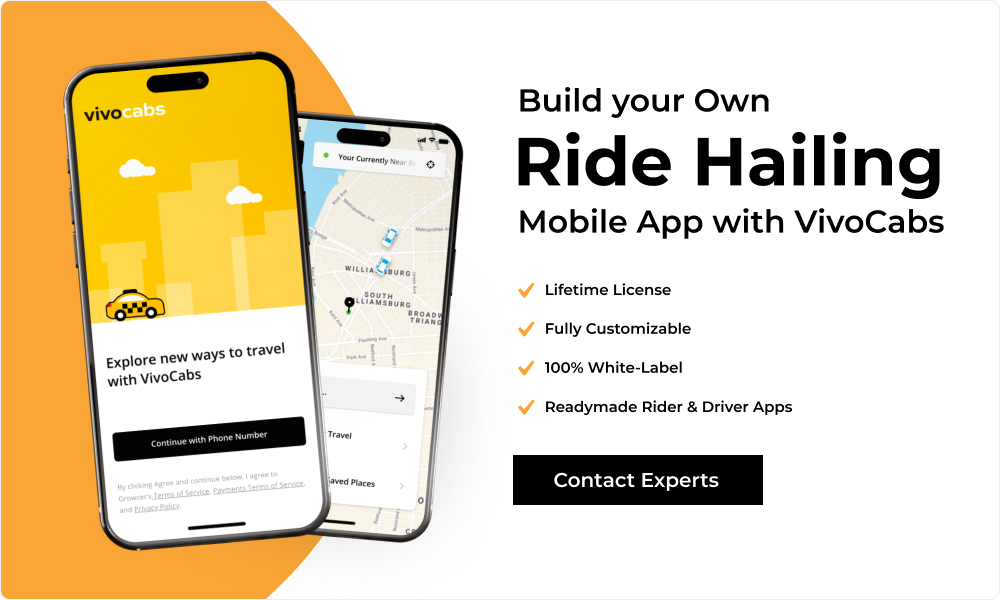
VivoCabs is a white-label taxi app platform designed from the ground up for the operational realities of local and regional taxi businesses. It includes everything needed to launch your own branded ride-hailing service: a fully branded passenger app, a driver app, and a powerful admin dashboard, all under your business name.
What sets VivoCabs apart from local operators:
- Rapid deployment: Go live in weeks, not months, without building anything from scratch
- Full brand customisation: Your logo, your colours, your app name across the app
- Comprehensive admin tools: Real-time fleet visibility, earnings reports, driver management, and customer data all in one dashboard
- Multiple payment methods: UPI, wallets, and cash tracking natively supported
- Scalable architecture: Grows with your fleet without platform migrations
VivoCabs offers infrastructure that puts local operators in control of their own technology, their own brand, and their own customer relationships.
Experience VivoCabs Firsthand
Conclusion
The narrative in the taxi industry for the past decade has framed technology as the enemy of local operators: the thing that aggregators weaponised to disrupt traditional businesses.
That framing is outdated. Technology in the form of white-label platforms is now accessible to any operator willing to use it. The local taxi businesses that are scaling fastest right now are not the ones with the biggest budgets or the most drivers; they’re the ones that combined existing operational strength with modern technology infrastructure.
The app isn’t a threat to the local taxi operator. It’s the missing piece that turns a good local business into a scalable one.
The operators who understand that the earliest are the ones pulling ahead right now.
Grow Beyond Phone Bookings With A White-Label Taxi App
Get In TouchPopular Posts