

Published Date: 10th Nov, 2026
TL; DR:
| Rank | Software | Best Suited For | Key Strengths |
|---|---|---|---|
| 1 | VivoCabs | Startups, entrepreneurs, and established mobility businesses | White-label and self-hosted One-time License Fees Customizable to different mobility models |
| 2 | Onde | Businesses seeking a managed ride-hailing platform | Managed platform approach Reduced technical effort Ride-hailing focus |
| 3 | Yelowsoft | Taxi fleets and transportation operators | Ready-made taxi software On-demand mobility support Suited to fleet and operator needs |
| 4 | TaxiCaller | Traditional taxi and private-hire businesses | Booking and dispatch tools Built for taxi and private-hire operations Suited to conventional operators |
| 5 | ATOM Mobility | Ride-hailing and multi-modal mobility businesses | Ride-hailing support Multi-modal mobility services Flexible across transport types |
| 6 | Autocab | Established taxi and private-hire operators | Mature dispatch technology Operations management tools Suited to established operators |
| 7 | iCabbi | Taxi fleets seeking advanced dispatch technology | Advanced dispatch features Fleet management tools |
Note: The ranking is based on each software’s capabilities for launching a ride-hailing business in the UAE, along with factors such as customization flexibility, cost-effectiveness, and scalability. VivoCabs suits businesses looking for a white-label, self-hosted ride-hailing solution, while options like ATOM Mobility and Yelowsoft are also worth considering depending on business requirements.
The online taxi app market is accelerating worldwide in 2026, especially in the UAE. The UAE has a well-established transportation ecosystem, with growing demand for convenient, technology-driven mobility services. As per TechSci Research, the sector is projected to reach USD 3.26 billion by 2031, growing at a CAGR of 11.79%.
For businesses, this growth rate signals a clear opportunity to join the industry. Passengers now expect to book rides, track vehicles, and pay digitally from a single app, whether they are traveling across the city, heading to the airport, or booking a chauffeur.
Building a taxi app from scratch is one way to meet this expectation, but it demands significant time, technical expertise, and upfront investment. White-label taxi app software offers a more practical route. It provides ready-made technology that you can brand as your own and customize with your own business rules, pricing, and features, so you can focus on operations and customer acquisition rather than development.
Not every solution suits every business, though. Some are built for startups launching their first service, while others are designed for established fleets or multi-modal mobility operators. To help you shortlist the right option, here are the top white-label taxi app software solutions to consider for launching a taxi business in the UAE in 2026.
Table of Contents
7 Best White-Label Taxi App Software in UAE
Here is our selection of taxi app development solutions based on their features, customization capabilities, deployment options, and suitability for different transportation business models. Since each criterion affects how much control a business has over its platform, the list is ranked by how well each solution balances them, beginning with VivoCabs.
1. VivoCabs
Best for: Entrepreneurs, startups, taxi operators, and enterprises looking for a customizable, self-hosted taxi app solution.
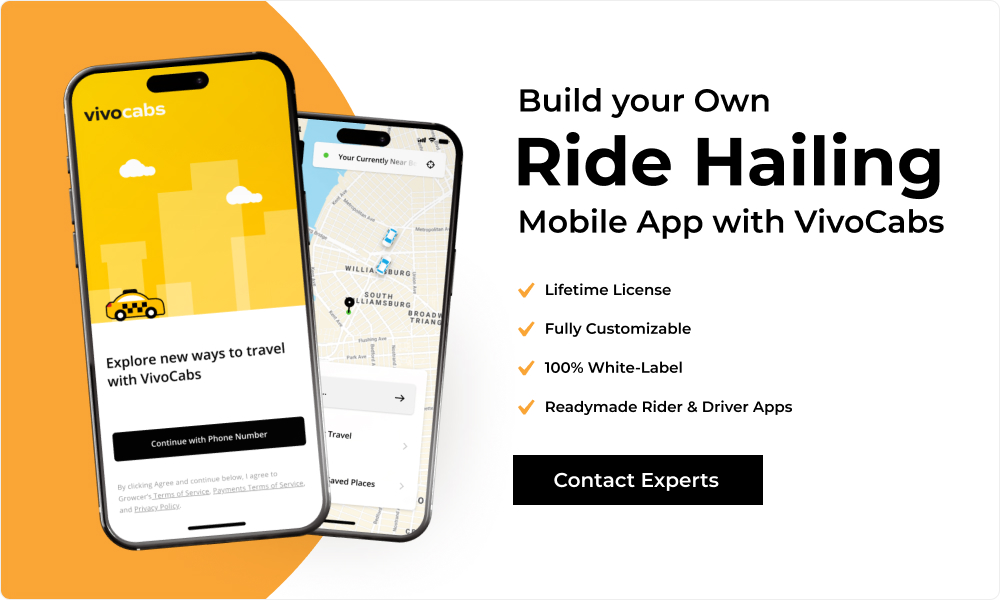
VivoCabs is a white-label taxi app software designed to help businesses launch their own branded taxi booking and ride-hailing platforms without developing the entire technology from scratch.
Developed by FATbit Technologies, VivoCabs provides ready-made passenger and driver applications alongside a web-based administration panel. Businesses can customize the solution according to their operational requirements and launch transportation services under their own brand identity.
One of its key differentiators is its self-hosted deployment model and lifetime licensing option, giving businesses greater control over their platform infrastructure and long-term technology investment.
Key Features:
- White-label passenger and driver applications for Android and iOS.
- Web-based admin panel for managing users, drivers, vehicles, and operations.
- Real-time ride tracking and fare estimation.
- Ride scheduling and ride-sharing functionality.
- Multiple vehicle categories and rental packages.
- Commission and fare management.
- Geo-fencing and location-based configurations.
- Driver verification and management.
- Multiple payment integrations.
- Customizable workflows and business rules.
Why Consider VivoCabs?
VivoCabs is suitable for businesses that want to establish an independent taxi or ride-hailing platform rather than operate through an existing aggregator. Its design focuses on ownership and long-term control, and the key benefits are as follows:
- Self-hosted: The software is installed on your own server, so you control your platform, data, and infrastructure rather than depending on a third-party subscription service.
- 100% customizable source code: Source code access lets you adapt workflows, features, and business rules to your operating model without being limited to preset options.
- Scalable: The platform can grow with your business, so you can add drivers, riders, vehicle types, and service areas without rebuilding your foundation.
- One year of free technical support: The first year includes technical support at no extra cost, helping keep the platform stable after launch.
- Dedicated project manager: A specific project manager guides your project from setup to launch, giving you one point of contact for requirements, updates, and queries.
Niches Supported by VivoCabs
VivoCabs can support several transportation business models, including:
- Traditional taxi booking services
- On-demand ride-hailing platforms
- Luxury and chauffeur transportation
- Airport transfer services
- Corporate transportation
- Intercity and scheduled rides
- Ride-sharing and vehicle rental services
VivoCabs in Real-World Use
Businesses have used VivoCabs as the foundation for different types of mobility and delivery platforms. Given are top 3 Ride hailing apps supported by Vivocabs:
- ZipCarz: An on-demand ride-hailing app based in Hong Kong.
- Tripli: An on-demand ride-hailing app based in Nigeria.
- Idle: An ethical ride-hailing app built around fair driver economics.
These examples show how the same foundation can be customized for ride-hailing as well as specialized logistics.
Get a Personalized Preview of VivoCabs Functionality
2. Onde
Best for: Startups and transportation businesses looking for a managed taxi booking and dispatch ecosystem.
Onde is a white-label taxi software platform that helps businesses launch branded passenger and driver applications along with supporting operational tools. The platform combines mobile applications, an operator interface, web booking functionality, and an administration system. It is designed to help taxi businesses manage ride requests, drivers, payments, and daily operations through a connected ecosystem.
Key Features:
- Branded passenger and driver applications.
- Automated ride dispatch.
- Operator and administration panels.
- Web-based booking functionality.
- Real-time ride tracking.
- Multiple payment options.
- Driver management and billing.
- Analytics and business reporting.
- Referral and promotional programs.
Suggested Read: VivoCabs Vs Onde App: Make the Right Choice for Your Ride-Hailing Business
3. Yelowsoft
Best for: Taxi companies and fleet operators managing multiple drivers and vehicles.
Yelowsoft is a SaaS based taxi dispatch and management software designed to simplify transportation operations. Its platform connects bookings, drivers, passengers, dispatchers, and fleet management activities through a centralized system. The solution is a suitable solution for businesses that receive bookings through multiple channels and need a structured platform to manage ride assignments and vehicle availability.
Key Features:
- Passenger and driver applications.
- Automated and manual dispatch.
- Real-time driver and vehicle tracking.
- Fleet management.
- Scheduled ride management.
- Corporate booking management.
- Booking management across multiple channels.
- Reporting and analytics.
- Passenger and driver notifications.
4. TaxiCaller
Best for: Traditional taxi companies, private-hire operators, and chauffeur services.
TaxiCaller is a cloud-based taxi dispatch software that helps transportation businesses manage bookings, vehicles, and drivers. It also offers passenger app branding options, allowing operators to provide customers with a booking experience under their own company identity.
Key Features:
- White-label passenger application.
- Cloud-based dispatch system.
- Real-time vehicle tracking.
- Automated driver assignment.
- Online booking functionality.
- Fare estimation.
- Advance ride scheduling.
- Driver and vehicle management.
- Trip history and passenger ratings.
5. ATOM Mobility
Best for: Mobility startups and businesses exploring multiple transportation services.
ATOM Mobility provides white-label software for ride-hailing, vehicle rental, and shared mobility businesses. Its ride-hailing solution includes customized passenger and driver applications, an operator interface, and a centralized management dashboard. Businesses can configure several aspects of the platform, including branding, pricing, vehicle types, and operating rules.
Key Features:
- Customized passenger and driver applications.
- Real-time fleet tracking.
- Automated ride assignment.
- Geofencing and location management.
- Multiple vehicle categories.
- Integrated payment options.
- Driver and customer management.
- Business analytics and reporting.
- API and third-party integrations.
Want To Build A Taxi Booking App With White-Label Software
6. Autocab
Best for: Established taxi companies and private-hire businesses.
Autocab offers booking and dispatch technology designed to help taxi operators manage customer bookings, driver allocation, and transportation operations. Its ecosystem includes a passenger application, driver companion application, booking and dispatch software, and corporate account management tools.
Key Features:
- White-label passenger application.
- Booking and dispatch management.
- Driver companion application.
- Automated booking management.
- Real-time vehicle tracking.
- Corporate account management.
- Online booking functionality.
- Passenger notifications.
- Trip and driver management.
7. iCabbi
Best for: Established taxi fleets and private-hire operators looking for configurable dispatch technology.
iCabbi provides efficient management and dispatch solutions designed to support taxi businesses in managing their fleets and passenger services. Its platform includes passenger-facing applications and operational technology for managing bookings, driver activities, and transportation services.
Key Features:
- White-label passenger application.
- Taxi booking and dispatch technology.
- Real-time driver tracking.
- Fare estimates and in-app payments.
- Driver and passenger communication.
- Fleet management.
- Trip management and reporting.
- Configurable booking operations.
Essential Features to Look for in Taxi App Software for the UAE
Choosing taxi app software involves more than comparing the number of features. Businesses should evaluate whether the platform can support their intended transportation model and local operational requirements. Here are some important considerations when selecting a white-label taxi app solution for the UAE.
1. Arabic and English Language Support
The UAE serves a diverse population, making multilingual functionality an important consideration. Look for software that supports both Arabic and English interfaces, including appropriate right-to-left (RTL) display capabilities.
2. Multiple Payment Options
Passengers should have convenient ways to pay for their rides. Consider solutions that support:
- Credit and debit cards.
- Cash payments.
- Digital wallets.
- Apple Pay and Google Pay, where supported.
- Locally relevant payment gateway integrations.
3. GPS Tracking and Navigation
Real-time location tracking helps passengers monitor their assigned vehicles and allows drivers to navigate pickup and drop-off locations. Check the availability of mapping integrations, accurate location services, and route-based fare calculations.
4. Flexible Fare and Pricing Management
Different transportation businesses may require different pricing structures. The software should allow businesses to configure:
- Base fares and per-distance charges.
- Vehicle-specific pricing.
- Airport transfer pricing.
- Scheduled ride rates.
- Corporate transportation rates.
- Commission structures.
5. Multiple Vehicle Categories
The UAE transportation market includes different service segments, from standard taxis to premium chauffeur services.
Look for software that supports different vehicle categories, such as:
- Economy cars.
- Business-class vehicles.
- Luxury cars.
- SUVs.
- Vans and larger passenger vehicles.
6. Scalability and Customization
Your initial business model may evolve as your customer base grows. Choose a platform that can accommodate new service categories, additional operational locations, customized features, and integrations without requiring a complete redevelopment.
7. Regulatory and Operational Compatibility
Technology selection should go hand in hand with local regulatory requirements. For example, Dubai’s passenger transport regulations cover authorizations, electronic platforms, fare requirements, and driver permits. Businesses must evaluate the applicable requirements of the relevant transport authority before launching their services. Ensure that your chosen software can support the operational and technical requirements applicable to your business model and jurisdiction.
Enter the UAE Ride-Hailing Market with a Feature-Rich Taxi App
How to Choose the Right White-Label Taxi App Software?
Choosing the right white-label taxi app software affects your costs, launch timeline, and ability to grow. Since every solution is built for a different type of business, comparing them against your own requirements helps you avoid expensive changes later. These five tips can guide your evaluation before you decide.
1. Match the Software to Your Business Model
Start by defining the kind of service you plan to run, because this decides which features you will actually need. A solution built for a startup launching its first app may not suit an established fleet that needs advanced dispatch, and the reverse is also true.
Common business models include:
- On-demand ride-hailing: Passengers book nearby drivers through the app, similar to Uber or Careem.
- Traditional taxi fleet: An existing fleet digitizes its booking and dispatch.
- Chauffeur and airport transfer: Pre-scheduled premium rides with fixed pricing.
- Multi-modal mobility: A platform combining ride-hailing with services such as vehicle rental or shared rides.
Choosing software designed for your model reduces the need for custom development and helps you launch faster.
2. Evaluate Customization and Branding Flexibility
A white-label solution should let your business look and operate as its own brand. Branding goes beyond adding a logo, so check how much of the experience you can control before committing.
Check whether you can customize:
- Logo, colors, and app name across the passenger app, driver app, and admin panel
- Fare structure, pricing rules, and commission settings
- Vehicle types and service categories
- Booking flows and operating rules
- Notifications and email templates
Also ask which changes are available through configuration and which need additional development, along with the cost and timeline for each. This prevents surprises later.
3. Compare Core Features and Integrations
The software should cover everything needed to run daily operations smoothly. Compare features across the passenger app, driver app, and admin dashboard, rather than judging by the passenger app alone.
Essential features to look for:
- Real-time booking, GPS tracking, and automatic fare calculation
- Driver onboarding, document verification, and earnings management
- Ride scheduling and advance booking
- Admin dashboard with reports, commissions, and dispute handling
For the UAE market, also check:
- Support for local payment methods and multiple currencies
- Arabic and English language options
- Integration with the maps, SMS, and payment services you plan to use
4. Assess Hosting, Ownership, and Total Cost
Different software providers use different deployment and licensing models, and each affects how much control you have over your platform and data. Neither model is automatically better, so choose based on your technical resources and long-term plans.
Compare the main options:
- SaaS: The vendor hosts and maintains the software, with quick setup but recurring fees and less control.
- Self-hosted: The software is installed on your own server, giving more control over data and source code, though hosting and maintenance are your responsibility.
- Managed platform: The vendor operates much of the service for you, which reduces technical effort.
Look beyond the initial price when estimating cost. Include setup, customization, hosting, maintenance, payment processing fees, and any per-ride or recurring charges, and compare the total over a defined period.
5. Check Scalability and Vendor Support
Your business will likely grow in drivers, riders, and service areas, so the software should handle that growth without a major rebuild. A solution that works for 50 drivers may struggle at 500 if it was not built to scale.
Questions to ask the vendor:
- Can the platform support more drivers, riders, and cities as demand grows?
- Can new features and service types be added later?
- What technical support, updates, and onboarding assistance are included, and for how long?
- Does the vendor offer a dedicated contact or project manager during setup?
- Can the vendor help with customization and local compliance requirements?
Reliable support matters most during launch and early operations, when problems affect real customers and drivers.
Launch Your Taxi App With Right White-Label Taxi App Software
Final Thoughts
The UAE’s online taxi market is growing steadily, and demand for app-based booking is creating a clear opening for businesses that want to launch their own transportation platforms. White-label taxi app software makes this practical, as it provides ready-made technology that can be branded and customized without building a platform from scratch.
However, the solutions discussed in this guide differ in deployment model, customization depth, and the type of business they serve. Some are built for fleets that need strong dispatch tools, while others suit startups, multi-modal operators, or businesses seeking full ownership of their platform. The right choice depends on your business model, preferred level of control, long-term costs, and plans for growth.
For businesses that value ownership and flexibility, VivoCabs is worth evaluating, with its self-hosted deployment, one-time license, and customizable source code. Alongside it, options such as ATOM Mobility and Yelowsoft are also worth considering for different business requirements. Before deciding, compare each software against the criteria mentioned in this guide.
Frequently Asked Questions (FAQs)
1. Which is the best white-label taxi app software for starting a taxi business in the UAE?
The best choice depends on your business model, how much customization you need, and your long-term costs. VivoCabs is a suitable choice for businesses that want a customizable, self-hosted white-label taxi app. It includes passenger and driver apps, an admin panel, customizable business workflows, and a one-time lifetime license. However, other softwares like- Onde, Yelowsoft, TaxiCaller, and ATOM Mobility are worth considering due to their unique capabilities.
2. How much does it cost to develop a taxi booking app in the UAE?
The cost depends on several factors, including the business vision, development approach, target regions, technology stack, features, API integrations, and deployment model. Building a taxi app from scratch generally requires a larger development investment, while white-label software can reduce initial development time and costs.
3. Can I launch my own taxi booking business in Dubai without building an app from scratch?
Yes. Businesses can use ready-made white-label taxi app software to launch branded passenger and driver applications without developing the entire platform independently. However, operating a commercial passenger transportation service requires the applicable approvals, permits, and compliance with the relevant transport authority requirements.
4. Is self-hosted taxi app software better than cloud-based software?
The choice depends on your technology ownership and infrastructure requirements. Self-hosted software gives businesses greater control over their hosting environment, deployment, and infrastructure management. Cloud-based solutions generally offer vendor-managed hosting and infrastructure. Businesses should compare long-term costs, security responsibilities, customization options, and technical support before choosing.
5. Can I customize a white-label taxi app solution according to my business model?
Yes, but that depends on the software and licensing agreement. Customizable taxi app solutions can support different pricing structures, commissions, vehicle categories, service areas, payment methods, and operational workflows. For example, VivoCabs supports business models such as traditional taxi booking, ride-hailing, chauffeur services, airport transfers, and scheduled transportation.
6. Do I need separate passenger and driver applications for my taxi business?
Separate passenger and driver applications are generally recommended because both user groups have different operational requirements. Passengers need features such as ride booking, fare estimates, payments, and trip tracking. Drivers require ride request management, navigation, trip status updates, and earnings information. An administration panel is also important for managing the overall platform.
7. Can white-label taxi software support luxury transportation and airport transfers in UAE?
Yes. Many white-label taxi platforms support multiple transportation categories and service models. Depending on the solution, businesses can configure luxury vehicles, chauffeur services, airport transfers, corporate transportation, scheduled rides, and intercity travel. The availability of specific workflows should be confirmed with the software provider.
Thinking of Starting an App-Based Taxi Business?
Consult With ExpertsPopular Posts